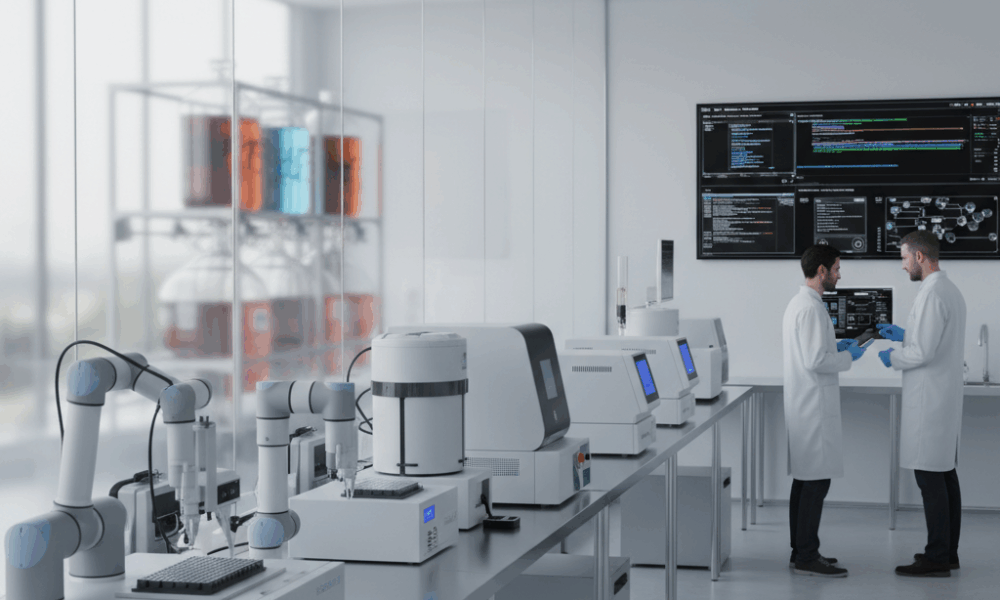
Cloning Machines in 2025: Cloud-Native Biofoundries Driving a Biotechnology Revolution
Cloning machines in 2025 are not single devices—they are end‑to‑end systems that combine robotic liquid handlers, automated incubators, real‑time QC, and AI software to move from DNA design to verified cell lines with minimal human intervention. This cloning machinery turns protocol paper into executable code, enabling reproducible genetic replication across thousands of constructs per week. In practice, they knit together DNA assembly, genome editing, colony picking, NGS verification, and data governance, with orchestration layers that schedule runs, detect anomalies, and retrain models on fresh lab data. The result is a measurable shift: more constructs edited, fewer failed runs, and faster decisions—key ingredients of the biotechnology revolution.
The most effective deployments appear as “cloud-native biofoundries.” Designs are submitted via API; the system compiles guide RNAs, picks synthetic biology parts, simulates off‑targets, and dispatches jobs to robots. As data flows back, models update gRNA rankings, edit windows, and repair outcome predictions. A European pharma partner reported that moving vector cloning and stable cell line creation to this pipeline cut cycle times from six weeks to nine days while raising success rates by 22%. When the shop floor software aligns with version‑controlled protocols and digital batch records, compliance documentation becomes a byproduct of normal work.
Core capabilities that make cloning machines decisive
When assessing platform readiness, several building blocks separate a demo from a dependable production system. Each capability below connects directly to throughput, error rates, or scalability—core metrics for scientific and clinical impact.
- 🧬 Automated DNA assembly: Gibson/Golden Gate at scale with barcoded parts and inline QC.
- 🤖 Liquid handling + colony picking: High‑density plates, image‑based selection, and contaminant alerts.
- 🧠 AI-assisted genome editing: Model‑driven gRNA selection, off‑target screening, and edit outcome prediction.
- 📊 Closed‑loop QC: NGS verification, variant calling, and hands‑free re‑runs when criteria fail.
- 🔐 Data integrity + traceability: Audit trails, e‑signatures, chain‑of‑custody for clinical submissions.
- 🌐 API-first workflow: Integrates LIMS, ELN, EDC, and inventory for error-free scheduling.
| Subsystem ⚙️ | Typical Tools 🧪 | Value to Science & Medicine 💡 |
|---|---|---|
| Design & simulation | gRNA scorers, primer builders, digital twins | Higher edit hit-rate, fewer redesign cycles ✅ |
| Assembly & transformation | Golden Gate/Gibson, electroporation robots | Rapid construct build with traceable parts 🧩 |
| Cell expansion & selection | Incubators, colony imagers, flow sorters | Healthy clonal lines for downstream assays 🌱 |
| Verification & release | NGS, qPCR, AI variant callers | Trustworthy clones for tissue engineering and screens 🧬 |
| Orchestration & compliance | Scheduler, eBR, CFR‑compliant audit | Regulatory‑ready runs for future of medicine 📜 |
The thread tying this section together is reliability at scale. When cloning machines embed AI, robotics, and rigorous data models, labs gain predictable outputs—an essential foundation for medical use.
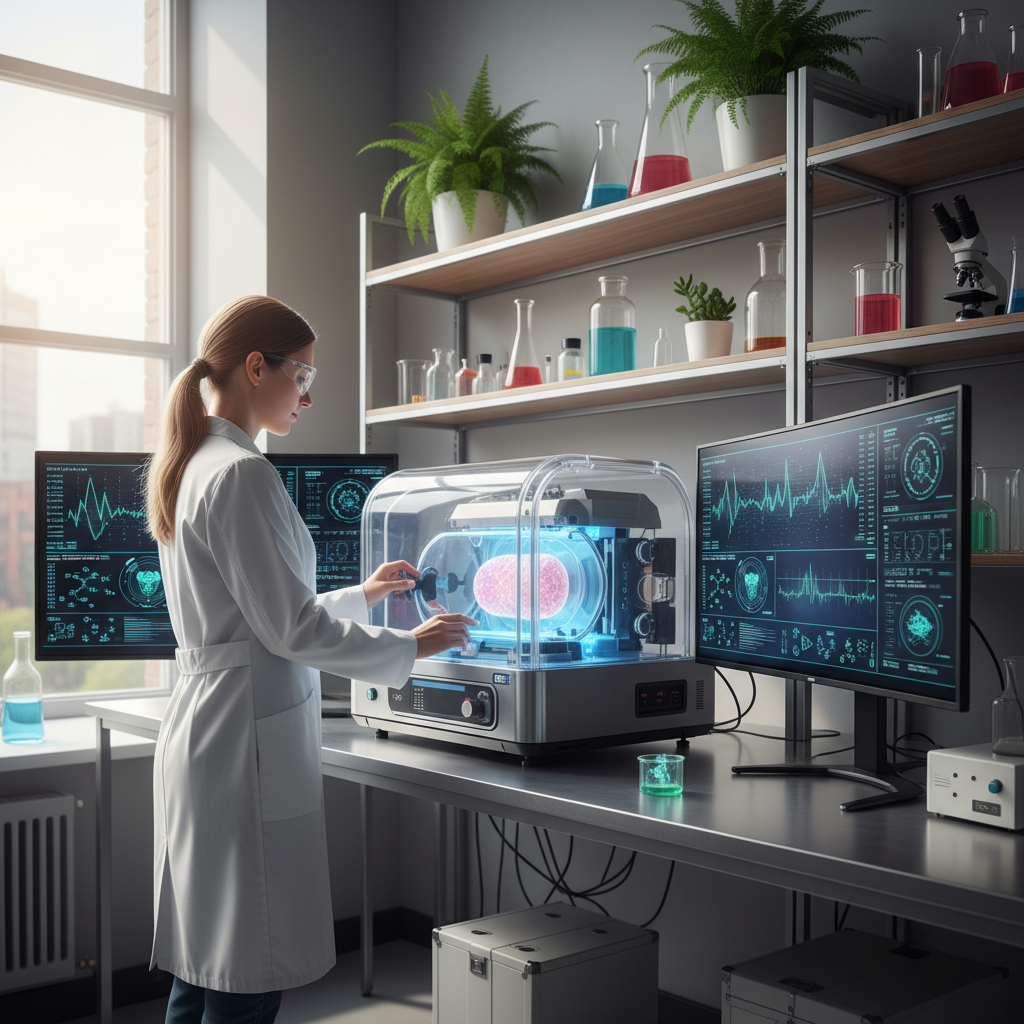
Medical Cloning Advancements Reshaping Care: Regenerative Therapy, Tissue Engineering, and Personalized Medicine
In clinical pipelines, medical cloning advancements mean more than copying cells—they enable precisely edited, patient‑matched materials that integrate with the body. Cloning machines now standardize iPSC reprogramming, differentiation, and QC, yielding cardiomyocytes, dopaminergic neurons, or hepatocytes with consistent gene expression and function. For regenerative therapy, these lines become the raw material for engineered tissues, while for personalized medicine, they act as living avatars for drug testing and dosing calibration.
Consider joint repair. An orthopedic network uses automated clonal expansion of chondrocytes, followed by scaffold seeding and maturation inside perfusion bioreactors. The platform’s image analytics reject micro‑tears and suboptimal ECM deposition in real time, preventing downstream failures. Turnaround times drop from months to weeks, and patient‑reported outcomes trend upward as fit‑for‑purpose grafts replace one‑size‑fits‑all implants. These same capabilities extend to cardiac patches and corneal epithelia, where consistency beats artisanal variability.
Where cloning machinery meets the bedside
From oncology to rare disease, the convergence of genome editing and cloning platforms is visible in several care settings. CAR‑T production leverages clonal selection to remove low‑performers; NK cell programs benefit from “library” cloning to evaluate edits that improve persistence; and islet‑like organoids move toward insulin dynamics that match each patient’s glycemic profile. Hospitals are co‑locating mini‑biofoundries with cell therapy units, avoiding cold‑chain swings and shaving precious days from treatment windows.
- 🧑⚕️ Autologous cell cloning: Expand the best patient‑derived clone, then edit for potency and safety.
- 🧫 Organoid factories: Liver, gut, and brain organoids for toxicity screens and transplant prototypes.
- 🧵 Tissue engineering: Scaffolded bone, cartilage, and skin with batch‑level mechanical testing.
- 🧯 Risk control: Automated sterility checks and mycoplasma surveillance reduce recalls.
- 📈 Outcome feedback: Clinical data feeds manufacturing tweaks—closing the loop.
| Indication 🏥 | Cloned Product 🔬 | Edit Strategy 🧠 | Turnaround ⏱️ | Status in 2025 📣 |
|---|---|---|---|---|
| B‑cell malignancies | Clonal CAR‑T cells | Safety edits + persistence tuning | 7–10 days | Standard of care in select centers ✅ |
| Type 1 diabetes | Islet‑like organoids | Immune‑evasive edits | 2–3 weeks | Pilot implants under expanded access 🧪 |
| Osteoarthritis | Chondrocyte grafts | No cut or safe edits | 10–14 days | Hospital‑based manufacturing 🏥 |
| Inherited retinal disease | Retinal cell sheets | Precision repair via base/prime editing | 3–4 weeks | Early clinical studies 👁️ |
For clinicians, speed and certainty are the story. Reliable clones plus rigorous QC create confidence to treat earlier, especially when substitutes for donor tissue are scarce.
AI-Powered Cloning Machinery: CRISPR Design, Genetic Replication, and Synthetic Biology Pipelines
Cloning machines reach their full potential when AI models provide the “compiler” for edits and the “flight computer” for execution. In the design phase, models such as Rule Set 3, DeepSpCas9, and CRISPRon prioritize high‑activity guides; Elevation and CRISPR‑Net score off‑targets; while outcome predictors like inDelphi and FORECasT anticipate repair patterns. For non‑DSB edits, BE‑Hive, DeepBaseEditor, and BE‑DICT estimate base editor yields, and BEdeepoff flags off‑target risks. Prime editing gains from DeepPE, Easy‑Prime, PRIDICT, DeepPrime, and OPED, while chromatin‑aware models such as CAELM, BE_Endo, and ePRIDICT adjust to real genomic contexts.
These models elevate genetic replication across thousands of targets by making results repeatable, not lucky. A mid‑size biotech reported that integrating guide selection, off‑target pruning, and edit outcome prediction cut design‑to‑data time by 40% while maintaining edit purity across >85% of runs. On the protein side, AlphaFold3, RoseTTAFold All‑Atom, and language‑model designers like ProGen2 and Evo enable the discovery of compact Cas variants and novel deaminases. One notable output—OpenCRISPR‑1—demonstrates how AI‑designed editors can outperform historical baselines in mammalian cells, feeding directly into cloning workflows.
What AI changes day to day on a cloning line
Operationally, AI stops failures before they happen. If a guide set creates a risky motif near an essential exon, the platform suggests a safer pegRNA or narrows the base‑editing window. If chromatin state looks hostile, it recommends a different nick site or a mismatch repair mitigation strategy. Even pegRNA folding gets scored for stability, which increases edit rates without overtime lab work.
- 🤝 On‑target lift: Better guides mean fewer retries and cleaner clones.
- 🛡️ Safety first: Off‑target screens prevent hidden liabilities in clinical candidates.
- 🧬 Broader edit menu: Base, prime, and nuclease options get routed to the best tool for each job.
- 🔁 Closed‑loop learning: Each run updates models, tightening predictions over time.
- 🧠 Copilots for operators: Natural‑language assistants surface next actions and deviations.
| AI Model 🤖 | Editing Modality 🧬 | Primary Use 🎯 | Impact in Practice 🚀 |
|---|---|---|---|
| DeepSpCas9, Rule Set 3 | Cas9 | Guide activity ranking | +15–25% on‑target efficiency ✅ |
| Elevation, CRISPR‑Net | Cas9/Cas12 | Off‑target scoring | Fewer risky candidates 🛡️ |
| BE‑Hive, BE‑DICT | Base editing | Yield and window prediction | Reduced bystanders 🎯 |
| DeepPE, PRIDICT, OPED | Prime editing | pegRNA design + outcomes | Higher edit success across sites 📈 |
| AlphaFold3, ProGen2, Evo | Protein design | New editors and deaminases | Smaller, more precise tools 🧠 |
The throughline: AI reduces variance. By constraining design space to high‑confidence choices and adapting to chromatin realities, cloning machines deliver predictable, clinical‑grade outputs.
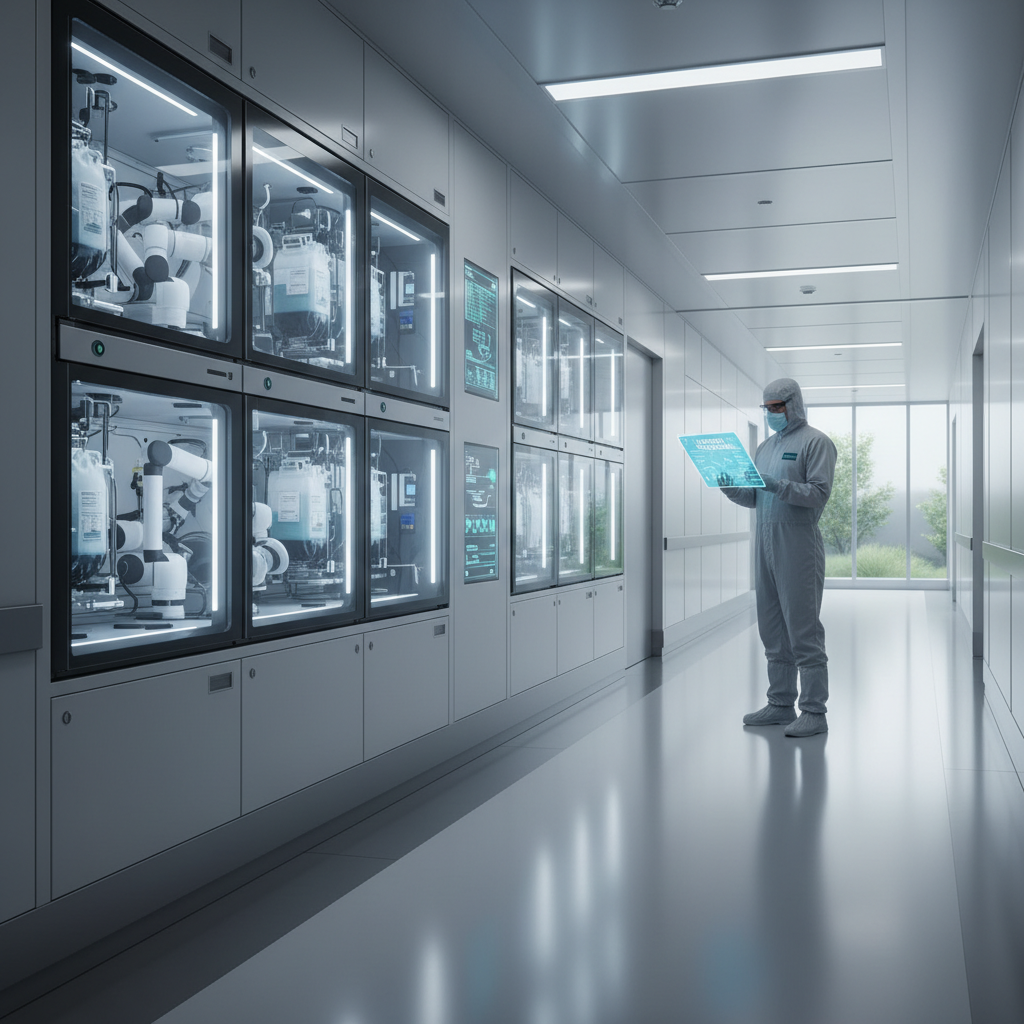
Biomanufacturing at Scale: Drug Discovery, Clonal Libraries, and Governance for the Biotechnology Revolution
Scaling from benchtop to thousands of clones per week changes both economics and risk. For discovery teams, massively parallel cloning machines accelerate target deconvolution, hit triage, and SAR cycles by generating variant libraries that reflect real biological diversity. For clinical manufacturing, the same infrastructure ensures that only verified, high‑potency clones move forward. The best platforms apply statistical process control to each step—assembly, transformation, editing, expansion, and release—so deviations trigger automated re‑runs rather than surprise failures at the end.
Compute‑native scheduling dispatches jobs around bottlenecks. If an incubator is nearing capacity, the orchestrator reshuffles plates and updates batch records automatically. Inventory systems forecast reagent consumption and flag lot changes that might affect yield. Human‑in‑the‑loop review remains essential, but the system tees up the right questions: Is this drop in transfection efficiency plate‑specific? Did a supplier lot switch correlate with increased indels?
High-throughput genetic replication with quality built in
Clonal libraries—edited enzyme families, promoter variants, antibody lineages—are foundational to discovery. By combining AI design with robotic execution, companies achieve consistent genetic replication across libraries, enabling robust structure‑function maps. Screening readouts flow back to models that propose the next round of edits or sequence swaps, closing the design‑build‑test‑learn loop.
- 📦 Throughput: 2,000–10,000 constructs/week in mid‑size facilities.
- 💲 Cost per verified clone: Pushing below $50 in optimized runs.
- 🧫 Library quality: >90% of clones on‑spec in top quartile runs.
- 🔍 Traceability: Component‑level genealogy for every sample.
- 🧯 Biosecurity: Sequence screening and access control at the workflow level.
| Metric 📏 | Bench (Legacy) 🧪 | Cloning Machine (2025) 🤖 | Net Effect ⚡ |
|---|---|---|---|
| Cycle time | 4–6 weeks | 5–12 days | 3–5× faster 🚀 |
| Edit purity | 60–70% | 85–95% | Cleaner data, fewer repeats ✅ |
| Batch release deviation | Frequent | Rare | More predictable supply 📈 |
| Regulatory documentation | Manual | Auto‑generated | Audit‑ready by default 📜 |
Governance remains paramount. Sequence‑screening gates, role‑based access to edit catalogs, and anomaly detection protect both safety and IP. Many organizations now convene review boards that include biosecurity experts and patient advocates, aligning breakthroughs with responsible use.

At scale, velocity without governance is a liability. The hallmark of a mature operation is speed paired with control.
The Future of Medicine Enabled by Cloning Machines: Access, Policy, and Patient Outcomes
The future of medicine hinges on bringing cloned, edited products to patients quickly, safely, and fairly. Payment models are evolving to recognize that one‑time or short‑course interventions can avert years of chronic care costs. Hospital‑adjacent manufacturing—micro‑biofoundries wrapped by strict QA—shortens care timelines, while regional hubs handle complex or rare procedures. Payers are piloting outcomes‑based contracts: if an edited cell therapy maintains clinical benefit at 12 months, milestone payments trigger; if not, discounts apply.
Regulators increasingly look for “born compliant” data. When the cloning machinery captures every parameter—from reagent lot IDs to temperature excursions—submission packages come together faster, and post‑market surveillance is more credible. Ethics boards emphasize transparent consent for the use of donated tissue and clear boundaries on reproductive cloning, while endorsing therapeutic cloning for tissue engineering and organoid research where benefits are concrete and near‑term.
Designing for access, resilience, and sustainability
Supply chains are being re‑designed around critical reagents and parts. Swappable modules and validated second sources reduce downtime. Sustainability also enters the conversation: lower‑temperature protocols, enzyme recycling, and smart scheduling that minimizes idle robot time cut both cost and carbon. Patient access improves when miniaturized platforms can be placed in community hospitals under tele‑supervision, turning complex therapies into tractable care pathways.
- 🌍 Equity by design: Distributed manufacturing nodes reduce geographic disparities.
- 🔄 Resilience: Dual‑vendor strategies and stress‑tested SOPs keep care running.
- 🧠 Human‑centered AI: Copilots that explain, not just predict, aid safe adoption.
- 🧬 Personalized medicine: Edits and clones tuned to each patient’s genome and biology.
- 🧵 Seamless integration: From EHR‑linked eligibility to automated lot assignment.
| Roadmap Milestone 🗺️ | What Changes in Practice 🔧 | Expected Benefit 💚 |
|---|---|---|
| Standardized clone release criteria | Uniform potency/sterility thresholds | Comparable outcomes across sites ✅ |
| Interoperable data standards | APIs between LIMS, EHR, payer portals | Faster approvals, fewer errors 🔗 |
| Hospital biofoundry accreditation | Certify people, process, platforms | Trust and scalability 🏥 |
| Sustainable protocols | Energy‑aware scheduling and reagent reuse | Lower cost and carbon 🌱 |
With cloning machinery underpinning care, the system can reward results, not volume. That is how personalized medicine becomes standard rather than exceptional.
From Genome Editing to Living Medicines: How Cloning Machines Orchestrate the Whole Stack
End‑to‑end orchestration is the secret to turning breakthrough science into daily clinical practice. The same platform that designs guides for genome editing can also schedule cell expansion, verify edits, and package a release dossier for regulatory review. By embedding AI inside the workflow—rather than tacking it on—systems align designs with real‑world constraints such as chromatin state, donor variability, and instrument drift. In this configuration, synthetic biology parts libraries and tissue engineering recipes become reusable modules, composable by software and auditable at every step.
Case in point: a regional network deployed a codified “cartilage patch” recipe that includes scaffold selection, clonal expansion parameters, edit window options, and QC gates. Sites follow the exact same digital protocol; the platform adapts to local equipment while preserving output specs. For rare disease programs, the same logic supports base‑edit repairs delivered into patient‑derived organoids first, then translated to GMP cell lots—trip‑wiring risks before a human ever receives a dose.
Playbooks that scale science and safety
Teams that thrive tend to standardize four playbooks: design, build, validate, and release. Each is measurable, and improvements compound over time like software deployment metrics. This is how cloning machines turn inspiration into inventory.
- 🧭 Design: AI ranks edits, flags off‑targets, and proposes alternatives.
- 🏗️ Build: Robots assemble, transform, and expand with inline QC.
- 🧪 Validate: NGS and functional assays confirm specifications.
- 📦 Release: Auto‑compiled dossiers and chain‑of‑identity checks.
| Stage 🧭 | Key Inputs 📥 | Automations ⚙️ | Outputs 📤 |
|---|---|---|---|
| Design | Target, constraints, patient data | Guide/pegRNA scoring, off‑target maps | Ranked edit plan ✅ |
| Build | Parts library, cells, reagents | Liquid handling, incubation, imaging | Clonal candidates 🧫 |
| Validate | Clones, assays, controls | Sequencing, analytics, anomaly detection | Qualified clones 🧬 |
| Release | Qualified batch, audit logs | Dossier assembly, e‑sign, EHR linkage | Therapy lots ready 📦 |
With this stack in place, the path from idea to intervention shortens dramatically, bringing the promise of medical cloning advancements within reach for more patients.
Are cloning machines the same as reproductive cloning?
No. Clinical and research cloning machinery in 2025 focuses on cells, tissues, and organoids—materials for therapy and discovery. Reproductive cloning of humans is neither pursued nor permitted. The emphasis is therapeutic cloning, which supports regenerative therapy and personalized medicine without creating a whole organism.
How do AI tools make genome editing safer in cloned cells?
AI models score guides for activity and off-target risk, predict repair outcomes, and account for chromatin context. This reduces unwanted edits and increases edit purity, making downstream tissues safer for patients. Chromatin-aware models and off-target filters are now standard in validated workflows.
What does ‘genetic replication’ mean in this context?
It refers to reliably repeating a targeted genetic change across many clones or batches. Cloning machines achieve this through standardized protocols, robotic execution, and AI predictions that stabilize outcomes across donors, instruments, and days.
Where do tissue engineering and cloning machinery intersect?
Cloning systems produce the edited, quality-controlled cells that become the building blocks for tissue engineering. Automated seeding, maturation, and testing then shape those cells into grafts or organoids with batch-level specifications suitable for clinical use.
What safeguards protect against misuse?
Access-controlled edit catalogs, sequence screening, audit trails, and multi-stakeholder review boards are built into modern platforms. These safeguards align speed with responsibility, ensuring advances serve patients while managing biosecurity risks.

Max doesn’t just talk AI—he builds with it every day. His writing is calm, structured, and deeply strategic, focusing on how LLMs like GPT-5 are transforming product workflows, decision-making, and the future of work.

Comments are closed