
Regression Models vs Transformers: Core Concepts, Key Differences, and 2025 Realities
Among the many choices in machine learning, the tension between regression models and transformers remains one of the most consequential. Regression thrives on structured, tabular signals where relationships are explicit and noise is moderate. Transformers dominate unstructured modalities—language, audio, vision—where context must be inferred and long-range dependencies matter. Understanding the key differences is the shortcut to better predictive modeling, lower costs, and faster iteration in 2025.
Classic regression models—linear and logistic—lean on statistical assumptions and transparent coefficients. They offer crisp interpretability and minimal compute, and they are unbeatable for fast baselines. In contrast, transformers are the engines of modern deep learning, powered by self-attention and pretrained representations. They process entire sequences in parallel, model intricate dependencies, and unlock transfer learning—but they also introduce tokenization constraints, heavy memory footprints, and deployment complexity.
Consider a property platform estimating prices across neighborhoods. A regularized linear regression or gradient-boosted trees decode tabular features like tax rates, distance to transit, and room count with clarity. Now contrast that with a multilingual real-estate assistant summarizing thousands of agent notes and buyer messages—suddenly, a transformer is the natural fit thanks to contextual reasoning and robust embeddings. It’s the same industry, two very different AI applications.
Tokenization has become a real operational variable. Teams now monitor prompt length, batching, and truncation as closely as they monitor learning curves. A helpful reference like the token limits guide for 2025 can reduce cost blowouts and latency surprises during prototyping and rollout. This matters because transformers often sit at the center of user-facing systems where milliseconds and margins are visible to customers.
In practical model comparison, a healthy rule of thumb in 2025 is: use regression when feature semantics are clear and causality is plausible; reach for transformers when the problem is soaked in context, ambiguity, or multi-modal signals. Organizations that codify this rule scale faster because they avoid overfitting the tool to the trend.
What separates them in practice?
- 🎯 Objective clarity: Regression targets a numeric or binary outcome with explicit features; transformers learn representations before prediction.
- 🧠 Feature engineering: Regression depends on domain features; transformers minimize manual features via self-attention.
- ⚡ Compute profile: Regression runs on CPUs; transformers love GPUs/TPUs and careful token budgeting.
- 🔍 Explainability: Regression gives coefficients and SHAP clarity; transformer explanations rely on attention maps and post-hoc tools.
- 📈 Scaling trend: Regression scales with rows; transformers scale with data diversity and pretraining corpora.
| Aspect 🔎 | Regression Models | Transformers |
|---|---|---|
| Best Data Type | Structured/tabular 📊 | Text, images, audio, long sequences 🧾🖼️🎧 |
| Feature Engineering | High (domain-driven) ⚙️ | Low (learned representations) 🧠 |
| Compute/Latency | Low/fast ⏱️ | High/needs optimization 🚀 |
| Interpretability | Strong (coefficients, SHAP) 🧩 | Moderate (attention, LIME/SHAP) 🔦 |
| Typical use cases | Pricing, risk, operations 📦 | Search, summarization, assistants 💬 |
The immediate takeaway: treat transformers as context engines and regression as precision instruments. Knowing which lever to pull turns architecture debates into business outcomes.

Use Cases in 2025: Where Regression Wins and Where Transformers Dominate
Use cases crystallize choices. A fictional retailer, BrightCart, needs two models: weekly demand forecasting and multilingual customer-support summarization. Demand forecasting on store-level features—promotions, holidays, weather indices—leans on regularized regression or gradient boosting for accuracy and clarity. Summarization of long chats across English, Spanish, and Hindi is a transformer task, where multi-head attention and pretrained encoders compress context and nuance.
In the energy sector, hourly-binned load forecasting on structured telemetry often favors regression plus tree ensembles, while long-horizon planning that fuses text reports and time-series can benefit from transformer-based time-series models. In 2025 competitions, teams routinely combine both: regression for tabular baselines and transformers for unstructured inputs like operator notes or incident logs.
Healthcare systems showcase another split. Predicting readmission risk from EHR tables suits regression due to regulatory explainability and stable features. But clinical text, imaging summaries, and discharge notes require transformer encoders to parse subtle cues. The operational result: a two-tier pipeline that routes tabular tasks to lighter models and sends narrative content to language models, capped by a small linear head for final decisions.
Token overhead is a design constraint whenever long documents enter the model. Teams reference a GPT token count overview before setting chunking strategies and retrieval-augmentation windows. Getting this right can halve serving costs without hurting quality.
Decision checklist for common scenarios
- 🏪 Retail demand planning: Start with regression or gradient boosting for tabular fidelity; add transformer embeddings only if text signals matter.
- 🧾 Document-heavy operations: Transformers plus retrieval improve summarization, search, and compliance review.
- 💳 Credit and risk modeling: Regression for auditability; transformers for fraud patterns in free-text claims.
- ⚙️ Manufacturing yield: Regression on sensor features; transformers if maintenance logs or images add signal.
- 📱 Customer experience: Transformers for chatbots and voice; regression to score satisfaction drivers.
| Scenario 🧭 | Preferred Approach | Rationale 💡 |
|---|---|---|
| Tabular forecasting | Regression models 📊 | Transparent, fast iteration, robust with limited data |
| Long text summarization | Transformers 🧠 | Context handling, transfer learning, multilingual strength |
| Hybrid operations | Both 🔗 | Unstructured-to-structured chain, best of both worlds |
| Small datasets | Regression ✅ | Low variance, strong baselines without overfitting |
| Multimodal assistants | Transformers 🚀 | Integrates text, images, audio with attention |
Curious to see these models side by side in action? A quick learning boost comes from lectures that compare sequence architectures and practical pipelines.
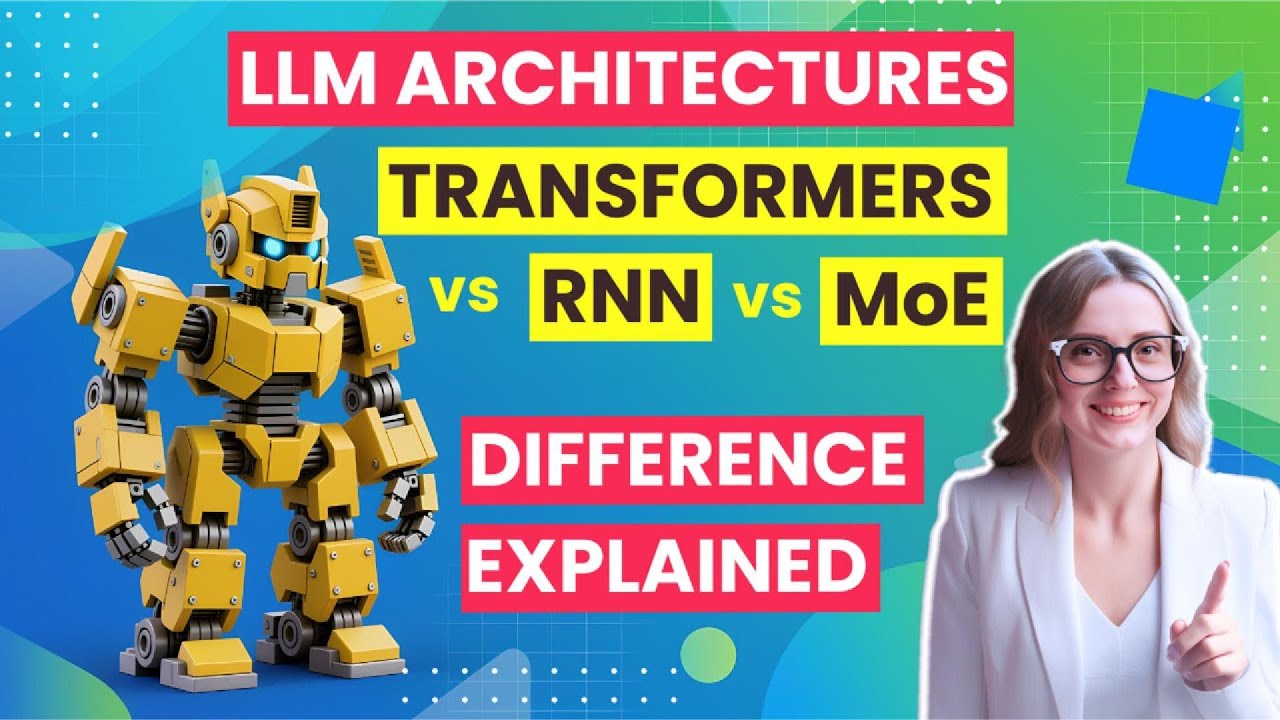
Organizations that map problems to the right paradigm earlier enjoy faster sprints and cleaner post-mortems. The strategic edge is not picking a camp—it’s picking the right tool, consistently.
Cost, Compute, and Data: Practical Trade‑offs That Shape Predictive Modeling
Budgets speak loudest. Transformers shine, but their GPU appetite, memory needs, and token throughput make cost discipline essential. Regression is nimble: it trains on CPUs, fits in small containers, and deploys easily at the edge. This contrast affects every product decision, from proof-of-concept to scaled rollout.
Data regimes also diverge. Regression tends to perform reliably with hundreds to tens of thousands of rows if features are well crafted. Transformers hunger for breadth and diversity. Fine-tuning can work with modest data thanks to pretraining, but inference costs scale with context length. That’s why practitioners consult artifacts like a practical token budgeting guide when planning prompts, truncation strategies, and vector-store retrieval windows.
Latency expectations further shape architecture. A pricing endpoint serving a million queries per hour needs predictable sub-50ms responses—regression or small linear heads excel there. A contract-review assistant can tolerate 500ms–2s latency if it produces reliable summaries—ideal for a transformer with caching and smart chunking.
Optimization moves teams are using
- 🧮 Right-size the model: Prefer small or distilled transformers for production; keep large models for offline batch or few-shot tasks.
- 📦 Cache aggressively: Memoize frequent prompts and embeddings to cut repeated token costs.
- 🧪 Benchmark early: Compare a tuned regression baseline to a transformer fine-tune before scaling—avoid premature complexity.
- 🧰 Hybrid stacks: Preprocess with regression or rules, route complex requests to transformers selectively.
- 🧷 Token discipline: Use an updated tokenization reference to set safe context sizes and stop runaway prompts.
| Factor ⚖️ | Regression Models | Transformers | Notes 📝 |
|---|---|---|---|
| Compute | CPU-friendly 💻 | GPU/TPU required 🖥️ | Transformers benefit from batching and quantization |
| Data need | Moderate 📈 | High diversity 📚 | Pretraining reduces fine-tune size but not inference cost |
| Latency | Low ⏱️ | Moderate–High ⏳ | Use retrieval and truncation to limit context |
| Interpretability | Strong 🔍 | Medium 🔦 | Attention ≠ explanation; use SHAP/LIME |
| TCO | Low 💸 | Variable–High 💳 | Token budgets matter—see deployment planning resource |
Teams that quantify these trade-offs early keep projects on tempo. Cost-aware design is not a constraint—it’s a competitive advantage.

Evaluation and Explainability: Metrics, Audits, and Trust in Model Comparison
Performance without trust won’t ship. Regression models earn adoption through interpretable coefficients and solid diagnostics—MSE, MAE, R², calibration plots. Transformers bring powerful sequence metrics—BLEU, ROUGE, BERTScore, perplexity—and human evaluation protocols that check factuality and bias. In regulated spaces, both are augmented by post-hoc interpretability techniques and structured audits.
Explainability differs in kind. For regression, feature coefficients and SHAP values tell a causal story candidates can debate. For transformers, attention maps reveal focus but not causation; SHAP and LIME applied to token embeddings help, and so do counterfactual prompts. When business stakeholders ask “why did it answer that?”, surfacing evidence—retrieved passages, highlighted tokens, or constrained decoding rules—builds confidence.
Evaluation cycles now include latency SLOs and cost-per-request alongside accuracy. A model that is 1% more accurate but 4× more expensive may fail the product review. Smart teams add a guardrail layer—input validators, content filters, and policy checks—then they audit drift monthly. Practical references like a token budgeting checklist integrate seamlessly into these reviews, ensuring test prompts mirror production volumes.
How to structure assessments stakeholders trust
- 🧪 Holdout rigor: Keep a truly out-of-time test set for time-series and seasonality checks.
- 🧭 Metric diversity: Pair accuracy with calibration, latency, and cost per thousand tokens.
- 🧯 Safety by design: Adopt rejection sampling and content rules for transformer outputs.
- 🧬 Explainability mix: Use SHAP for both paradigms; add attention visualizations and chain-of-thought audits prudently.
- 🔁 Continuous eval: Shadow deploy and measure real user traffic before flipping the switch.
| Dimension 🧪 | Regression Models | Transformers | Audit Tip ✅ |
|---|---|---|---|
| Core metrics | MSE/MAE/R² 📊 | BLEU/ROUGE/Perplexity 🧠 | Align metric to user journey, not just lab score |
| Calibration | Platt/Isotonic 📈 | Temperature + probability heads 🌡️ | Plot reliability diagrams quarterly |
| Explainability | Coeffs, SHAP 🔍 | Attention, SHAP/LIME 🔦 | Compare saliency to domain heuristics |
| Robustness | Outlier tests 🧪 | Adversarial prompts 🛡️ | Randomized stress scenarios help surface gaps |
| Cost & latency | Low & predictable ⏱️ | Manage with caching & truncation ⏳ | Track tokens/request with a budget SLO |
By scoring models on accuracy, cost, speed, and clarity, teams evolve from model worship to product truth. That’s where durable wins happen.
Trends and Hybrids in 2025: Bridging Regression and Transformers for Real‑World Use Cases
The sharpest trend this year is pragmatic hybridity. Product teams don’t pick sides—they build pipelines that let each paradigm shine. A common pattern uses a transformer to turn messy text into structured signals—entities, sentiment scores, key phrases—and then a regression or tree model digests those features for ranking, pricing, or risk. This achieves state-of-the-art intake with cost-efficient decisioning.
Time-series is moving similarly. Transformer variants handle long contexts and multiple seasonalities, while a linear residual layer or regression baseline anchors the forecast. In marketing mix models, teams embed campaign text and visuals with transformers, then run constrained regression to capture elasticities regulators can understand. Even retrieval-augmented generation pipelines end with a simple linear head for confidence scoring.
Another noteworthy direction: smaller distilled transformers at the edge for low-latency tasks, paired with central regression services monitoring outcomes. This division reduces round trips and keeps token counts lean. For planning, engineers routinely reference a token cost overview to design prompts that fit budget envelopes across traffic spikes.
Hybrid patterns gaining traction
- 🧷 Embed → Regress: Turn unstructured inputs into embeddings, then feed a regression model for scoring.
- 🧱 Rules → Transformer: Gate requests with cheap rules; escalate hard cases to a transformer.
- 🪄 Transformers with linear heads: Fine-tune encoders; predict with a compact linear/regression head.
- 🛰️ Edge-tier + Cloud-tier: Distilled transformer on-device, regression in cloud for oversight.
- 🧭 RAG + calibration: Retrieval for grounding; regression to calibrate final confidence.
| Pattern 🧩 | Why it works | Cost/Latency ⚡ | Example 📌 |
|---|---|---|---|
| Embed → Regress | Combines semantic power with tabular precision | Moderate 💡 | Support triage: transformer tags, regression prioritizes |
| Rules → Transformer | Filters easy cases cheaply | Low → High 🔄 | Content moderation pipelines |
| Linear heads | Simplifies downstream prediction | Medium ⏱️ | Document classification with frozen encoder |
| Edge + Cloud | Latency-sensitive UX with oversight | Low at edge ⚙️ | On-device voice with cloud QA checks |
| RAG + calibration | Grounds outputs; improves trust | Variable 🔧 | Contract Q&A with confidence scoring |
The bottom line: the strongest use cases in 2025 are rarely pure-play. The winners stitch together simple and powerful tools, aligning quality with cost and speed.
From Lab to Production: Playbooks, Failure Modes, and Smart Guardrails
Shipping is a different sport than prototyping. Regression projects fail when feature leakage, non-stationarity, or a lack of calibration sneaks in. Transformer projects fail when token costs balloon, context windows truncate critical details, or hallucinations slip through. The real craft is spotting these failure modes early and installing guardrails that match the stakes.
A production playbook usually starts with baselines. Establish a regression line with clean features, then trial a compact transformer with a frozen encoder and linear head. Compare not just accuracy but cost per 1,000 requests and p95 latency. Build user-facing safety into requirements: red-team prompts, retrieval for grounding, and fallback answers when confidence is low. Maintain a changelog of prompts and templates—small wording tweaks can alter token counts, so teams keep a reference for token policies close at hand.
Operationally, monitoring matters. Track drift on tabular distributions and embedding clusters. Review edge cases weekly, and run shadow evaluation before replacing any baseline. When incidents occur, a reproducible trail—training data versions, model hashes, prompt templates—turns firefighting into debugging, not guesswork.
Field-tested practices to avoid surprises
- 🧯 Fail gracefully: Add timeouts, retries, and cached fallbacks for transformer endpoints.
- 🧪 Guard your data: Split by time and entity to avoid leakage; validate schema changes in CI.
- 🧭 Set thresholds: Use calibration for regression and confidence heads for transformers to decide when to abstain.
- 🧱 Constrain generation: Use retrieval, templates, and stop-words to keep outputs grounded.
- 📊 Measure what matters: Adopt a scorecard—quality, cost, latency, safety—reviewed every sprint.
| Risk 🚨 | Regression Mitigation | Transformer Mitigation | Signal to watch 👀 |
|---|---|---|---|
| Data drift | Re-fit, recalibrate 📈 | Refresh embeddings, re-rank 🔄 | Feature/embedding distribution shifts |
| Cost spikes | Minimal risk 💵 | Token trimming, caching ✂️ | Tokens/request & p95 latency |
| Explainability gaps | SHAP, partial dependence 🔍 | Attention viz + SHAP/LIME 🔦 | Stakeholder approval rate |
| Hallucinations | N/A | RAG, constrained decoding 🛡️ | Factuality audits |
| Leakage | Strict temporal splits ⏳ | Prompt isolation, test prompts 🧪 | Sudden, unrealistic lift in test scores |
A crisp production mindset turns “model choice” into “system design.” That’s where regression and transformers stop competing and start collaborating.
What are the most important key differences between regression models and transformers?
Regression focuses on structured signals with explicit features, low compute, and strong interpretability. Transformers learn representations from unstructured inputs, handle long-range context, and enable transfer learning—but require more compute, token budgeting, and careful guardrails.
When should a team choose regression over transformers?
Pick regression for tabular data, small-to-medium datasets, strict explainability needs, and latency-critical endpoints. Use transformers when the task depends on context (long text, multilingual content, multimodal inputs) or when pretraining can meaningfully boost performance.
How do costs compare in production?
Regression typically runs cheaply on CPUs with predictable latency. Transformers often need GPUs/TPUs and careful prompt/token management. Use caching, truncation, distilled models, and a token budgeting guide to keep costs under control.
Can hybrid systems outperform single-model approaches?
Yes. Commonly, transformers convert unstructured inputs into features, then regression or tree models handle final scoring. This pairing balances quality with speed, cost, and interpretability.
What metrics should teams track beyond accuracy?
Add calibration, latency, cost per request (or per thousand tokens), robustness against drift, and safety/guardrail effectiveness. Make these part of a regular deployment scorecard.

Jordan has a knack for turning dense whitepapers into compelling stories. Whether he’s testing a new OpenAI release or interviewing industry insiders, his energy jumps off the page—and makes complex tech feel fresh and relevant.

Comments are closed