
The Era of the Big Sip: Redefining Beverage Culture
The concept of the Big Sip in 2025 represents a definitive convergence of contrasting consumer desires: the longing for nostalgic comfort and the urgent demand for futuristic functionality. This isn’t merely about hydration; it is a cultural movement where beverage trends are driven by experience, utility, and ethics. The industry is witnessing a shift where a drink is expected to serve as a meal replacement, a mood booster, or a time capsule, all while adhering to strict environmental standards.
Consumers are no longer passive drinkers; they are active participants in a market that values sustainable packaging and transparent sourcing. This evolution is powered by a desire for products that align with personal values and lifestyle needs, creating a landscape where every sip tells a story of innovation and heritage.

Nostalgia Meets Modern Innovation
We are seeing a massive resurgence of retro aesthetics, but with a sophisticated twist. The “Big Sip” phenomenon thrives on this duality. Old-school soda fountain classics are returning, but they are being re-engineered for the modern palate. Jolt Cola, for instance, is finding new life by targeting Gen Alpha and Gen Z, not just as a sugary kick, but as a rebranded energy staple. However, the real magic happens in the kitchen.
The “DIY” trend is exploding, fueled by social platforms where users concoct homemade soda blends and intricate bubble teas. This shift towards personalization allows consumers to control their sugar intake while indulging in the fun of creation. It is a direct response to the need for market innovation, where brands must provide the tools for creation rather than just the finished product.
Functional Beverages and the Wellness Imperative
The definition of a healthy drink has expanded far beyond simple vitamin fortification. In 2025, health-conscious consumers are driving the functional drinks market to a projected growth rate of 7.1% through 2030. The focus is on holistic well-being, targeting specific needs such as cognitive focus, gut health, and stress reduction.
Adaptogens and The “Sober-ish” Lifestyle
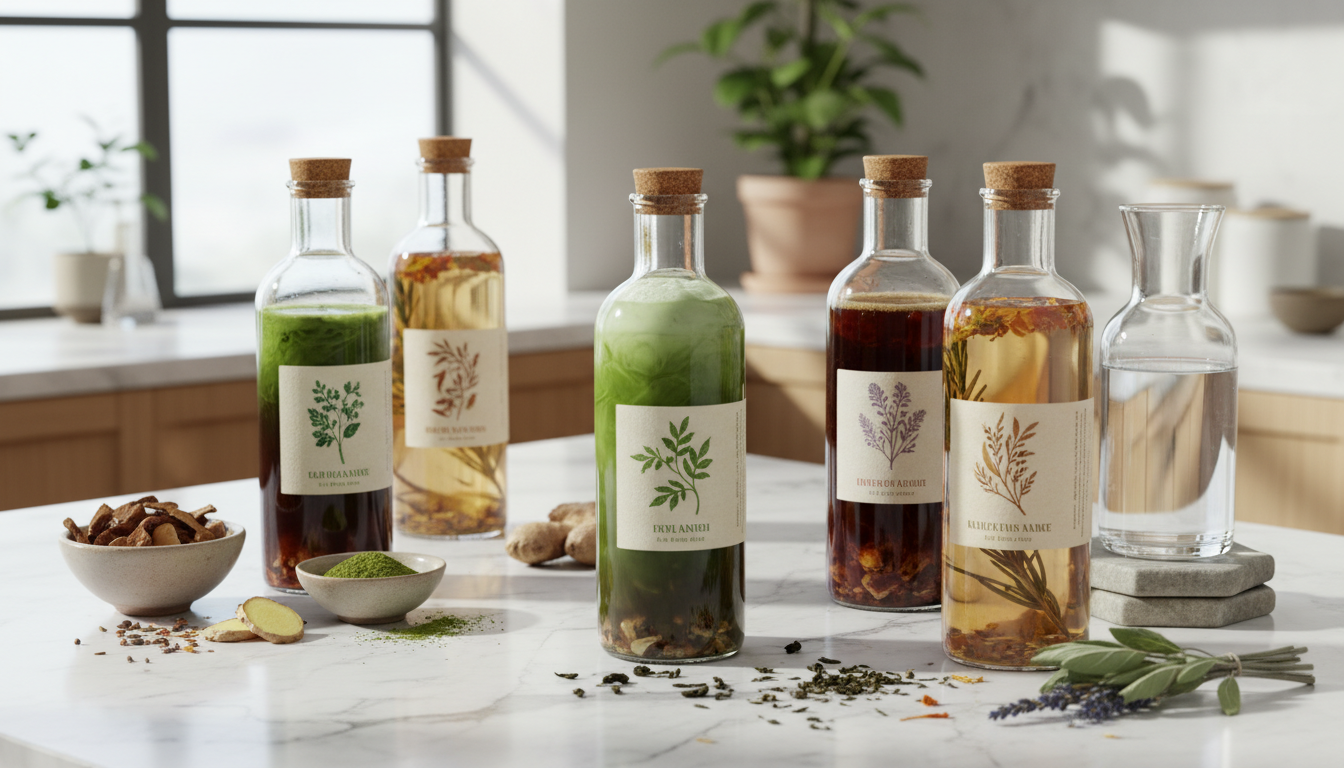
Alcohol is taking a backseat as the “sober-ish” movement gains momentum, particularly among younger demographics. This has paved the way for functional beverages infused with adaptogens like ashwagandha, rhodiola, and holy basil. These ingredients promise to reduce stress and boost mood without the hangover. The adaptogenic drinks market alone is expected to surge, with sales already up by 257% over the last four years.
This trend dovetails with the rise of Sparkling Tea. As a non-alcoholic alternative to wine or cocktails, sparkling teas offer complex, fermented flavor profiles that satisfy the need for a celebratory drink. It satisfies the craving for innovative flavors without the alcohol content, perfectly positioning itself for social occasions in a health-first world.
The Rise of Meal Drinks and Protein
Efficiency is currency. Nutritional meal drinks are evolving to meet the demands of a fast-paced society, with the global market projected to grow at a CAGR of 8.6%. These aren’t the chalky shakes of the past; they are sophisticated, nutrient-dense solutions often enhanced with botanicals like turmeric for gut health.
Similarly, plant-based drinks and RTD (Ready-to-Drink) milk teas are seeing a 133% growth in new product launches. The emphasis is heavily on protein content, transforming a simple latte into a nutritional powerhouse.
Flavor Complexity: From Swicy to Savory
The palate of 2025 is adventurous. We are moving away from monochromatic sweetness toward complex, layered profiles. “Swicy”—the fusion of sweet and spicy—is dominating, with ingredients like cayenne and ginger adding a fiery kick to fruit-based drinks. Simultaneously, savory notes are entering the mainstream, with pickle margaritas and mushroom-infused coffees challenging traditional flavor boundaries.
To illustrate the stark contrast between past preferences and current demands, consider the evolution of key beverage categories:
| Category 🏷️ | Traditional View 🕰️ | 2025 Big Sip Trend 🚀 |
|---|---|---|
| Soda | High sugar, artificial flavors | Low sugar drinks, prebiotic infusions, homemade craft sodas 🥤 |
| Tea | Simple bags, hot water | Sparkling, nitrogen-infused, adaptogenic blends 🍵 |
| Dairy | Standard cow’s milk | High-protein RTD, sophisticated plant-based drinks, milk tea varieties 🥛 |
| Alcohol | Beer, Wine, Spirits | Zero-proof spirits, botanical mocktails, hop-infused waters 🌿 |
Technology and Market Growth
The rapid evolution of these trends is underpinned by advanced analytics and technology. Companies are leveraging data to predict the next viral flavor before it hits the shelves. For instance, understanding how regional economic shifts influence consumption requires robust analysis, similar to how innovation empowers economic growth nationwide. This technological backbone ensures that supply chains can adapt to the sudden demand for niche ingredients like elderflower or ashwagandha.
Furthermore, the precision required to formulate these complex beverages—balancing taste with functional efficacy—often relies on sophisticated modeling. This is akin to the meticulous nature of optimizing prompts for AI to generate the best results; manufacturers optimize recipes to hit the perfect sensory and nutritional notes for the modern consumer.
Essential Ingredients Defining 2025
The “Big Sip” is physically constructed from a specific set of raw materials that signal quality and function to the consumer. These ingredients are non-negotiable for brands looking to stay relevant.
* 🍄 Functional Fungi: Reishi, Lion’s Mane, and Chaga are ubiquitous in coffee and cocoa alternatives for cognitive support.
* 🌶️ Heat Elements: Capsaicin from peppers and ginger root provide the “swicy” sensation that drives engagement.
* 🌸 Botanical Florals: Lavender, Hibiscus, and Elderflower offer natural sweetness and relaxation benefits, vital for low sugar drinks.
* 🦴 Bone Broth: Moving beyond soup, this is now a savory, protein-rich sipping beverage, often infused with herbs.
* 🍵 Matcha & Tea Bases: High-grade matcha and fermented tea leaves form the base of the energy drink alternative market.
The trajectory for 2025 is clear: the beverage industry is no longer just about thirst. It is about identity, health, and the environment. Brands that fail to integrate sustainable packaging or ignore the demand for functional benefits will likely be left behind. The “Big Sip” is a holistic experience, blending the best of the past with the nutritional science of the future.
What defines the ‘Big Sip’ trend in 2025?
The ‘Big Sip’ refers to the convergence of nostalgia, functional wellness, and experiential drinking. It represents a shift where beverages are chosen for their ability to evoke memories (nostalgia), improve health (functionality), and offer unique flavors, often driven by social media trends.
Are high-sugar drinks still popular in 2025?
While sugary drinks exist, the dominant trend is towards low-sugar or no-sugar options. Consumers are increasingly health-conscious, preferring natural sweeteners or botanical flavors like hibiscus and lavender to provide taste without the caloric load.
What is a ‘Swicy’ drink?
‘Swicy’ is a popular flavor profile in 2025 that combines sweet and spicy elements. Examples include carbonated fruit drinks infused with cayenne pepper or ginger, offering a bold and complex sensory experience that appeals to adventurous palates.
How are plant-based drinks evolving?
Plant-based drinks are moving beyond simple dairy alternatives to become functional powerhouses. In 2025, the focus is on high-protein content, ready-to-drink (RTD) milk teas, and blends that incorporate vitamins and minerals to compete directly with traditional nutritional supplements.

Max doesn’t just talk AI—he builds with it every day. His writing is calm, structured, and deeply strategic, focusing on how LLMs like GPT-5 are transforming product workflows, decision-making, and the future of work.

Comments are closed