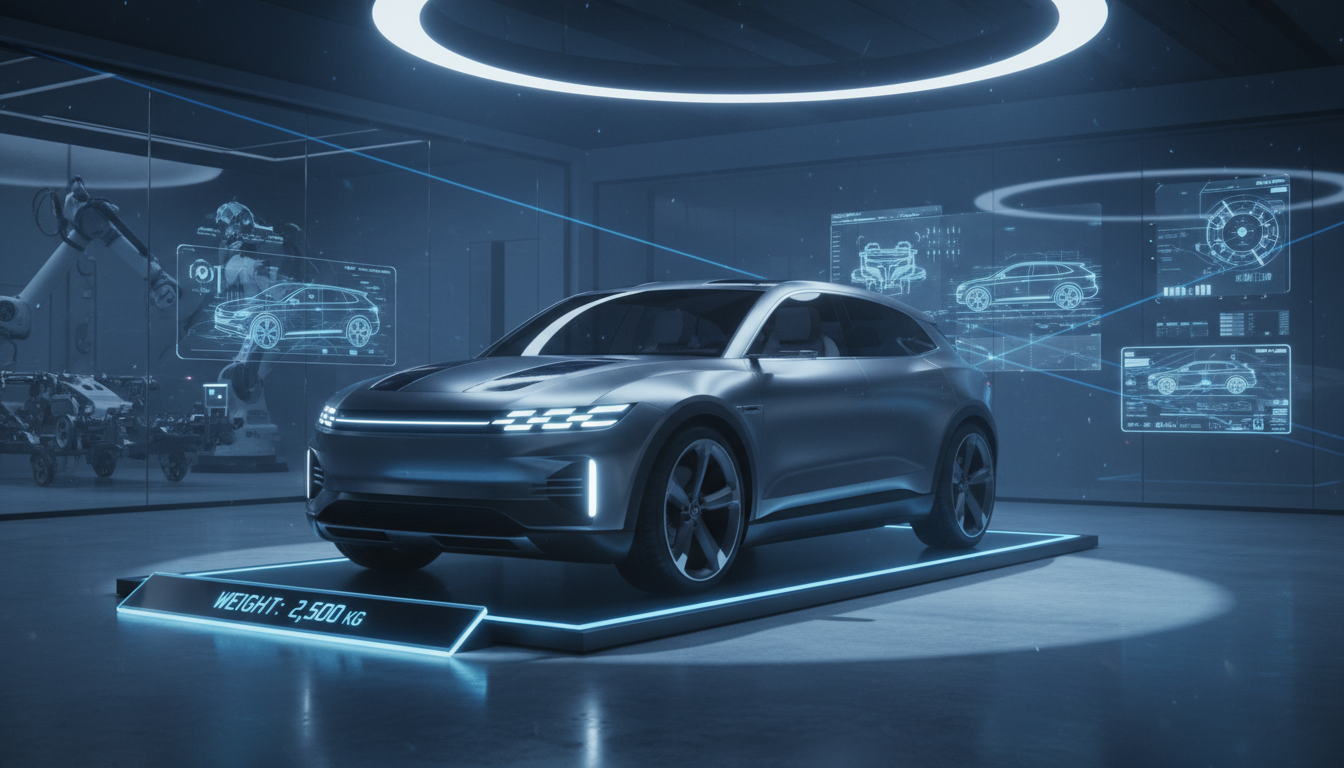
The Heavy Truth: Average Car Weight Analysis for 2026
Every time a driver steps on the gas, they are moving thousands of pounds of steel, aluminum, and glass. The question of how much does a car weigh is not just trivia for gearheads; it is a fundamental metric defining safety, fuel efficiency, and handling dynamics. As we navigate through 2026, the data reveals a significant trend: vehicles are getting heavier. According to recent EPA records, the average vehicle mass has climbed to approximately 4,419 pounds (2,004 kg), a stark contrast to the lighter machines of previous decades.
This “vehicle bloat” is driven by a convergence of consumer demand for comfort, stringent government safety mandates, and the electrification of the automotive industry. Just as a fitness enthusiast might consult a muscle growth guide to understand bulk, automotive engineers are managing the increased bulk of modern transport. The implications of this weight gain ripple through every aspect of the driving experience, from the pump to the pavement.

Breaking Down Average Vehicle Weights by Type
Not all vehicles impact the asphalt with the same force. The disparity between a nimble city commuter and a heavy-duty hauler is massive. Understanding these categories is essential for buyers comparing performance and efficiency. In the current market, car weight statistics show a clear hierarchy based on body style and purpose.
Below is a detailed breakdown of what consumers can expect regarding average vehicle mass in the 2025-2026 landscape:
| Vehicle Category 🚙 | Weight Range (Lbs) ⚖️ | Weight Range (Kg) 🌍 | Primary Weight Factors 🔧 |
|---|---|---|---|
| Smart / Micro Cars | 1,800 – 2,200 | 816 – 1,000 | Minimal frame, small engine, two seats |
| Compact Sedans | 2,600 – 3,000 | 1,179 – 1,361 | Unibody construction, 4-cylinder engines |
| Midsize Sedans | 3,676 – 3,900 | 1,667 – 1,769 | Enhanced safety cages, tech integration |
| Compact SUVs | 3,000 – 3,500 | 1,361 – 1,588 | AWD systems, taller suspension |
| Large SUVs | 5,400 – 6,000 | 2,449 – 2,722 | 3rd-row seating, heavy chassis, V8/Hybrid |
| Electric Vehicles (EVs) | 3,500 – 6,500+ | 1,588 – 2,948 | High-density battery packs, reinforced structures |
| Pickup Trucks | 5,000 – 8,000+ | 2,268 – 3,628 | Steel frames, towing equipment, off-road gear |
The gap between segments is widening. While a subcompact remains relatively light, the surge in popularity for trucks and SUVs pushes the national average higher. High-end automakers, including prominent Mercedes-Benz manufacturers, balance this by utilizing advanced composites, but luxury features inevitably add pounds.

The Electric Elephant in the Room: EV Battery Impact
The transition to electric mobility is the single largest contributor to the recent spike in car mass 2025 data. While electric motors are relatively compact, the energy storage systems required to power them are incredibly dense. A typical long-range battery pack can weigh anywhere from 1,000 to nearly 3,000 pounds on its own. This is dead weight that the suspension, brakes, and tires must manage constantly.
Battery chemistry remains the focal point of weight reduction efforts. Current lithium-ion technology, while efficient, requires heavy protective encasing to prevent puncture and thermal runaway. Engineers are racing to develop solid-state batteries, which promise higher energy density at a lower mass. Until that technology matures, vehicle mass for EVs will likely remain significantly higher than their internal combustion counterparts.
Safety Paradox: Heavier but Deadlier?
Physics dictates that in a collision between two objects, the heavier one exerts more force. Consequently, occupants in heavier vehicles often fare better in crashes. However, this creates an aggressive environment for lighter cars, pedestrians, and cyclists. Research suggests that for every 1,000 pounds of added weight, the probability of fatality in the opposing smaller vehicle increases by nearly 47%.
To mitigate this, regulatory bodies use a rigorous grading system to evaluate crash compatibility, forcing manufacturers to design crumple zones that absorb energy rather than deflect it. Modern vehicle weight guides emphasize that while mass provides protection, it also increases stopping distances and kinetic energy, demanding more robust active safety systems like automatic emergency braking.
Decoding the Jargon: Curb Weight vs. GVWR
Navigating the technical specifications in an owner’s manual can feel like studying AP World flashcards 2025; there is a lot of terminology to memorize. However, confusing these numbers can lead to dangerous situations, particularly when hauling cargo or towing.
- Curb Weight: This is the car weight as it sits on the dealership lot—full of fluids (oil, coolant, fuel) but completely empty of passengers and cargo. It is the baseline “ready to drive” mass.
- Gross Vehicle Weight Rating (GVWR): This is the absolute maximum limit. It includes the curb weight plus the driver, passengers, luggage, and the tongue weight of a trailer. Exceeding this is illegal and unsafe.
- Payload Capacity: The difference between the GVWR and the Curb Weight. This is the “usable” weight you can put inside the car.
- Gross Combined Weight Rating (GCWR): The maximum allowable weight of the vehicle plus a loaded trailer.
If you ignore these limits, you risk blown tires, transmission failure, and compromised braking. It is crucial to check the sticker inside the driver’s door jamb, which lists these specific limits for your exact VIN configuration.

Performance and Maintenance Implications
A heavy car handles differently. The inertia generated by a 5,000-pound SUV resists turning, leading to “understeer,” where the vehicle wants to push straight in a corner. Manufacturers counter this with sophisticated suspension tuning and wider tires, but physics always wins eventually. This increased mass also accelerates wear and tear on consumable parts.
Tires suffer the most. The friction required to accelerate and decelerate a heavy average vehicle mass generates immense heat and degrades rubber compounds faster. A set of tires that might last 50,000 miles on a sedan might only last 30,000 miles on a heavy electric crossover. Furthermore, brake pads and rotors face higher thermal stress, necessitating more frequent replacements.
With the integration of AI in vehicles, from simple lane assist to full autonomy, the computing hardware also adds weight. While it might seem negligible, the miles of copper wiring and sensors add up. Just as we analyze tech trends like ChatGPT vs Llama3 2025 for their software capabilities, engineers must account for the physical weight of the hardware running these systems.
What is the average car weight in 2026?
While data fluctuates, the average vehicle weight is hovering around 4,400 pounds (approx. 2,000 kg), heavily influenced by the sales dominance of SUVs and the increasing market share of electric vehicles.
Why are electric cars so much heavier?
The primary culprit is the battery pack. To achieve acceptable driving ranges (300+ miles), EVs require massive lithium-ion batteries that can weigh between 1,000 and nearly 3,000 pounds, far exceeding the weight of a standard engine and fuel tank.
Does car weight affect fuel efficiency?
Yes, significantly. A heavier vehicle requires more energy to accelerate and overcome rolling resistance. Generally, for every 100 pounds added, fuel economy drops by about 1-2%. This applies to both gas mileage and electric range.
Where can I find the exact weight of my car?
You can find the precise Curb Weight and GVWR on the compliance label located on the driver’s side door jamb. Alternatively, this information is listed in the owner’s manual under ‘Specifications’.

Jordan has a knack for turning dense whitepapers into compelling stories. Whether he’s testing a new OpenAI release or interviewing industry insiders, his energy jumps off the page—and makes complex tech feel fresh and relevant.

No responses yet