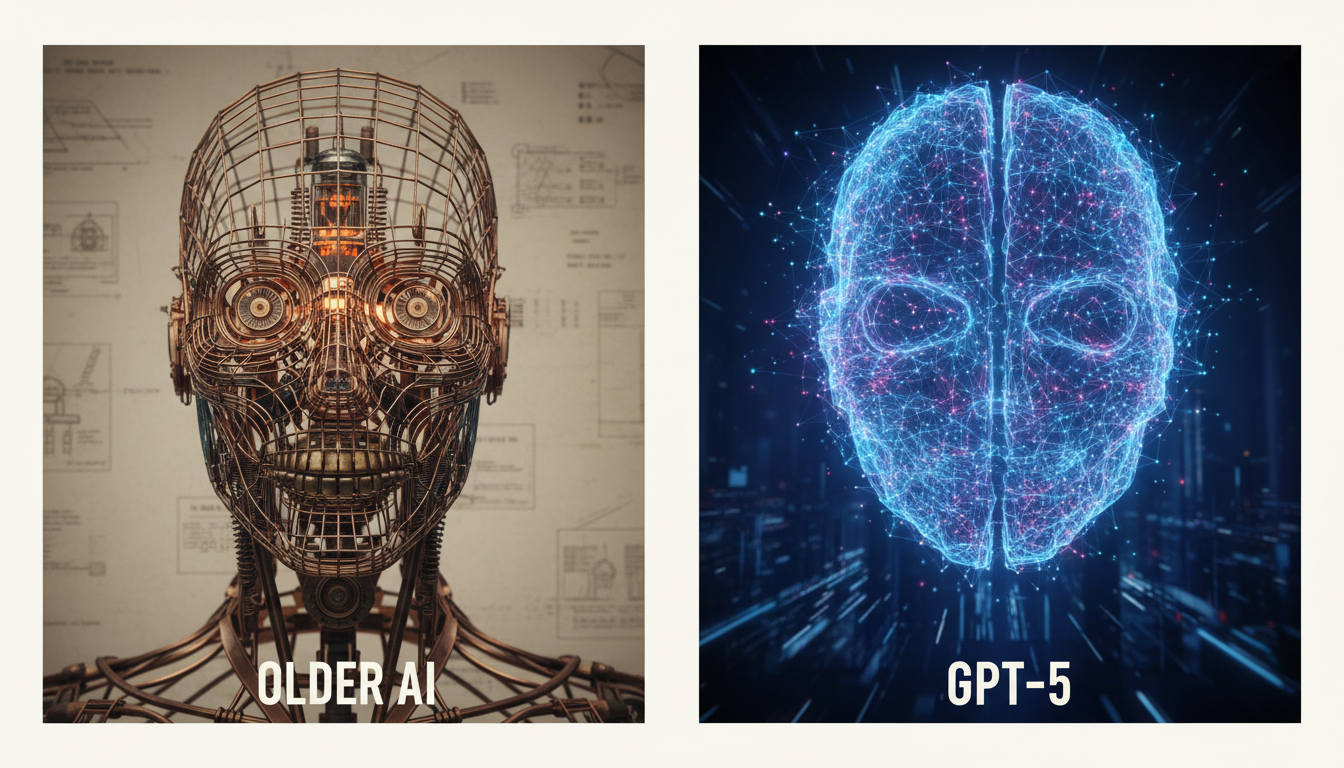
The Evolution from GPT-3.5 to the GPT-5 Era: A New Standard in AI Models
The landscape of artificial intelligence has undergone a seismic shift. While GPT-3.5 served as the reliable workhorse that introduced the world to generative AI, the ecosystem has rapidly matured. As we navigate through late 2025 and into 2026, the comparison between the legacy architecture of 3.5 and the newly released GPT-5 highlights a massive leap in capability. OpenAI has officially moved beyond simple text prediction into the realm of complex reasoning, redefining what users expect from technology.
For years, users had to choose between speed and intelligence. GPT-3.5 was fast but lacked depth. The latest iteration, however, obliterates this trade-off. CEO Sam Altman has described the new system as having a “PhD-level expert in your pocket,” signaling that machine learning has graduated from basic conversational skills to high-level problem solving. This isn’t just an update; it is a fundamental restructuring of how we interact with digital intelligence.

Breaking Down the Intelligence Gap: Accuracy and Hallucinations
One of the most critical distinctions lies in reliability. Legacy AI models like GPT-3.5 were notorious for “hallucinations”—confidently stating false information. The new standard has aggressively tackled this issue. By utilizing advanced natural language processing techniques, the latest model boasts 45% fewer factual errors compared to previous iterations like GPT-4o, specifically when web search is enabled. This leap in accuracy transforms the tool from a creative writer into a trustworthy research assistant.
The improvement in logic is even more stark. When tested against complex reasoning benchmarks, the system demonstrated 80% fewer reasoning mistakes than OpenAI’s experimental “o3” model. This precision is vital for professional applications where error margins are non-existent. For instance, in advanced mathematics, the model scored a staggering 94.6% on the AIME 2025 benchmark, a feat that older models could effectively never achieve without external plugins.

The Adaptive Router: How Modern ChatGPT Thinks
The most significant architectural change distinguishing the current experience from the GPT-3.5 era is the introduction of a dynamic “router.” Previously, users interacted with a static model. Now, ChatGPT operates as an adaptive system that assesses the complexity of a query in real-time. This eliminates the friction of manually selecting a model version, a common pain point in the past.
This intelligent routing system ensures that computing power is allocated efficiently, switching seamlessly between two distinct modes of operation:
- ⚡ Fast Mode: Designed for instant gratification, this mode handles simple queries, emails, and basic facts with the speed users loved in GPT-3.5 but with vastly superior comprehension.
- 🤔 Deep Reasoning Mode: Triggered for complex problems—or forced by the user with prompts like “think hard about this”—this mode engages extensive chain-of-thought processing to solve logic puzzles, coding challenges, or scientific queries.
- 🔄 Continuous Learning: Unlike static legacy models, this system actively learns from user feedback and interactions to refine its routing logic over time.
Vibe Coding: The Next Frontier in Software Development
For developers, the gap between the generations is unbridgeable. While older language generation tools could write snippets of code, the new “Vibe Coding” capability allows for the generation of complete software applications from a single prompt. Early testers using platforms like Cursor and Vercel have reported a significant drop in bugs, attributed to the model’s ability to maintain context over long strings of code.
Scoring 74.9% on SWE-bench, the model demonstrates a proficiency that rivals human software engineers in specific tasks. It is no longer just about syntax suggestion; it is about architectural understanding. This evolution positions artificial intelligence not just as a tool for writing code, but as a partner in software engineering.
Accessibility and Safety: Redefining the Free Tier
Perhaps the most disruptive move by OpenAI in this cycle is the democratization of high-end intelligence. Historically, the best models were locked behind paywalls, leaving free users with the capable but limited GPT-3.5. That barrier has been dismantled. The cutting-edge GPT-5 model is now available to all users, including those on the free tier, fundamentally changing the landscape of AI differences across socioeconomic lines.
| User Tier 👤 | Access Level 🔑 | Reasoning Capabilities 🧠 |
|---|---|---|
| Free Users | Access to GPT-5 (with usage caps) | Standard reasoning, downgrades to GPT-5 mini after cap |
| Plus Subscribers | Higher usage limits | Enhanced stability and faster response times |
| Pro Users | Unlimited GPT-5 access | Access to GPT-5 Pro with superior deep reasoning |
Alongside access, safety protocols have evolved. The era of blanket refusals—where the AI would simply say “I cannot answer that”—is fading. The new “Safe Completions” protocol ensures that ChatGPT attempts to provide helpful, safe responses rather than shutting down completely. This nuance allows for more productive discussions on sensitive topics without compromising safety standards, a balance that GPT-3.5 struggled to maintain.
Is GPT-3.5 still available for use in 2026?
While GPT-3.5 legacy endpoints may exist for specific API implementations, the consumer interface of ChatGPT has fully transitioned to the newer GPT-5 architecture, even for free users, rendering GPT-3.5 obsolete for general chat.
How does the ‘Deep Reasoning’ mode differ from standard responses?
Deep Reasoning mode engages a ‘chain-of-thought’ process where the AI takes more time to analyze the query, break it down into steps, and verify its logic before answering, whereas standard mode prioritizes speed for simpler tasks.
Can the new model really replace human coding?
While it scores exceptionally high on coding benchmarks (74.9% on SWE-bench) and can generate full apps, OpenAI emphasizes it acts as a ‘PhD-level expert’ to assist developers rather than a complete replacement for human oversight and creativity.
Why did OpenAI make GPT-5 free?
To maintain market dominance and maximize data feedback loops, OpenAI released the model to all tiers. This ensures the router learns from a massive user base, improving the system faster than if it were restricted to paid users only.

Aisha thrives on breaking down the black box of machine learning. Her articles are structured, educational journeys that turn technical nuances into understandable, applicable knowledge for developers and curious readers alike.

No responses yet