OpenAI ChatGPT vs Google Bard (Gemini): Core Models, Real‑Time Reach, and What Changes Your Decision
The headline choice in AI solutions comes down to how OpenAI ChatGPT and Google Bard—now rebranded as Gemini—think, fetch, and reason. Under the hood, ChatGPT is powered by OpenAI’s latest GPT-4 class systems, with GPT‑4o pushing multimodal reasoning and creative generation, while Google’s Gemini family emphasizes natively multimodal design, live web context, and tight integration across Search and Workspace. For a marketing team or a solo creator, this isn’t academic. The right mix of natural language processing, browsing, and memory will change the output quality, revision cycles, and ultimately the cost per deliverable.
Consider a recurring scenario: Rhea, a content lead at a SaaS startup, needs a weekly thought‑leadership post plus a fast news brief for the Monday standup. Gemini’s live access to Google’s index reduces research friction, surfacing sources and snippets in seconds. ChatGPT, meanwhile, tends to craft more nuanced long‑form drafts with stronger stylistic control. Both can be configured with guardrails and persistent instructions, yet their bias in strengths—recency versus creative depth—shows up immediately in real work.
Benchmarks and model names don’t tell the whole story. What matters is whether a chatbot can reason across multiple paragraphs, cite sources, and adapt tone without nudging. In many teams, the “aha” moment comes from a simple A/B test: ask each model to outline a 1,200‑word blog plan referencing last week’s news, then expand section two into draft copy. Gemini often excels at current references and linkable facts; ChatGPT often reads more like a human editor already workshopping the narrative.
Curious users often search for a direct Google Gemini vs ChatGPT comparison to confirm these patterns. Recent analyses back up a practical split: choose live web synthesis when freshness is non‑negotiable and choose structured, voice‑consistent generation when storytelling and style are king. That said, ChatGPT’s rapid evolution and Gemini’s iteration cadence keep narrowing gaps every quarter. Legal and governance questions matter too; tracking ongoing matters like the OpenAI ChatGPT legal battle helps leaders weigh risk and policy needs.
What really differentiates Bard/Gemini and ChatGPT in 2025
- 🧠 Reasoning flavor: ChatGPT leans into narrative structure and meticulous synthesis; Gemini leans into fast, source‑supported answers.
- 🌐 Recency: Gemini’s live Search integration suits breaking topics; ChatGPT browsing is capable but less native to Google’s index.
- 🎨 Voice & style: ChatGPT often feels more “editorial,” useful for content teams and creative briefs.
- 🧩 Ecosystem pull: Gemini thrives inside Gmail/Docs/Sheets; ChatGPT shines with APIs, custom GPTs, and automation stacks.
- 🔒 Governance: Both offer enterprise controls; policy and data residency needs should drive vendor due diligence.
| Dimension 🔎 | OpenAI ChatGPT ✨ | Google Bard (Gemini) ⚡ |
|---|---|---|
| Model family | GPT‑4 class (GPT‑4o) | Gemini Pro/Ultra |
| Recency & web | Browsing capable; Bing‑backed | Native Google Search links |
| Multimodality | Vision + image generation via DALL·E | Natively multimodal with Imagen‑powered visuals |
| Tone control | Highly adaptable long‑form style 🎙️ | Concise, fact‑forward by default 📚 |
| Integrations | Rich API, custom GPTs, plugins | Deep Workspace extensions (Gmail, Docs) |
| Best for | Creative long‑form, coding, brainstorming | Real‑time research, briefs, summaries |
For teams weighing AI comparison research, two quick resources help calibrate expectations: a pragmatic rundown of Gemini 3 vs. ChatGPT and a survey of Microsoft Copilot vs ChatGPT for Microsoft‑centric stacks. The bottom line for technology choice remains simple: match the model to the workflow edge—recency for speed, reasoning for depth.
AI Usability and Integrations: Where Productivity Is Won (or Lost)
All the model horsepower in the world can’t fix a clumsy workflow. AI usability—how quickly a team gets from prompt to publish—depends on interface clarity, context persistence, and integrations. Gemini’s advantage is straightforward: many professionals already live in Gmail, Docs, Sheets, and Meet. Summarizing a long email thread and drafting a reply without switching tabs smashes friction. ChatGPT counters with a vibrant ecosystem of custom GPTs, an API that plays nicely with automation tools, and a broader community sharing prompt patterns.
The “ecosystem trap” sneaks up on organizations. A content manager may flip between Gemini for meeting summaries and ChatGPT for voice‑consistent drafting, copying and pasting across windows. This context switching kills “flow state,” scatters source trails across multiple chat histories, and complicates auditing. A neutral, extensible workspace—whether an internal platform or a third‑party AI office—can route requests to the best engine for the job while keeping everything in one place with policy controls. That solves fragmentation without forcing a single‑vendor lock‑in.
When email deliverability hiccups appear, practical know‑how matters. Guides such as a quick fix for Gmail “Queued” messages save time and keep teams focused on creative work rather than troubleshooting. Similarly, leaders often ask which vendor roadmap aligns with their stack. A helpful explainer on OpenAI vs Anthropic in 2025 provides broader context for risk posture and feature velocity.
Integration playbook for fewer clicks and fewer errors
- 🧭 Stay where you work: If your day is 80% in Google Workspace, Gemini’s extension layer is a force multiplier.
- 🔌 Automate repeatables: ChatGPT’s API plus Zapier/Make can eliminate rote paste‑jobs across CMS, CRM, and analytics.
- 🧷 Centralize artifacts: Use one repository for prompts, outputs, citations, and approvals to keep governance tidy.
- 🛡️ Privacy forward: Lock down sensitive fields and define red‑flag topics that trigger human review.
- 📈 Instrument outcomes: Track revision counts and time‑to‑publish to quantify productivity gains.
| Workflow 🚀 | ChatGPT Edge ✨ | Gemini Edge ⚡ | Tip 💡 |
|---|---|---|---|
| Email + Docs | Strong drafting & tone control | One‑click Gmail/Docs actions | Use Gemini drafts, refine in ChatGPT for polish |
| Research | Great synthesis of longer briefs | Fast links to current sources | Start in Gemini, synthesize in ChatGPT |
| Automation | API + custom GPTs 🤖 | Workspace extensions 📎 | Pick based on your stack’s center of gravity |
| Governance | Fine control via API | Domain policies in Google Admin | Centralize audit logs |
For a deeper dive into the shifting landscape, see this roundup of agentic AI features and a balanced Gemini vs ChatGPT look. When integrations are aligned to real habits, AI solutions fade into the background and productivity takes the spotlight.
Video walk‑throughs help teams visualize click‑paths and decision points before rolling AI into daily rituals. The next consideration is output quality across creative writing, code, and multimodality.
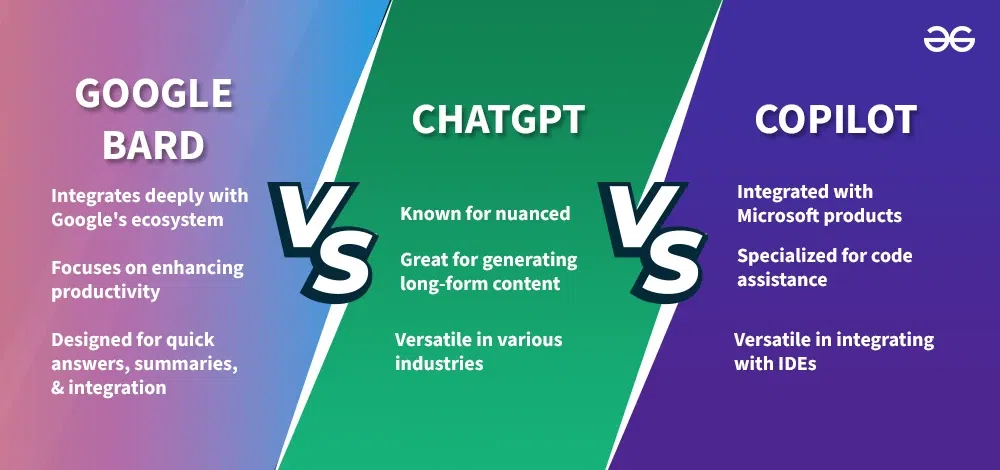
Creativity, Coding, and Multimodal Workflows: Which Assistant Wins Which Task?
Creativity has become a battleground where chatbot technology proves its mettle. Marketers value on‑brand voice; engineers want precise code and solid explanations; analysts need charts, citations, and auditability. In side‑by‑side tests, ChatGPT often delivers a more lyrical, structured narrative for blogs, scripts, and ad copy. Gemini strikes quickly with crisp summaries and up‑to‑the‑minute references, often linking sources inline. The takeaway: match the AI to the deliverable’s success metric—voice fidelity or time‑to‑truth.
For coding, the gap is thin. Both produce runnable snippets, convert between languages, and debug with reasoned steps. Development environments and ecosystem knowledge tip the scales. Android, Google Cloud, or Apps Script workflows tend to benefit from Gemini’s “home field” intuition. Cross‑stack prototypes, data‑transformation scripts, and multi‑framework docs often feel smoother with ChatGPT’s step‑by‑step explanations and iterative refinement style.
Multimodality also shapes the choice. ChatGPT combines GPT‑4‑level reasoning with image analysis and DALL·E‑based generation, strong for creative ideation and visual briefs. Gemini’s natively multimodal architecture keeps images and text in one cognitive loop, beneficial for product teams analyzing screenshots, charts, or UI mocks alongside requirements. For a quick pulse on current capabilities, see this evolving Gemini 3 comparison and the broader ChatGPT vs Claude 2025 landscape that informs buyer alternatives.
Field‑tested prompts and practical outcomes
- 📝 Campaign taglines: Ask for 10 options, then request rewrites in three brand voices—ChatGPT typically nails tone consistency.
- 📰 Breaking news digest: Request 5 headlines with timestamped sources—Gemini’s Search links speed validation.
- 💻 Code translation: Convert Python → TypeScript and add unit tests—both perform well; pick based on your IDE and cloud stack.
- 🖼️ Visual briefs: Upload a screenshot + ask for UX copy variants—Gemini’s seamless multimodality keeps context intact.
- 📊 Data storytelling: Have the AI draft a chart narrative from pasted CSV summaries—ChatGPT often writes a more cohesive narrative.
| Task 🎯 | Leaning Winner 🏆 | Why It Matters 🔍 | Helpful Link 🔗 |
|---|---|---|---|
| Long‑form creative | ChatGPT | Rich voice, narrative cohesion | Evolution of ChatGPT |
| Real‑time digest | Gemini | Faster sourceable updates | Gemini vs ChatGPT |
| Cloud‑specific code | Gemini | Native Google tooling familiarity | Copilot vs ChatGPT |
| Cross‑stack prototyping | ChatGPT | Explanatory reasoning, refactors | OpenAI vs Anthropic |
One more angle matters: culture and safety. Reports about mental health risks in online systems and coverage of NSFW AI trends remind leaders to set boundaries, deploy filters, and train teams on red‑line topics. Creativity thrives with constraints; governance just keeps it publishable.
With core content, code, and multimedia clear, the next question is whether general chatbots are enough for your pipeline—or if specialized tools add unfair advantages.
Beyond the Two‑Horse Race: Specialized AI Solutions for Video, Design, and Research
General chat assistants redefine writing, coding, and research. Yet entire industries are leaping ahead with specialized AI solutions built for visuals, motion, and domain workflows. In video, platforms modeled after film pipelines provide features chatbots can’t replicate at production quality: multi‑image fusion for character consistency, scene‑to‑scene continuity, and directorial controls. These systems often bundle 100+ models—think Flux‑style photorealism, Runway‑class cinematic motion, and Sora‑like long‑form coherence—selectable per shot, not just per project.
Imagine a boutique studio producing a 60‑second product trailer. A specialized video platform lets creators set a look bible, lock character anchors, and apply a “director” agent to guide pacing, lenses, and transitions. That kind of orchestration saves days, not hours. It also opens monetization: creators can train and publish models, earn credits when others license them, and iterate based on community feedback. While ChatGPT and Gemini can generate scripts and shot lists, the rendering, consistency, and camera literacy live in these purpose‑built tools.
Specialization isn’t limited to video. Interior design, fashion, and product visualization benefit from AI that understands materials, lighting, and spatial logic. A practical primer on AI applications in interior design shows how briefs become mood boards and annotated floor plans, trimming discovery time. On the infrastructure side, industry collaborations—such as NVIDIA’s smart city initiatives—signal where heavy compute and machine learning pipelines are heading next: real‑time perception and simulation at urban scale.
When specialized trumps general—signals to watch
- 🎬 Visual continuity is non‑negotiable: Character persistence, scene blocking, and camera language require film‑aware tooling.
- 🧱 Asset libraries and model training: In‑platform training and marketplace licensing create compounding advantages.
- 🧪 Domain semantics: Materials, lighting, compliance rules—specialized models internalize constraints generalists miss.
- 📡 Latency vs. quality controls: Shot‑level model switching beats one‑size‑fits‑all generation.
- 🧭 Governance & audit: Project‑level logs and rights management simplify approvals and handoffs.
| Need 🎯 | General Chatbots (ChatGPT/Gemini) 💬 | Specialized Platforms 🎥 | Outcome 📈 |
|---|---|---|---|
| Script & brief | Excellent outlines and dialogue | Storyboards linked to shot specs | Faster pre‑production |
| Visual consistency | Limited control via prompts | Multi‑image fusion + anchors 🔗 | On‑model characters every scene |
| Direction | Text suggestions | Agent “director” for pacing/camera 🎬 | Film‑grade coherence |
| Monetization | Indirect via content | Model marketplace & credits 💳 | Creator revenue flywheel |
Specialization also extends to research copilots, resume builders, and HR workflows. Teams evaluating hiring pipelines can test free AI resume tools and scan the top AI resume picks to accelerate shortlists responsibly. Meanwhile, engineering leaders exploring simulation‑heavy R&D can glean ideas from NVIDIA’s AI physics in aerospace and automotive. The signal is loud: pick generalists for breadth, specialists for advantage.
Decision Playbook: A Clear Framework for Technology Choice in 2025
Leaders juggle two calendars: ship dates and AI trends. A durable framework cuts through hype and guides day‑to‑day choices across content, code, support, and operations. Start by auditing tasks by outcome. If freshness and sourceability decide success, tilt toward Gemini. If tone, structure, and long‑form reasoning decide success, tilt toward ChatGPT. For domain‑specific outputs—video with character continuity, spatial layouts, or simulation—layer a specialized platform alongside your general assistant.
Budget, governance, and team training are the next levers. Premium tiers from each vendor hover around the same monthly price point, so the real cost is integration time and context switching. Consolidate where possible, and complement with a neutral hub if multiple engines are necessary. When comparing broader ecosystems, perspective pieces like OpenAI vs Anthropic and pragmatic buyer guides such as Gemini vs ChatGPT help set expectations.
Practical steps and pitfalls to avoid
- 🧪 Pilot with real workloads: Run a two‑week head‑to‑head on your top three deliverables and measure edits, citations, and publish time.
- 🧰 Build prompt libraries: Store tried‑and‑true prompts with examples; teach teams how and when to switch engines.
- 🧯 Hallucination handling: Require citations for facts; flag high‑risk outputs for human review to maintain trust.
- 🔐 Policy & privacy: Define PII handling, log retention, and vendor data usage clearly before scale‑up.
- 📚 Upskill continuously: Share wins and misses in weekly “AI office hours” so knowledge compounds.
| Tier 💼 | ChatGPT Plan 🧩 | Gemini Plan 🧷 | Notes 🗒️ |
|---|---|---|---|
| Free | GPT‑3.5 / limited GPT‑4o | Gemini Pro | Good for trials and light tasks |
| Premium | GPT‑4o, custom GPTs, tools | Gemini Advanced / Ultra, Workspace | Keep an eye on usage caps |
| Enterprise | Admin controls, SSO, audit | Admin console, DLP, Vault | Map to your compliance needs |
Evaluation doesn’t happen in a vacuum. Market scanning—like tracking legal developments or reading comparative pieces on ChatGPT vs Claude—keeps your roadmap resilient. For operations teams, articles on automated failure attribution illustrate how AI reduces MTTR in production. And for people ops, exploring resume tooling ensures time savings without sacrificing fairness. The north star never changes: use the right model for the right moment, then remove every unnecessary click between idea and output.
Real‑World Scenarios: Matching Use Cases to the Right Assistant Without Guesswork
Decision fatigue fades when concrete scenarios map to crisp choices. Below are situational playbooks collected from field teams that ship daily. Each example pairs a goal with a recommended assistant and a “why” rooted in capability, not hype. Use these as jump‑off points to build your organization’s own matrix and standard operating prompts.
Scenario 1—B2B blog with citations: The content goal is authority and clarity. Start in Gemini to pull three current, linkable sources and a summary. Then switch to ChatGPT to expand a structured outline into a voice‑consistent draft with strong transitions. This two‑step flow keeps facts fresh and prose polished. For further benchmarking, scan up‑to‑date rundowns like Gemini vs ChatGPT models to tune expectations.
Scenario 2—Customer support macros: Turn noisy ticket logs into clean macros. ChatGPT tends to produce crisp, empathetic tone for macros and triage scripts. Gemini can power a daily issue brief with live links to docs and release notes. As a side note, if email queue issues derail response time, a quick read on Gmail queue behavior helps stabilize SLAs.
Scenario‑by‑scenario guidance that teams can apply today
- 📣 PR monitoring: Gemini for live sentiment and media links; ChatGPT to draft the reactive statement in brand voice.
- 🛠️ Dev onboarding: ChatGPT to explain architecture and codebase conventions; Gemini to surface current API changes.
- 🎯 Paid social variants: ChatGPT for 25 crisp ad lines with style constraints; Gemini to verify claims and pull fresh benchmarks.
- 🧩 Docs refactoring: ChatGPT to restructure a long Confluence page; Gemini to link to updated policies and external references.
- 🧪 Experiment logs: ChatGPT to narrate results and next steps; Gemini to attach relevant recent studies or changelogs.
| Use Case 🧭 | Pick ✅ | Reason 💡 | Add‑ons 🔗 |
|---|---|---|---|
| Live market brief | Gemini | Speed + source links | Deep dive |
| Thought‑leadership draft | ChatGPT | Voice & structure | Model evolution |
| Comparative research | Both | Gemini for sources, ChatGPT for synthesis | Landscape |
| Hiring ops | Specialized | Resume scoring and bias checks | Top resume tools |
Rounding it out, don’t ignore culture and safety. Coverage on risk signals in online products underscores the need for escalation paths and human‑in‑the‑loop review. AI moves fast, but the safeguard that matters most is a team trained to ask, “Should this be automated?” The best programs favor judgment first, automation second.
Is Google Bard the same as Gemini now?
Yes. Google rebranded Bard under the Gemini umbrella in 2024. In 2025, the public chatbot experience runs on Gemini models (Pro by default, Ultra on premium tiers). Feature emphasis: natively multimodal design and live Google Search context.
Which is better for real-time research versus creative writing?
For the latest facts and linkable sources, Gemini typically wins due to native Search integration. For long-form, voice-consistent writing and nuanced reasoning, ChatGPT often produces more polished drafts. Many teams use Gemini to gather sources and ChatGPT to synthesize them.
Do small teams need both ChatGPT and Gemini?
Not always. If your work is deeply embedded in Gmail/Docs/Sheets, Gemini Advanced may cover most needs. If creative long-form and coding depth dominate, ChatGPT Plus is often enough. When both strengths matter, consider a neutral workflow hub to reduce context switching.
How can hallucinations be minimized in production content?
Require citations for factual statements, route high-risk topics to human review, and keep a prompt library with verification steps. Establish a ‘no publish without source’ rule for data points and timestamps for news or market numbers.
Where do pricing and limits make the biggest difference?
Premium tiers are similarly priced, so the true cost is workflow time. Measure edits-per-draft, time-to-publish, and percent of outputs needing rework. Choose the assistant that reduces revisions on your core deliverables.

Jordan has a knack for turning dense whitepapers into compelling stories. Whether he’s testing a new OpenAI release or interviewing industry insiders, his energy jumps off the page—and makes complex tech feel fresh and relevant.

Comments are closed