OpenAI vs Jasper AI for Modern Content Creation in 2025: Capabilities and Core Differences
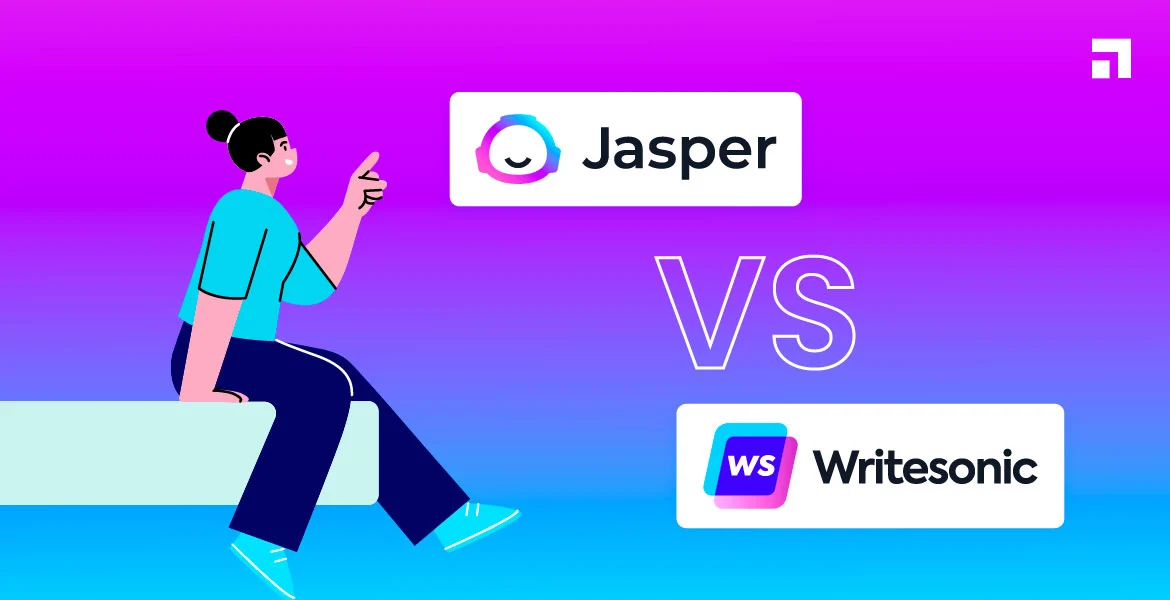
OpenAI and Jasper AI dominate discussions whenever teams assess AI content tools for scale, speed, and reliability. While both rely on advanced artificial intelligence and machine learning, their design philosophies diverge in ways that matter for daily content creation and editorial governance. OpenAI’s latest ChatGPT models, including GPT‑4o and GPT‑5.x tiers in certain regions, emphasize broad reasoning, multimodal inputs, and dynamic conversation. Jasper AI is purpose-built for marketers, offering guided templates, brand voice controls, and SEO-minded workflows that push teams to consistent, on-brand outputs across channels.
Consider a consumer gear marketplace launching a seasonal campaign. A conversational assistant from OpenAI can brainstorm 50 ad angles, synthesize competitor messaging, and turn analytics notes into crisp creative concepts in minutes. The same campaign in Jasper AI can move from outline to polished blog, landing page, and social captions with reusable structures, preconfigured tones, and collaboration-ready drafts. The difference is not “better vs worse,” but freeform ideation versus structured execution. Teams frequently pair them: ideate and analyze with ChatGPT, then standardize and publish with Jasper’s templated guardrails.
Model depth also impacts media versatility. OpenAI’s multimodal stack reads images, charts, and PDFs, and can propose code snippets or data transformations to support editorial apps. Jasper, by contrast, directs energy toward formats marketers ship every day—ad variants, subject lines, outlines, and long-form posts—plus integrations that elevate content marketing performance. For leaders comparing ecosystems, the essential question becomes: “Is the bottleneck ideas and analysis—or repeatable production?” Aligning that answer to the platform removes friction across the calendar.
Where Each Platform Shines in Daily Work
OpenAI’s flexible chat excels at research synthesis, reframing, and multi-turn reasoning. Jasper’s template library fast-tracks conversion-focused assets while preserving brand consistency. Both tools improve throughput, but the path they take is different by design.
- 🧠 OpenAI: best for brainstorming, analysis, code-adjacent tasks, and conversational drafting.
- 🚀 Jasper AI: best for ads, blog production sprints, on-brand tone reproduction, and SEO briefs.
- 🔎 Blend with research: compare Gemini/Bard vs ChatGPT and ChatGPT vs Claude to test edge cases.
- 📈 Market reality: see the roundup of top writing AIs in 2025 to benchmark maturity.
- ⚖️ Context matters: track OpenAI legal challenges that may shape policy and enterprise adoption.
| Dimension ⚙️ | OpenAI (ChatGPT) 🧠 | Jasper AI ✍️ | Takeaway 💡 |
|---|---|---|---|
| Core approach | Conversational, multimodal reasoning | Template-driven marketing production | Ideas vs. execution define fit |
| Content types | Essays, code, briefs, research, Q&A | Ads, blogs, emails, landing pages | Map to your pipeline |
| Brand control | Custom instructions + memory | Brand voice + tone sliders | Jasper wins for uniformity ✅ |
| SEO workflows | Manual prompts or plugins | SEO integrations and briefs | Jasper accelerates SEO 🚀 |
| Technical depth | Code, data, doc parsing | Marketing-first features | OpenAI for dev-heavy tasks 🧩 |
Insight: When the goal is breakthrough concepts or cross-functional analysis, ChatGPT is the spark. When the mandate is repeatable, brand-locked digital content at scale, Jasper AI is the engine.
Pricing, Plans, and ROI: Choosing Between OpenAI ChatGPT and Jasper for Content Marketing Teams
Cost is only one piece of value. The question executives ask in 2025 is: “Which stack shortens the path from insight to publish?” OpenAI offers a free tier for casual usage and a low-friction Plus plan for premium models, while enterprise tiers add SSO, privacy controls, and advanced admin. Jasper AI typically starts with a Creator plan and scales to Teams and Business with brand voice, style guides, approvals, and collaboration. The calculus is ultimately hours saved per asset and the impact on conversion metrics.
In high-velocity editorial calendars, the right AI writing assistants can compress research, first drafts, and revisions from hours to minutes. For a growth team producing 30 assets per month, shaving even 45 minutes per piece equates to several days reinvested in optimization. Leaders report the biggest gains when OpenAI handles exploratory research and ideation, while Jasper finalizes production with predictable structure—fewer back-and-forth edits, faster stakeholder sign-off, and steadier quality across a brand portfolio.
Understanding the Business Trade-offs
For solo creators and early-stage startups, OpenAI’s affordability is compelling. As organizations add reviewers, compliance, and brand standards, Jasper’s governance features often return more value than they cost. The result is an ops-first decision: pay less per seat or pay more to reduce management overhead and last-mile inefficiency. Teams should run a two-week pilot with both tools against a single campaign to compare outcomes and bottlenecks.
- 💸 Affordability: ChatGPT’s free and Plus tiers reduce barrier to entry.
- 🧱 Governance: Jasper’s brand voice and approvals reduce rework.
- 📊 Attribution: Test conversion lift on ads and landing pages to measure ROI.
- 🧭 Focus: Use OpenAI for research and ideation; Jasper for shipping assets at scale.
- 🧠 Expand perspective: read ChatGPT’s evolution to anticipate model improvements affecting cost/value.
| Plan 💼 | Indicative Price 💵 | What You Get 🎯 | ROI Signal 📈 |
|---|---|---|---|
| ChatGPT Free | $0 | General models, core chat features | Good for casual drafting ✅ |
| ChatGPT Plus | $20/mo | Premium models, better speed/accuracy | Great solo creator ROI 🚀 |
| Jasper Creator | $39/mo | Single-seat with templates, brand basics | Fast blog/ads output ✍️ |
| Jasper Teams | $99/mo | Collaboration, brand voice, approvals | Best for small teams 🤝 |
| Jasper Business | Custom | Advanced security, SSO, custom workflows | Enterprise governance 🛡️ |
To deepen the analysis of adjacent tool costs, compare related ecosystems like ChatGPT vs GitHub Copilot for technical teams and agentic AI features that may consolidate steps in your workflow. These comparisons clarify where to invest and where to consolidate subscriptions.
Teams that quantify time saved against ad spend and revenue impact invariably choose the platform that reduces revisions. In many cases, that’s Jasper for production, with OpenAI as the research copilot. The combination avoids false trade-offs and maximizes the blend of creativity and consistency.

Workflow Realities: Templates vs Conversation—How Creators, Agencies, and SMBs Actually Use These AI Writing Assistants
Operations determine outcomes. In agencies, an editor might kick off ideation in OpenAI to harvest angles from competitor pages, then shift to Jasper AI to lock tone, structure bullets, and generate intro-hooks and CTAs. Creators handling newsletters often reverse it: starting with Jasper’s headline and outline templates, then using ChatGPT to expand complex sections, add analogies, and integrate reference data. The winning pattern is a ping‑pong: ideate → structure → expand → refine → fact-check.
Prompts vs templates is not an aesthetic dispute; it’s a throughput decision. Conversation unlocks higher originality because it allows free association and context blending across sources. Templates unlock consistency by constraining the path from the blank page to publish-ready copy. As teams mature, they codify both: reusable prompt frameworks in OpenAI, and custom templates/brand voice in Jasper. Think of this like jazz and classical—together they produce a richer editorial sound.
Playbooks That Keep Content Shipping on Time
Two case snapshots highlight real-world patterns. A SaaS startup uses OpenAI to generate product FAQs from Slack, Jira, and meeting notes, then moves into Jasper to craft a sequence of onboarding emails with consistent tone. Meanwhile, an eCommerce boutique drafts an SEO pillar outline with Jasper’s brief, but relies on ChatGPT to synthesize long-form research from PDFs and identify gaps the brief missed. In both cases, switching tools mid-stream raised quality without slowing speed.
- 🧩 Prompt frameworks in OpenAI keep ideation focused and reproducible.
- 🧭 Brand voice in Jasper stabilizes tone across ads, blogs, and email.
- 🔗 Cross-check with market roundups to fill tool gaps without overbuying.
- 🧪 Validate edge cases via Claude comparisons and Gemini/Bard vs ChatGPT.
- 🗂️ Document your “golden prompts” and Jasper templates in Notion for team reuse.
| Stage 🔄 | OpenAI Strength 🧠 | Jasper Strength ✍️ | Tip 💡 |
|---|---|---|---|
| Research | Source synthesis, Q&A from PDFs | SEO brief import | Let ChatGPT find gaps 🕵️ |
| Outline | Flexible structures | Template scaffolds | Mix jazz + classical 🎼 |
| Drafting | Conversational expansion | On-brand first drafts | Alternate paragraphs 🔁 |
| Polish | Style experiments | Tone lock + CTAs | Freeze voice, then iterate ❄️ |
| Review | Counter-arguments | Approvals & versions | Version control saves hours 🕒 |
Curious about non-writing use cases that broaden your stack? Explore AI applications in interior design to see how multimodal assistants translate across verticals. The same principle applies: ideate conversationally, then standardize for production. That rhythm sustains output without sacrificing originality.
Quality, Safety, and Governance: Accuracy, SEO, and the Human-in-the-Loop Standard
Speed is table stakes; oversight wins campaigns. With digital content influencing high-stakes decisions, teams enforce a human-in-the-loop process to reduce hallucinations, protect brand reputation, and ensure compliance. OpenAI’s advanced reasoning and document understanding raise first-draft fidelity; Jasper’s controlled templates and SEO alignment reduce the chance of off-voice tangents. However, neither tool eliminates accountability. Editors still verify sources, run plagiarism checks, and align claims with product truth.
Safety conversations in 2025 are more nuanced. Researchers track mental health risks of AI overuse among heavy users, and organizations follow OpenAI legal challenges to forecast compliance changes. Pragmatically, teams design workflows that encourage critical reading and source citation. With OpenAI’s chat, reviewers ask the model to list assumptions and counter-arguments; with Jasper, they rely on SEO briefs and internal style guides to keep outputs anchored to known facts.
Editorial Checks That Keep You Safe and Search-Ready
Effective teams combine algorithmic and human checks. They set rules for citation density, define banned claims, and standardize how to fact-check sensitive statements. Where possible, they use multiple model passes—first for generation, second for skepticism. If search visibility matters, an SEO audit tool remains in the loop to validate headings, entities, and internal links. This blend of AI assistance and human judgment yields accuracy without stifling creativity.
- 🛡️ Policy guardrails: maintain a list of prohibited claims and compliance red lines.
- 🔬 Source verification: require citations and sample spot checks on each draft.
- 🧭 Model triangulation: compare outputs across assistants to catch errors faster.
- 📚 Education: share resources on the evolving reality of OpenAI’s technology with your editorial team.
- 🧠 Well-being: encourage healthy use habits given known overuse risks.
| Quality Pillar 🧱 | OpenAI Advantage 🧠 | Jasper Advantage ✍️ | Best Practice ✅ |
|---|---|---|---|
| Accuracy | Counter-argument prompts, doc Q&A | Structured briefs, fewer tangents | Two-pass verification 🔁 |
| SEO | Entity-rich drafting | SEO templates/integrations | Audit titles, H2s, links 🔗 |
| Brand safety | Custom instructions + memory | Brand voice + approvals | Lock tone, limit deviations 🧭 |
| Compliance | Red-team prompts for risk | Workflow checkpoints | Escalate sensitive claims ⚠️ |
| Well-being | Session limits, breaks | Template boundaries | Promote healthy usage 🧘 |
Video walkthroughs of editorial QA can help teams align fast. The best ones demonstrate how to interrogate a draft, request opposing views, and stitch citations into copy without killing flow. That kind of shared muscle memory turns safety into a habit rather than a hurdle.
Ultimately, the standard is simple: humans own claims, AI accelerates synthesis and structure. The result is content that ranks, converts, and stands up to scrutiny.
Future-Proofing Your Stack: When to Pair OpenAI or Jasper AI with Other AI Content Tools
Winning teams think beyond a single tool. In a modern stack, OpenAI handles reasoning-heavy tasks, Jasper AI industrializes production, and specialized apps fill gaps: SEO, multimedia, automations, and analytics. As technology shifts toward agentic systems, organizations experiment with orchestration—letting assistants sequence steps such as research, outline, draft, and QA with minimal handoffs. Those who document their playbooks early maintain an edge as features ship quickly across vendors.
A practical pairing looks like this: OpenAI brainstorms and analyzes studies; Jasper creates the pillar page; a design assistant generates social visuals; an automation layer syncs assets to CMS and schedules posts; a QA loop validates links, schema, and compliance. If you need inspiration, track emerging agentic AI features and broader trends in ChatGPT’s evolution. Both signal where AI content tools are headed and how to adapt your processes proactively.
Pairings That Compound Results Without Bloat
Not every team needs every add-on. Students and solo creators can stay lean with OpenAI Plus and a light design app. Agencies may add SEO and analytics. Enterprises will care about SSO, data governance, and CRM tie-ins. The goal is fewer tabs, not more. When in doubt, test combinations for one sprint—if a tool adds steps without lifting outcomes, cut it.
- 🤖 Automation: Connect output to publishing with Zapier/Airtable-like ops to reduce copy-paste.
- 🎨 Design/video: Pair with Runway, Pika, or Canva-style tools to cover short-form and ads.
- 🔎 Research: Mix conversational research with retrieval to keep facts tight.
- 💼 Career ops: See the best AI resume tools for job-seeking workflows powered by assistants.
- 🛠️ Dev-collab: Understand ChatGPT vs GitHub Copilot roles if product and content intersect.
| Scenario 🗺️ | Primary Tool 🎯 | Secondary Tool 🔧 | Why It Works 🌟 |
|---|---|---|---|
| Thought leadership | OpenAI | Jasper | Reasoning + brand polish 🧠✨ |
| SEO content calendar | Jasper | OpenAI | Templates + gap analysis 🧭 |
| Video-first campaigns | Jasper | Design/video AI | Copy + assets 🎬 |
| Developer marketing | OpenAI | Copilot-like tools | Code + narrative 💻📣 |
| Sales enablement | Jasper | CRM integration | On-brand playbooks 📚 |
Curiosity pays dividends. Explore eclectic resources to widen perspective, from niche comparisons to cross-domain examples. Some are surprising and still useful for sharpening editorial instincts and safety posture—like tracking the cultural discourse around AI’s social impact or testing unfamiliar verticals. The more you practice orchestrating tasks across assistants, the more predictable your outcomes become—and the faster your team ships standout content.
For broader context, see roundups of the top writing AIs and adjacent comparisons that illuminate the edges of capability. These references help teams avoid overfitting to a single assistant and maintain optionality as the market evolves.
Which platform is better for SEO-heavy blogs in 2025?
Jasper AI generally wins for SEO-heavy production thanks to templates, briefs, and integrations that keep structure tight. Many teams still use OpenAI upstream to research entities, angles, and counter-arguments, then finalize in Jasper for consistent headings, internal links, and CTAs.
How should a small team split work between OpenAI and Jasper?
Use OpenAI for brainstorming, summarizing research, and resolving contradictions across sources. Shift to Jasper to lock brand voice, generate drafts for ads/email/blogs, and get faster approvals. This division minimizes rework while preserving originality.
What’s the smartest way to estimate ROI before buying seats?
Run a two-week pilot on one campaign. Track hours per asset, revision cycles, and conversion changes on key pages. If Jasper reduces edits and time-to-publish, the higher plan cost often pays for itself. If ideation is your bottleneck, OpenAI’s Plus tier may deliver outsized value.
Are there risks to overusing AI during content production?
Yes. Quality can slip without human review, and overreliance can impact mental well-being. Build breaks into workflows, verify sources, and adopt a two-pass editorial check. For context on healthy use, see research into the mental health risks of AI overuse.
Will agentic workflows replace human editors?
Agentic systems will automate sequences—research to draft to QA—but editors remain essential for claims, nuance, and brand judgment. Expect assistants to handle more of the glue work while humans steer narrative and accountability.

Jordan has a knack for turning dense whitepapers into compelling stories. Whether he’s testing a new OpenAI release or interviewing industry insiders, his energy jumps off the page—and makes complex tech feel fresh and relevant.

Comments are closed