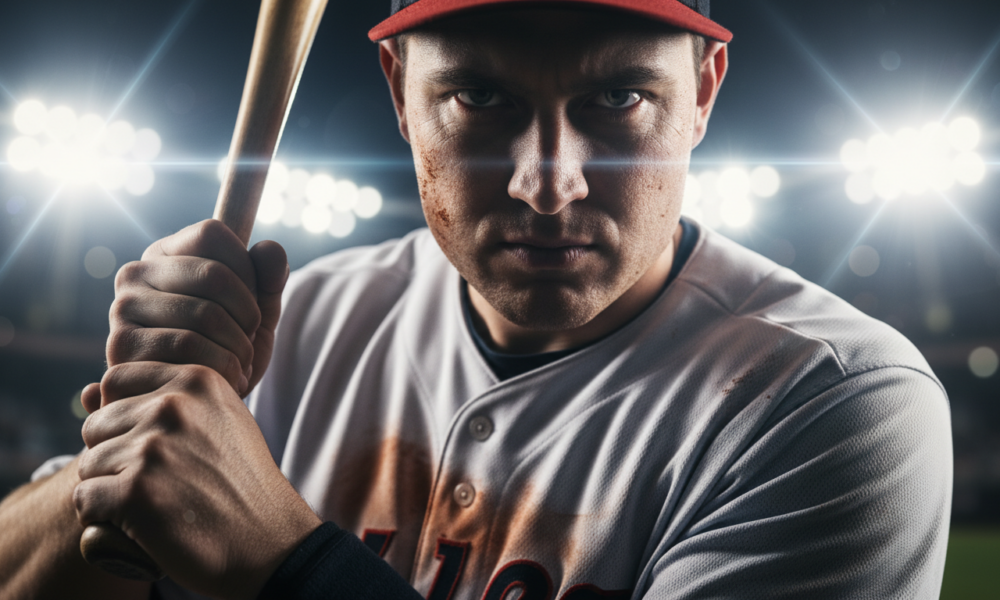
Advanced AI Generators Transforming Sports Imagery
By 2026, the intersection of creative design and artificial intelligence has matured significantly, fundamentally altering how we approach digital aesthetics. The advancements observed throughout 2025 have provided professionals with a robust toolkit for image creation, specifically in the niche of dynamic sports representation. For technical leads and creators alike, understanding the nuance of these engines is critical for producing stunning visuals that resonate with audiences.
The days of struggling with uncanny valley artifacts in sports renders are largely behind us. Machine learning algorithms have become adept at understanding the biomechanics of a pitch or the physics of a swing, making baseball imagery a prime candidate for these high-fidelity generation tools.
Top-Tier Tools for Realistic Baseball Visualization
Navigating the ecosystem of AI generators requires a strategic approach to selecting the right model for the specific output required. In 2025, several platforms distinguished themselves through unique capabilities that directly benefit the creation of sports imagery.
Flux by Black Forest Labs emerged as a powerhouse for photorealism. Its ability to render human features—specifically hands and facial expressions—addresses historical pain points in generative art. For a baseball pitcher gripping a ball, Flux delivers a level of anatomical accuracy that rivals digital art created by human hands. It matches the fidelity of competitors like Midjourney 6 while offering distinct advantages in prompt adherence.
In the corporate and enterprise sector, Adobe Firefly solidified its position within the Creative Cloud. With the rollout of Image 4 and Image 4 Ultra, along with vector models, it offers a seamless workflow for designers. The “Firefly Boards” feature allows for infinite canvas collaboration, essential for teams iterating on campaign assets. Furthermore, integrations with third-party engines like Google Imagen enhance its versatility.
For projects requiring typographic precision, such as scoreboard graphics or team jerseys, Ideogram remains unrivaled. Unlike earlier models that hallucinated text, Ideogram generates legible, coherent lettering within the image, a crucial feature for authentic baseball marketing materials.
Midjourney V7 continues to dominate the artistic spectrum. Its user-friendly interface, accessible via Discord or the web, allows for rapid stylistic pivots—from hyper-realistic game shots to stylized, abstract interpretations of the sport.
Meanwhile, DALL-E 3, integrated into ChatGPT Plus, excels in natural language processing. It understands complex, narrative-driven prompts, ensuring that the generated scene aligns perfectly with the user’s intent, reducing the need for endless regeneration cycles.
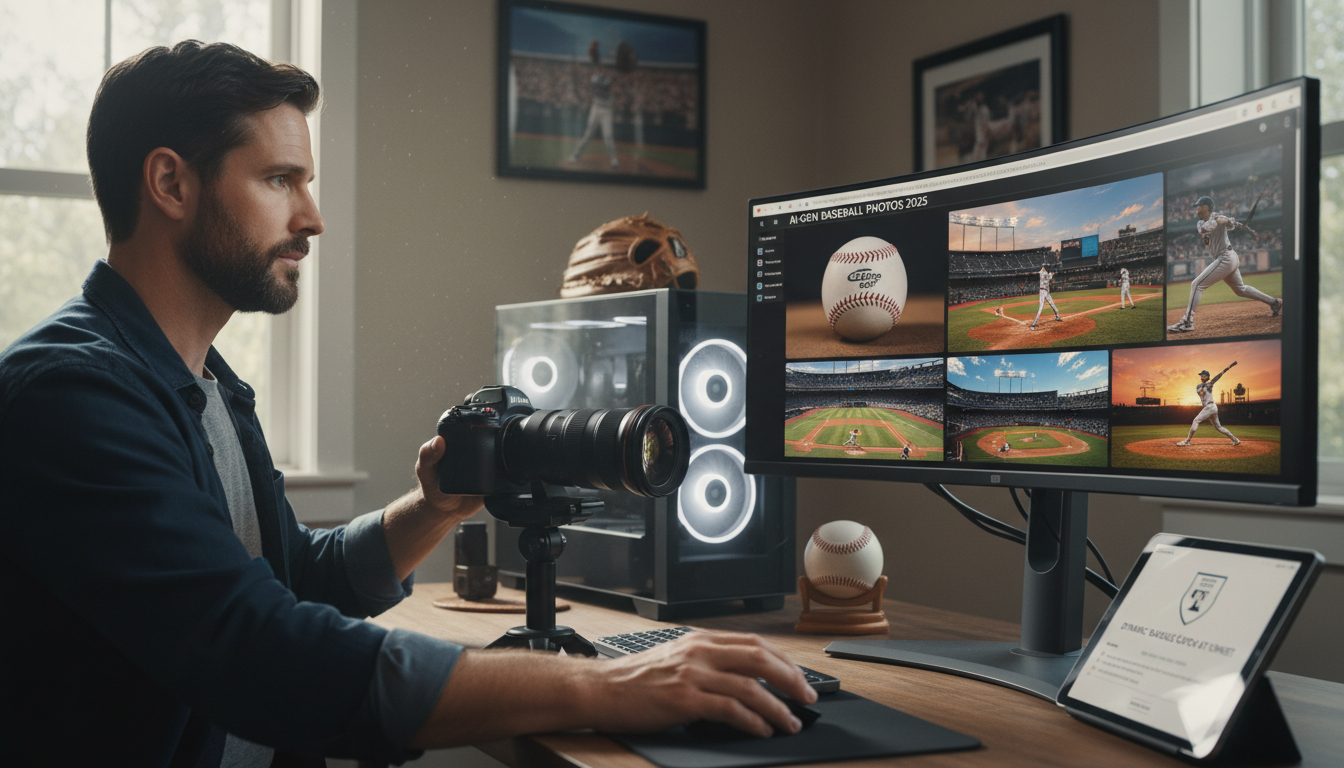
Optimizing Workflows for Dynamic Action Shots
Creating static images is one thing; capturing the kinetic energy of a game is another. Technology has bridged this gap through specialized models and animation tools. Stable Diffusion 3 by Stability AI offers professional-grade customization, allowing users to fine-tune models on specific image libraries. This is particularly useful for maintaining brand consistency across a series of generated assets.
However, users must remain vigilant regarding data accuracy and context. Even the most advanced models can misinterpret historical contexts or specific team data. We witnessed similar issues recently, such as the Yankees ChatGPT blunder, where AI confidentially presented incorrect information. This serves as a reminder that human oversight remains essential in the loop of generative workflows.
To maximize the potential of these tools, consider the following actionable strategies for prompt engineering in a sports context:
- ⚾ Define the Physics: Explicitly describe the motion blur and the tension in the muscles to convey speed.
- 🏟️ Lighting is Key: Specify “stadium floodlights” or “golden hour” to achieve professional-grade atmosphere.
- 🧢 Equipment Specificity: Detail the texture of the glove leather or the wood grain of the bat for heightened realism.
- 📸 Camera Angles: Use terms like “low angle,” “telephoto lens,” or “depth of field” to mimic broadcast photography.
Comparative Analysis of Leading Models
Selecting the right tool depends heavily on the specific requirements of the project. The following breakdown illustrates the strengths of the leading platforms available in 2025.
| AI Model | Primary Strength 🚀 | Best Use Case for Baseball |
|---|---|---|
| Flux | Anatomical Accuracy | Close-ups of pitchers and batters where hand detail is critical. |
| Ideogram | Text Rendering | Marketing posters involving jerseys, scoreboards, and banners. |
| Midjourney V7 | Artistic Range | Stylized conceptual art and high-impact social media visuals. |
| Adobe Firefly | Workflow Integration | Enterprise teams needing to edit and iterate within Photoshop. |
| Stable Diffusion 3 | Customization | Training models on specific team rosters for consistent likeness. |
Ultimately, the goal is to leverage technology to enhance human creativity, not replace it. By understanding the specific strengths of each engine, from the open-source flexibility of Stable Diffusion to the polished ecosystem of Adobe, creators can produce stunning visuals that stand out in a crowded digital landscape.
Which AI generator is best for realistic baseball player images?
Flux by Black Forest Labs is currently considered one of the top contenders for photorealism in 2025, specifically due to its ability to accurately render complex human anatomy like hands and gripping motions, which are frequent in baseball imagery.
Can AI generators create images with correct text on jerseys?
Yes, Ideogram is specifically designed to handle text generation within images better than most competitors. It is the recommended tool if your visual requires legible team names, numbers on jerseys, or scoreboard text.
Is it possible to animate static AI baseball images?
Tools like Stable Diffusion 3 and newer updates to Adobe Firefly offer animation capabilities. Stable Diffusion 3, for instance, includes tools to convert still images into short 5-second video clips, bringing static shots to life.
Are these AI tools free to use?
Many tools offer a freemium model. For example, Adobe Firefly has free credits for web users, and Stable Diffusion can be run locally for free if you have the hardware. However, premium features and higher generation limits generally require a subscription.

Max doesn’t just talk AI—he builds with it every day. His writing is calm, structured, and deeply strategic, focusing on how LLMs like GPT-5 are transforming product workflows, decision-making, and the future of work.

No responses yet