Mastering the Art of Halving and Basic Numerical Logic
In the fast-paced digital landscape of 2026, relying solely on devices for every minor calculation can slow down cognitive processing. Developing sharp numerical skills is not just about passing school exams; it is about agility in decision-making. Whether splitting a bill at a restaurant or verifying code logic, understanding how to break down numbers efficiently is a superpower. The journey to understanding division starts with the absolute basics: the relationships between numbers and their ability to be split.
Before diving into complex equations, one must grasp the fundamental rules that govern our number system. Dividing by 1 is the identity property; the number remains unchanged, maintaining its original value. Conversely, dividing by 0 is a mathematical impossibility. It leads to an undefined result, a concept that often confuses learners but is crucial for understanding the limits of arithmetic. For a deeper dive into number properties, exploring the zero rational number theory can clarify why this specific digit holds such a unique place in mathematics.
The most practical skill in this domain is learning to divide by 2. This operation is synonymous with “halving.” If a number is even, the process is straightforward: simply split it down the middle. For odd numbers, the strategy involves a slight mental adjustment: subtract 1 to make it even, halve that result, and then add 0.5. For example, to handle 9 divided by 2, treat it as 8 divided by 2 (which is 4) and add 0.5, resulting in 4.5. This foundational technique paves the way for more advanced math tips.

Strategies for Even Numbers and Powers of Two
Once the concept of halving is mastered, division tricks for other even numbers become significantly easier. Dividing by 4 is essentially halving a number twice. To solve 48 ÷ 4, one can divide 48 by 2 to get 24, and then divide 24 by 2 to arrive at 12. This method, often called “quartering,” removes the intimidation factor from larger divisors. Similarly, dividing by 8 involves halving the dividend three times. These math shortcuts reduce complex problems into a series of manageable, bite-sized steps.
In the world of technology, these binary-based divisions are omnipresent. For instance, when developers optimize software or compare tools like in a chatgpt vs github copilot scenario, understanding data chunks often relies on powers of two. Beyond the binary, dividing by 10 is the simplest calculation of all: simply shift the decimal point one place to the left. This decimal shift is the basis for the metric system and currency calculations globally.
Dividing by 6 requires a two-step check. Since 6 is the product of 2 and 3, a number must be divisible by both to be divisible by 6. This means the number must be even (divisible by 2) and the sum of its digits must be divisible by 3. If both conditions are met, the division will result in a whole number. This approach highlights how simple math rules can interact to solve more difficult problems.
Cracking the Code of Odd and Prime Numbers
Odd numbers often present more of a challenge, but specific patterns exist to aid in quick division. The rule for 3 and 9 is perhaps the most famous: if the sum of the digits is divisible by the divisor, then the entire number is as well. For 9, one can often use an approximation method—divide by 10 and adjust upwards—to get close to the answer quickly. These learning division techniques transform abstract figures into concrete, workable logic.
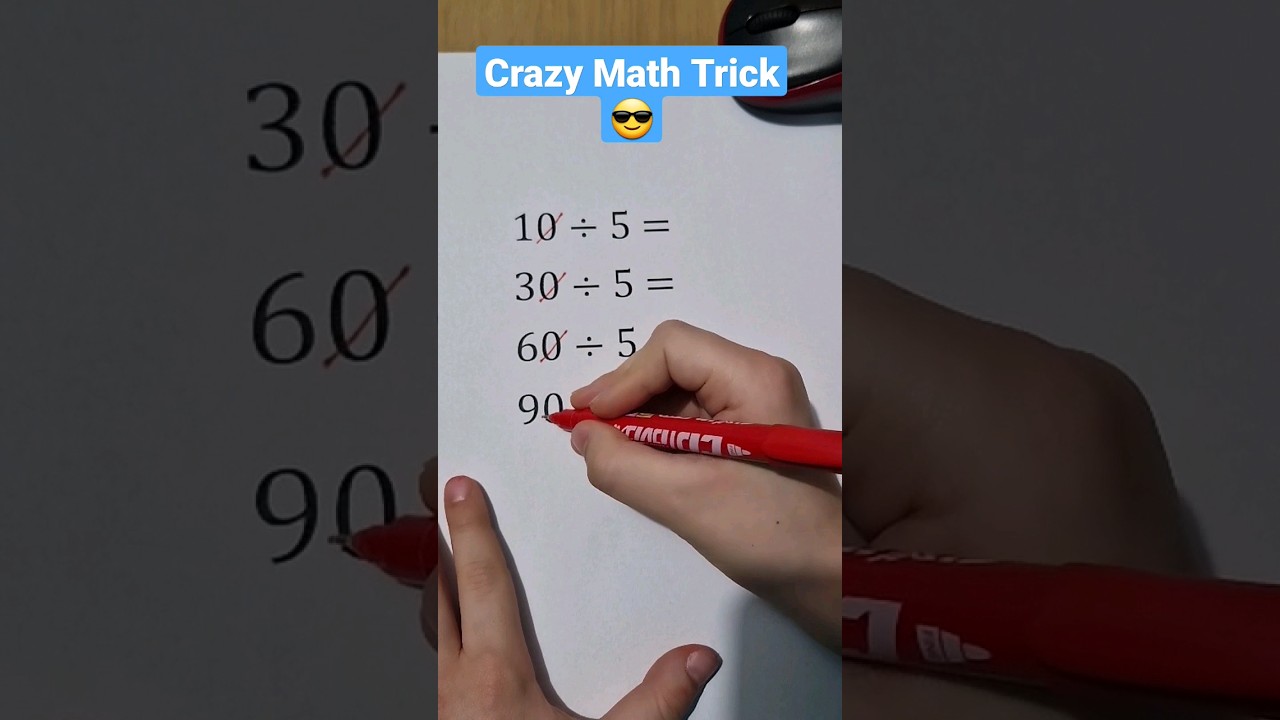
Dividing by 5 comes with a remarkably efficient hack. Since 5 is half of 10, one can multiply the number by 2 and then divide by 10. For 35 ÷ 5, calculate 35 × 2 = 70, then move the decimal to get 7. This is often faster than traditional calculation methods. Even in complex fields like AI physics in aerospace, engineers rely on rapid mental estimations like these to verify computational outputs on the fly.
The number 7 is notoriously tricky as it lacks a simple pattern like the others. However, the number 11 has a fascinating “alternating sum” rule. To determine divisibility, subtract the last digit from the remaining truncated number, or alternate adding and subtracting digits. If the result is 0 or a multiple of 11, the number works. Mastering these rules provides a comprehensive toolkit for mental arithmetic.
| Divisor | Mental Strategy 🧠 | Example |
|---|---|---|
| 2 | Halve the number. If odd, subtract 1, halve, add 0.5. | 9 ÷ 2 = 4.5 |
| 4 | Halve the number twice. | 48 → 24 → 12 |
| 5 | Multiply by 2, then divide by 10. | 35 × 2 = 70 ÷ 10 = 7 |
| 9 | Sum of digits must be a multiple of 9. | 81 (8+1=9) ✅ |
| 10 | Shift decimal one place left. | 250 → 25.0 |
Advanced Mental Math: Chunking and Estimation
When dealing with large figures that don’t fit neatly into basic rules, the “Chunking” method is invaluable. This involves breaking a large number into parts that are easy to divide. For example, dividing 1548 by 12 can seem daunting. However, by splitting it into 1200 and 348, the task simplifies. 1200 ÷ 12 is 100. Then deal with the remainder. This mirrors how project managers break down massive tasks, such as the construction of Microsoft Building 30, into manageable phases for execution.
Another powerful technique is the use of compatible numbers. This strategy involves adjusting the numbers slightly to make them easier to work with mentally, providing a close estimate. If you need to divide 195 by 6, rounding 195 to 192 (a known multiple) allows you to calculate 192 ÷ 6 = 32 quickly. You know the actual answer is slightly higher. This estimation skill is critical in logistics, similar to assessing supply chains during events like the War Shore 2025 exercises, where rapid approximation was vital.
Finally, for those working in programming, understanding division is essential for time management algorithms. When coding current time swift functions, developers constantly use modulo operations (finding the remainder) to calculate seconds, minutes, and hours. This proves that easy calculation methods are not just academic exercises but are deeply embedded in the technology that runs our world.
Key Takeaways for Rapid Division
- ✅ Halving is Key: Master dividing by 2 to unlock dividing by 4 and 8.
- ✅ Pattern Recognition: Use digit sums for 3 and 9 to check divisibility instantly.
- ✅ Prime Hacks: Multiply by 2 and shift the decimal for dividing by 5.
- ✅ Simplify: Use chunking to break massive numbers into “friendly” parts.
- ✅ Estimate: Rounding to compatible numbers helps verify if a calculator’s result is reasonable.
Why is division often considered harder than multiplication?
Division is frequently perceived as more difficult because it often involves a multi-step process, especially with long division. Unlike multiplication, which builds up, division breaks down and can result in remainders or decimals, requiring a stronger grasp of number relationships and subtraction.
What is the difference between short and long division?
Long division is a comprehensive, written method used for dividing large numbers where every step of the subtraction is documented. Short division is a compact version of this process, best suited for smaller divisors, where the subtraction and carry-over are done mentally rather than written out.
How can I teach division tricks to children effectively?
The best approach is to start with real-world examples, such as sharing food or toys, to visualize the concept. Introducing visual aids and games makes the process engaging. Focus on one rule at a time, like the specific trick for dividing by 5 or the digit sum rule for 9, to build confidence without overwhelming them.
Why is estimation important in division?
Estimation allows you to quickly approximate an answer before performing the detailed calculation. This serves as a ‘sanity check’ to ensure your final result is reasonable and helps prevent significant calculation errors, especially when placing decimal points.

Jordan has a knack for turning dense whitepapers into compelling stories. Whether he’s testing a new OpenAI release or interviewing industry insiders, his energy jumps off the page—and makes complex tech feel fresh and relevant.

No responses yet