
Innovation
Unveiling the Top Unfiltered AI Technologies of 2025
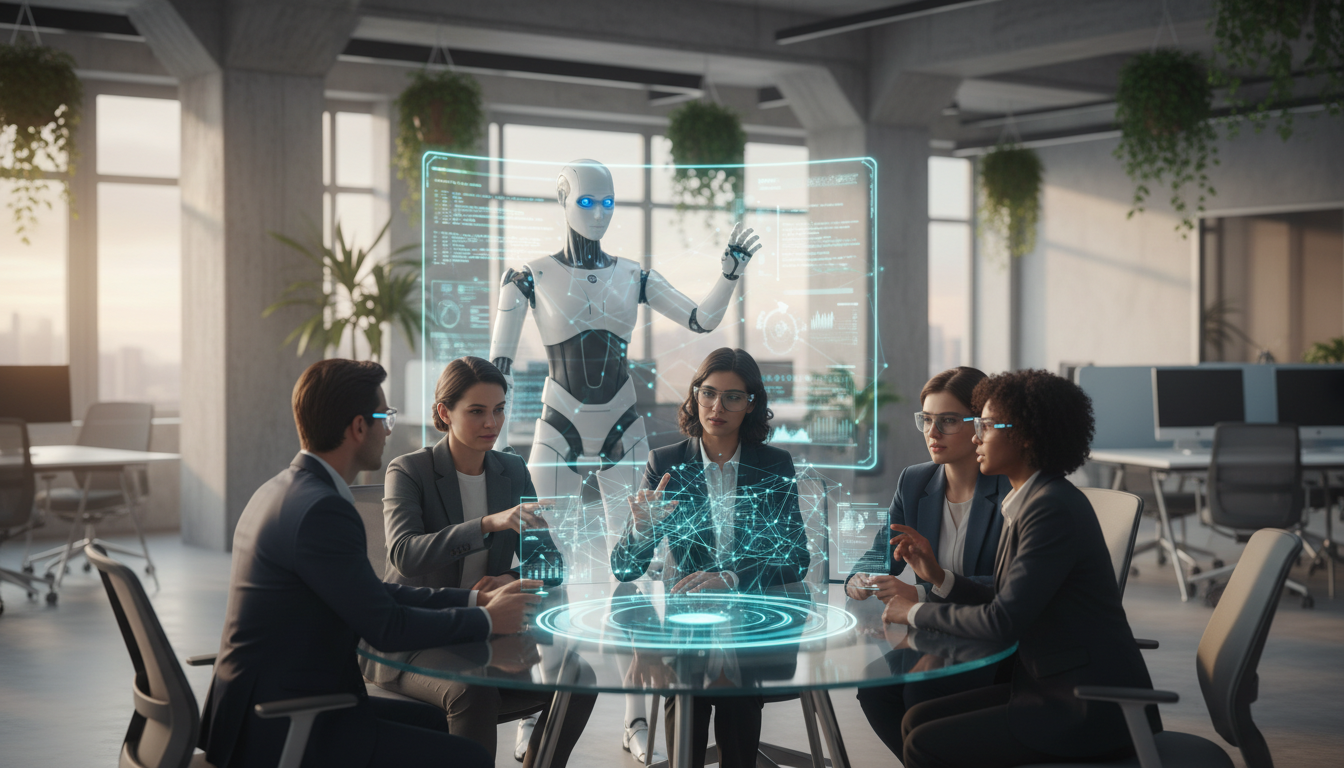
The digital landscape of 2025 feels less like a gradual slope and more like a sudden vertical ascent. We are no longer simply chatting with bots or generating quirky avatars; the ecosystem has shifted towards unfiltered AI technologies that act with autonomy and intent. The experimental phase is officially over. Companies and creators are now racing to integrate systems that don’t just suggest actions but execute them, fundamentally rewriting the rules of artificial intelligence engagement.
This year has stripped away the polish of mere novelty to reveal the raw machinery of next-gen AI. From the boardroom to the creative studio, the focus has moved from « what can this do? » to « what can this do for me while I sleep? ». The breakthroughs we are witnessing are not just about speed; they are about a deepened cognitive architecture that allows machines to understand context in ways previously thought strictly human.
The Shift from Generative to Agentic AI Technologies in 2025
If the last few years were defined by generative models, 2025 is undeniably the year of Agentic AI. This represents a massive leap in machine learning capabilities. Unlike their predecessors, which required constant prompting, agentic systems possess the ability to make decisions independently to achieve specific goals. They are the new power players identified by major analysts, marking a transition from passive tools to active workforce participants.
Agentic AI operates with a level of « intent » that changes the game for automation. Imagine a system that notices a supply chain disruption, identifies the best alternative vendor, negotiates a price within pre-set parameters, and places the order—all without human intervention. This is the « unfiltered » power of modern code: raw, decisive, and efficient. While Forrester notes that widespread mainstream adoption requires stronger trust mechanisms, the immediate potential for flexibility in business processes is staggering.

Synthetic Data and the Privacy Revolution
One of the most fascinating AI trends dominating 2025 is the reliance on data that doesn’t actually exist in the real world. Synthetic data has emerged as a critical solution to the dual challenges of privacy regulations and the exhaustion of high-quality human data. By generating artificial datasets that mimic the statistical properties of real information, developers can train more robust models without risking user privacy.
This innovation is particularly vital for sectors like healthcare and finance, where data sensitivity is paramount. It allows for the training of AI advancements in a sandbox environment that is mathematically accurate yet ethically secure. The « unfiltered » nature here lies in the purity of the data—stripped of bias and human error, tailored perfectly for the learning process.
Top AI 2025 Innovations: Balancing Power and Security
As we embrace these powerful tools, the architecture supporting them has had to evolve rapidly. The connection between future tech and physical reality is tighter than ever, necessitating robust defenses. The surge in connected devices has made IoT security a non-negotiable priority for enterprises. With AI innovation permeating every smart device, the attack surface has expanded, requiring intelligent systems that can predict and neutralize cyber threats in real-time.
The following table illustrates the key technological shifts we are navigating this year, contrasting the focus of previous years with the hard realities of 2025:
| Technology Focus 🔍 | 2023-2024 Era ⏳ | The 2025 Reality 🚀 | Primary Impact Sector 🎯 |
|---|---|---|---|
| Decision Making | Human-led with AI assistance | Agentic AI (Autonomous action) | Logistics & Operations |
| Data Sourcing | Scraping real-world web data | Synthetic Data generation | Healthcare & Finance |
| Visual Media | Basic image generation | GenAI for Visual Content (Photorealistic video) | Marketing & Hollywood |
| Hardware | Smart speakers & phones | Humanoid Robots integration | Manufacturing & Service |
The Visual Renaissance in Marketing and Media
We are also seeing GenAI for visual content reshape the aesthetic world. This isn’t just about making pretty pictures; it’s about creating immersive, personalized brand experiences at scale. Marketing departments are leveraging these AI technologies to deploy motion graphics and video content that adapt to consumer preferences in real-time. The result is a visual language that feels incredibly personal and shockingly real, blurring the line between captured reality and generated fiction.
The Physical Manifestation: Humanoid Robots and Hardware
Perhaps the most tangible evidence of AI global records of 2025 is the arrival of humanoid robots in the workspace. Driven by decreasing hardware costs and the sophisticated « brains » provided by Generative AI, these machines are stepping out of science fiction and into warehouses and hospitals. While full integration remains a mid-to-long-term journey due to infrastructure complexities, the prototypes walking among us today are impressive feats of engineering.
Google has also kept the pace relentless with its Gemini updates and new hardware integration, signaling that the big tech giants are doubling down on making AI developments ubiquitous. The « unfiltered » aspect here is the direct interface; humans are forming relationships with these machines, treating them as partners rather than mere tools. This shift in social dynamic is one of the most profound top AI 2025 cultural phenomena.
To summarize the immediate benefits emerging this year, consider the following breakthroughs that are reshaping industries right now:
- 🤖 Autonomous Operations: Systems that self-patent and enforce royalties without human legal teams.
- 🛡️ IoT Armor: Intelligent security layers that protect critical infrastructure from AI-driven cyber attacks.
- 📉 Cost Reduction: Massive drops in operational costs due to the deployment of agentic workflows.
- 🎨 Hyper-Personalization: Visual content engines that create unique media for individual viewers instantly.
- 🌐 Open Source Power: The rise of global open-source models, challenging proprietary gatekeepers and democratizing access.
What makes Agentic AI different from the AI we used in 2024?
Agentic AI differs fundamentally by having the capacity for autonomous decision-making and action. While 2024’s AI was largely responsive—waiting for a prompt to generate text or images—Agentic systems in 2025 can understand a goal, plan the steps to achieve it, and execute those steps across different software platforms without constant human oversight.
Is Synthetic Data safe to use for sensitive business operations?
Yes, synthetic data is increasingly considered safer than using raw real-world data. Because it is artificially generated to mimic statistical patterns without containing actual personal information, it mitigates privacy risks and helps companies comply with strict data protection regulations while still training powerful models.
Are humanoid robots actually being used in 2025 or is it just hype?
While widespread consumer adoption is still years away, 2025 marks a pivotal year for industrial pilots. We are seeing humanoid robots deployed in controlled environments like manufacturing floors and logistics hubs to perform repetitive tasks, driven by reduced hardware costs and smarter AI brains, though full integration remains a complex challenge.
What does ‘unfiltered’ AI mean in the context of 2025 technology?
‘Unfiltered’ refers to the raw capability and increased autonomy of new AI models. It signifies systems that are less constrained by rigid, pre-programmed rules and are more capable of open-ended problem solving, as well as the rise of open-source models that provide transparent, unmodified access to the underlying technology.




Découvrez 1000 idées innovantes pour inspirer votre prochain projet
Découvrez 1000 idées innovantes pour inspirer votre prochain projet : cadres performants de brainstorming et de sélection Lorsque des équipes...


ChatGPT connaît de nombreuses pannes, poussant les utilisateurs vers les réseaux sociaux pour obtenir du support et des solutions
Chronologie des pannes de ChatGPT et hausse de l’activité sur les réseaux sociaux pour le support utilisateur Lorsque ChatGPT est...


OpenAI vs PrivateGPT : Quelle solution d’IA conviendra le mieux à vos besoins en 2025 ?
Explorer le paysage des solutions d’IA sécurisées en 2025 L’écosystème numérique a évolué de manière spectaculaire au cours des dernières...


OpenAI vs Tsinghua : Choisir entre ChatGPT et ChatGLM pour vos besoins en IA en 2025
Naviguer parmi les poids lourds de l’IA : OpenAI vs. Tsinghua dans le paysage de 2025 La bataille pour la...


Choisir votre compagnon de recherche en IA en 2025 : OpenAI vs. Phind
La Nouvelle Ère de l’Intelligence : Le Virage d’OpenAI vs. la Précision de Phind Le paysage de l’intelligence artificielle a...


2025 Showdown : Une analyse comparative d’OpenAI et de Cohere AI – Les meilleurs IA conversationnels pour les entreprises
Le paysage de l’intelligence artificielle en 2025 est défini par une lutte colossale pour la domination entre l’efficacité spécialisée et...


Choisir votre compagnon de chat IA en 2025 : ChatGPT d’OpenAI vs. Gemini Advanced de Google
Explorer le paysage des compagnons de chat IA en 2025 Le paysage de l’intelligence artificielle a radicalement évolué à la...


claude erreur interne du serveur : causes courantes et comment les réparer en 2025
Décodage de l’Erreur Serveur Interne Claude en 2025 Vous appuyez sur entrée, vous attendiez une refonte propre du code ou...


Comprendre les antonymes dominés : définitions et exemples pratiques
Vous êtes-vous déjà retrouvé bloqué dans une conversation ou un écrit, cherchant désespérément le revers du contrôle ? Vous n’êtes...


Votre carte ne prend pas en charge ce type d’achat : ce que cela signifie et comment le résoudre
Comprendre le Mécanisme d’Erreur « Type d’Achat Non Pris en Charge » Lorsque la caisse digitale se ferme brusquement avec...

ChatGPT vs Writesonic : Quel outil d’IA mènera la voie pour votre contenu web en 2025 ?
Le paysage numérique de 2025 a fondamentalement déplacé la base de référence en matière de productivité. Pour les marketeurs et...


Comment sélectionner l’IA optimale pour la rédaction d’essais en 2025
Explorer le paysage de l’assistance académique haute performance Dans l’écosystème numérique en rapide évolution de 2025, la recherche de la...


Comment configurer Google SSO dans alist : un guide étape par étape pour 2025
Rationalisation de la gestion des identités avec Google SSO dans Alist Dans le paysage de 2025, gérer efficacement les identités...

les guêpes fabriquent-elles du miel ? découvrir la vérité sur les guêpes et la production de miel
Décoder le Mystère Doux : Les Guêpes Produisent-elles du Miel ? Lorsque la conversation tourne autour du nectar doré et...


Comment booster votre entreprise locale avec un plugin de zone de service WordPress
Dans le paysage numérique de 2025, la visibilité est synonyme de viabilité. Un site web époustouflant ne sert à rien...


Explorer les versions d’essai nyt : à quoi s’attendre en 2025
L’évolution des versions d’essai en 2025 : au-delà du simple accès aux logiciels Le concept de versions d’essai a subi...


Qu’est-ce que cgp论坛 et comment peut-il bénéficier à votre communauté en ligne en 2025 ?
Comprendre le rôle du cgp论坛 dans le paysage numérique de 2025 Dans l’écosystème numérique en évolution rapide de 2025, le...
robert plant fortune nette en 2025 : combien vaut aujourd’hui la légende de led zeppelin ?
Valeur nette de Robert Plant en 2025 : la fortune de 200 millions de dollars de la légende de Led Zeppelin...


ChatGPT vs QuillBot : Quel outil d’écriture dominera en 2025 ?
Le paysage de la création numérique a changé radicalement. Alors que nous naviguons à travers 2025, l’intelligence artificielle n’est plus...


Explorer les meilleurs traducteurs IA de 2025 : notre comparaison complète !
Communication mondiale à l’ère de la connectivité intelligente Dans le paysage interconnecté de 2025, les barrières linguistiques s’estompent rapidement. L’ère...
-
Tech10 heures ago
Votre carte ne prend pas en charge ce type d’achat : ce que cela signifie et comment le résoudre
-
Modèles d’IA4 heures ago
OpenAI vs Tsinghua : Choisir entre ChatGPT et ChatGLM pour vos besoins en IA en 2025
-
Modèles d’IA5 heures ago
Choisir votre compagnon de recherche en IA en 2025 : OpenAI vs. Phind
-
Modèles d’IA3 heures ago
OpenAI vs PrivateGPT : Quelle solution d’IA conviendra le mieux à vos besoins en 2025 ?
-
Outils8 heures ago
Comprendre les antonymes dominés : définitions et exemples pratiques
-
Tech11 heures ago
Comment configurer Google SSO dans alist : un guide étape par étape pour 2025