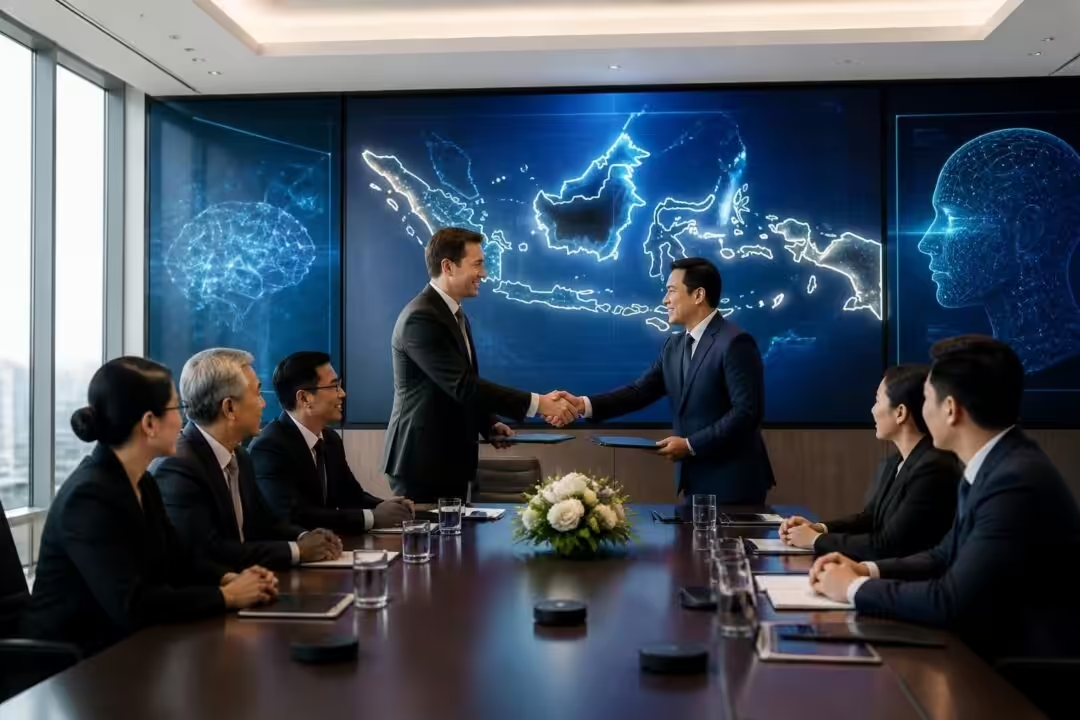
Agencia Comercial Spirits Ltd (NASDAQ: AGCC), best known as a Taiwan-based whisky importer and distributor, just took another concrete step into AI infrastructure. Its Indonesian unit, PT. AGCC AITECH INDONESIA, signed additional electricity supply agreements with PT PLN (Persero), Indonesia’s state-owned utility, to back a planned AI data center buildout. ⚡
The headline detail: the contracts complete a dual-feed power configuration for the facility, with two feeds rated at 55,400 kVA each. That kind of redundancy is the boring backbone of serious compute, and it sets up the next question: can AGCC turn power and concrete into paying GPU demand?
AGCC power agreements with PLN: what “dual-feed” means for Indonesia’s AI data center plan
AGCC says these are power procurement arrangements, not customer contracts. That distinction matters if you’re tracking risk: the company is committing money upfront for access to capacity, without locking in tenants who will consume it. 📌
Dual-feed usually signals a reliability target that enterprise buyers expect. Think of a hypothetical customer like “Bayu,” a Jakarta product lead trying to ship an internal LLM assistant; Bayu’s team can tolerate slow inference, but not recurring outages that break workflows. This is where redundant supply becomes a sales prerequisite, not a nice-to-have.
Power, though, is only one dependency. Grid access must line up with construction progress, installation readiness, certifications, and utility requirements. The tighter those dependencies are managed, the fewer surprises you get when it’s time to energize the site.
40MW IT load target: what AGCC is signaling to engineers and buyers
AGCC tied the PLN arrangements to a staged plan targeting roughly 40MW of IT load, subject to conditions. In data center terms, that’s enough to host a serious amount of AI training and inference capacity—assuming the racks, cooling design, and network can keep up. 🧠
In practice, 40MW doesn’t mean “40MW on day one.” It usually means phased commissioning: initial halls go live, then capacity ramps as gear arrives and demand is proven. That phased approach is how operators avoid stranding capex in empty white space.
For product teams buying compute, the key takeaway is timing. If you’re planning model training sprints or latency-sensitive inference, you’ll want to track when each phase is scheduled to energize and what SLAs are actually on paper.
AGCC Indonesia AI initiative: costs, conditions, and what could break the timeline
The company disclosed an aggregate connection fee of about IDR 69.9 billion, plus customer guarantee deposits, ongoing electricity charges, and other standard fees. 💰 That’s real cash tied up before a single GPU hour is sold.
AGCC also listed a long set of prerequisites that can stall the plan: equipment procurement, financing, construction milestones, and compliance items. If you’ve watched other APAC buildouts, transformers and switchgear lead times can be the silent schedule killer.
Risk language to take seriously: “no guarantee” clauses and why they matter
AGCC was explicit that the PLN agreements do not guarantee project completion, utilization, customer adoption, revenue, profitability, or positive cash flow. That’s not boilerplate you skip; it’s the company telling you where execution risk sits. ⚠️
For a simple mental model, keep Bayu in mind again: if Bayu’s employer can’t get firm delivery dates and reliability terms, they’ll shift workloads to established regional providers. Power access is necessary, but it doesn’t close deals by itself.
The next section connects the dots between this utility step and the broader “AI infrastructure” claim that’s driving attention around AGCC.
From whisky distribution to AI data centers: how AGCC is trying to reposition the business
AGCC’s legacy business is procuring, distributing, and selling whisky across Taiwan and select international markets. The pivot into AI infrastructure is a big narrative jump, and it’s the kind of move that can either create a second act or dilute focus. 🥃➡️🖥️
Investors tend to reward credible execution signals: land, permits, power, and signed vendors. So far, the PLN agreements land squarely in the “execution plumbing” bucket, which is more meaningful than marketing—but still far from booked revenue.
What to watch next if you need signal, not noise
If you’re evaluating whether this becomes a real AI compute business, watch for disclosures that turn infrastructure into customer-ready service. Specifically, you want evidence that the build matches what AI buyers actually need: uptime targets, network transit, and delivery dates.
- 🧾 Permits and construction milestones: evidence of civil works completion and commissioning schedules.
- 🔌 Utility energization checkpoints: when each feed is expected to go live and under what conditions.
- 🧊 Cooling and rack density plans: design targets that fit modern AI clusters, not legacy enterprise racks.
- 🌐 Network readiness: transit, peering strategy, and latency expectations for regional customers.
- 🤝 Commercial traction: named partners or signed capacity commitments, not just “pipeline” language.
That’s the difference between “we have power” and “you can ship production workloads here,” and it’s the line AGCC still has to cross.
Key numbers from AGCC’s PLN power supply agreements for the Indonesia AI data center
Here’s a clean view of the disclosed figures and what each one implies for delivery risk and planning. 📊
| Item | Disclosed detail | Why it matters |
|---|---|---|
| ⚡ Power configuration | Dual-feed supply | Redundancy is a baseline requirement for many AI and enterprise buyers. |
| 🔋 Feed rating | 55,400 kVA per feed | Signals high-capacity utility planning, but still depends on commissioning and site readiness. |
| 🧠 Target IT load | ~40MW (staged, conditional) | Frames the scale; real delivery depends on build phases, gear availability, and financing. |
| 💰 Connection fee | ~IDR 69.9 billion (aggregate) | Upfront commitment before revenue; increases execution pressure to fill capacity. |
| 🧷 Other charges | Deposits + ongoing electricity charges | Opex and working capital needs can rise quickly during ramp-up. |
| ⚠️ Company caveat | No guarantee of completion, utilization, or profitability | Sets expectations: this is infrastructure progress, not confirmed demand. |
If AGCC follows these power agreements with verifiable build milestones and early customer commitments, the narrative shifts from speculative pivot to operational delivery. Until then, the PLN deals are best read as necessary groundwork—expensive, real, and still incomplete.

I’m a Brooklyn tech journalist who spent a decade covering software, cloud and developer tooling. I started this magazine in 2023 to cover generative AI without the hype or the cynicism: testing tools on my own subscriptions and citing primary sources.