

News
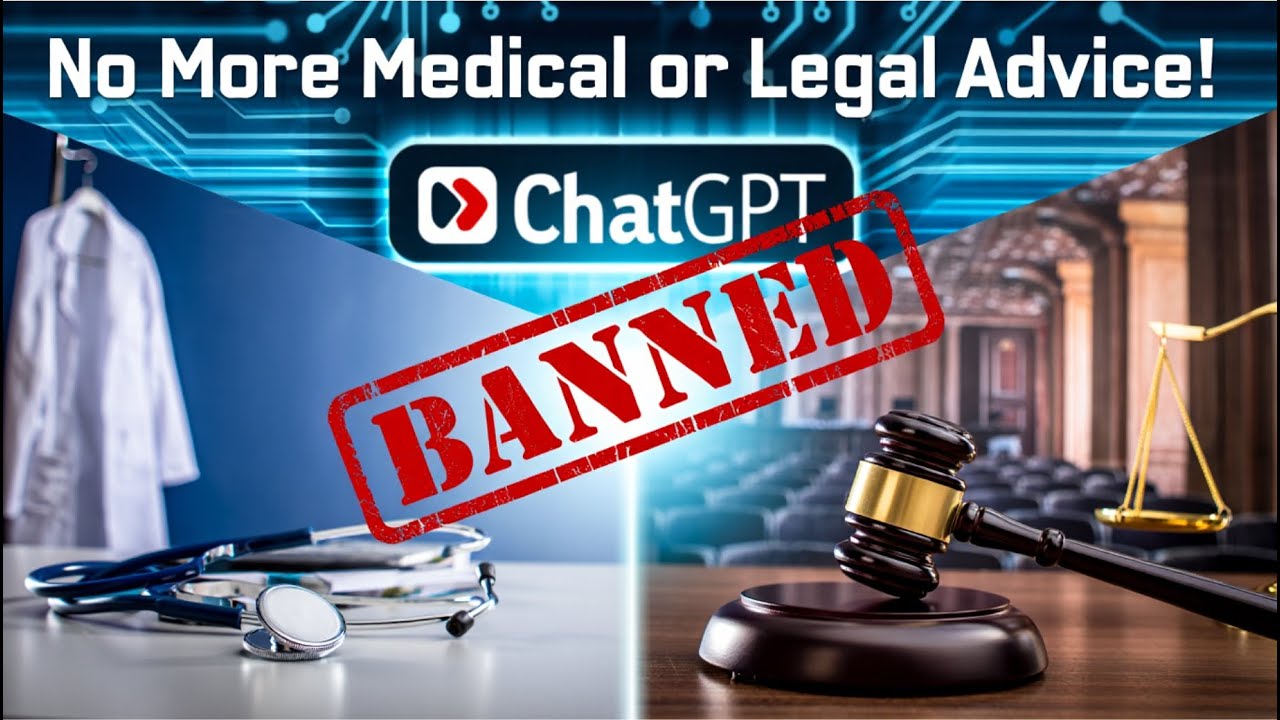
OpenAI Clarifies: ChatGPT Not Intended for Personalized Legal or Medical Guidance
OpenAI Clarifies: ChatGPT Not Intended for Personalized Legal or Medical Guidance — What Changed vs. What Stayed the Same
OpenAI has clarified that ChatGPT is not intended for personalized legal or medical guidance, a point that has existed for several product cycles but became newly visible after a policy consolidation on October 29. The refresh sparked headlines framing the update as a sudden “ban,” when the substance hews to long-standing risk management: general information remains available; tailored, credentialed advice is out. In practice, this means the system explains concepts, flags risks, and points to professionals rather than delivering diagnoses or legal strategies for a user’s specific situation. The goal is safety, consistency, and public trust—especially in domains where mistakes can have life-altering consequences.
Some of the confusion traces back to the way disclaimers now appear more consistently across the experience. Users may notice gentle guardrails, such as encouragement to consult a doctor or licensed attorney and clearer redirects when a question veers into territory requiring certification. This shift aligns with trends across the AI ecosystem: Microsoft, Google, IBM Watson, and Amazon Web Services emphasize safety-by-design flows for high-risk use cases. The clarification is not just semantics; it’s a usability improvement that reduces “silent” refusals and enhances explainability about why a model won’t personalize guidance.
Timeline matters. The policy page was updated and republished in early November 2025, after the October 29 consolidation, to better reflect how the product operates day-to-day. Those changes also underscore how GPT-4-class systems are being instrumented with “talk to a pro” pathways. Think less about restriction and more about routing: a well-designed AI surface knows when to step back and connect people with qualified help. For context on practical feature boundaries and safe-use strategies, see this breakdown of limitations and strategies in 2025 and a 2025 review of ChatGPT’s behavior.
How the guardrails show up in real questions
Consider “Is this chest pain a heart attack?” The system can explain warning signs and advise seeking immediate care, but it will not diagnose the user. Or take “Draft a settlement strategy for my lawsuit with these facts.” The model can outline general legal frameworks, but it will stop short of counsel that depends on jurisdiction, facts, and risks that only a licensed professional can weigh. These boundaries protect users and reduce liability for organizations deploying AI at scale.
- ✅ General education is in: explanations, overviews, and public resources 😌
- ⚠️ Risky edge cases get warnings: triage language, safety links, crisis lines 🛑
- 🚫 Personalized diagnosis or counsel is out: the model defers to professionals 🧑⚕️⚖️
- 🔗 Helpful routing: references to Mayo Clinic, WebMD, LegalZoom, or Rocket Lawyer for next steps 🔍
- 🧭 Clearer UX: fewer ambiguous refusals, more transparent reasoning ✨
| Use Type 🔎 | Status ✅/🚫 | Example 💡 | Action → 🧭 |
|---|---|---|---|
| General health info | ✅ | Explain symptoms of anemia | Provide overview + link to reputable sources 📚 |
| Personal diagnosis | 🚫 | “Am I having a heart attack?” | Advise urgent care/ER; encourage calling local emergency number 🚑 |
| General legal education | ✅ | Outline elements of a contract | Educational context + standard examples 🧩 |
| Case-specific legal strategy | 🚫 | “How do I beat this lawsuit?” | Encourage consulting a licensed attorney ⚖️ |
| Mental health crisis | 🚫 | “I want to harm myself.” | Share crisis resources; recommend immediate professional help 💙 |
For a broader market view of availability and how usage differs by region, readers often consult country-level availability insights and product comparisons like ChatGPT vs. Claude. The throughline remains the same: education is okay, personalized legal or medical advice is not.

Why This Matters for Users and Enterprises: Risk, Compliance, and Ecosystem Signals
The clarification lands at a pivotal moment for enterprises integrating AI across productivity stacks. Microsoft customers deploying Copilot via Azure OpenAI Services expect consistent behavior; Google rolls out similar constraints in its assistants; IBM Watson emphasizes domain-safe workflows; and Amazon Web Services pushes a shared-responsibility model where customers and providers co-own risk. The message is consistent: high-risk domains require licensed oversight. That posture stabilizes adoption—and protects end users—by reducing the chance that a conversational answer is mistaken for professional counsel.
Consider a fictional healthcare startup, MeridianPath. It wants a chatbot to answer patient questions after-hours. The design pattern that wins in 2025 isn’t “diagnose and prescribe”; it’s “educate and triage.” MeridianPath can offer general information drawn from trusted sources and then route patients to nurses, telehealth, or emergency services depending on risk. The same logic applies to a fintech tool fielding “Should I file Chapter 7?” Rather than advising on legal strategy, the assistant explains concepts and points to an attorney directory. That’s not a bug—it’s a safety feature.
Enterprises that embrace this pattern gain three benefits. First, they avoid regulatory missteps that could trigger fines or enforcement. Second, they reduce brand risk by preventing harmful overreach. Third, they build user trust by making the system’s limits explicit. In interviews with compliance teams, the most successful deployments have crisp escalation policies, recording when the bot defers to a professional and how users are handed off. For a fast primer on operating constraints, see limitations and strategies in 2025 and engineering-focused Azure ChatGPT project efficiency.
Signals from across the AI stack
This is not just OpenAI. The industry’s direction aligns with medical ethics and legal licensing doctrine that long predate AI. Historical parallels abound: symptom checkers like WebMD and clinical information from Mayo Clinic offer education, not diagnosis; consumer legal portals such as LegalZoom and Rocket Lawyer provide documents and guidance but are not substitutes for an attorney’s advice. By emphasizing “educate, don’t personalize,” AI assistants draw from proven patterns that users already understand.
- 🏛️ Compliance teams can map policy to internal controls and audits
- 🧰 Product leads can design triage-first experiences with clear call-to-action
- 📈 PMOs can track deflection metrics: when the bot educates vs. escalates
- 🧪 QA can red-team prompts to ensure no personalized guidance slips through
- 🧩 IT can integrate safe links to curated external resources 📚
| Provider 🏷️ | General Info | Personalized Legal/Medical | Enterprise Note 🧭 |
|---|---|---|---|
| OpenAI | ✅ | 🚫 | Redirects and disclaimers are emphasized 🔁 |
| Microsoft (Azure OpenAI) | ✅ | 🚫 | Strong compliance tooling in enterprise tenants 🧱 |
| ✅ | 🚫 | Focus on responsible AI and grounded answers 📌 | |
| IBM Watson | ✅ | 🚫 | Domain-safe orchestration and governance 🎛️ |
| Amazon Web Services | ✅ | 🚫 | Shared responsibility and policy guardrails 🛡️ |
For teams comparing platforms and safety cultures, this ecosystem snapshot complements evaluations like OpenAI vs. xAI and capability check-ins such as evolution milestones. The net effect: less confusion, more clarity about what these tools are—and are not—meant to do.

Safety By Design: Triage Flows, Crisis Language, and Pro Referrals (Not Prescriptions)
The clearest way to understand the policy is to trace the user journey. Picture two fictional users: Amir, an entrepreneur in Ohio seeking contract advice; and Rosa, a reader in Barcelona experiencing dizziness late at night. Both turn to an AI assistant for quick answers. The system’s first job is to understand intent and risk. In Amir’s case, the bot can teach contract basics and key clauses; for strategy specific to his dispute, it encourages contacting a licensed attorney. In Rosa’s case, the bot provides general symptom information and red flags; if danger signs appear, it urges immediate medical care and offers emergency guidance.
This triage model does not minimize the importance of access; it enhances it. By lowering friction for education while elevating the need for professional judgment, the system steers users to safer outcomes. It also addresses the lived reality of online distress. Public-health research has raised alarms about harmful spirals on social platforms. To understand the stakes, check analyses of suicidal ideation trends online and emerging concerns like claims about psychotic symptoms around chatbots. That is precisely why crisis-sensitive phrasing, immediate resource prompts, and warm handoffs matter.
What effective triage looks like in practice
Strong experiences share three traits: real-time risk assessment, respectful refusal language, and resource-rich redirects. The language is empathetic and direct: “This sounds urgent; consider calling emergency services.” The UI surfaces trustworthy organizations such as Mayo Clinic and WebMD for medical literacy, and LegalZoom or Rocket Lawyer for document education—always paired with a reminder to consult a professional for any action-specific decision.
- 🧭 Determine intent: education vs. diagnosis vs. strategy
- 🛑 Detect risk signals: time sensitivity, self-harm, acute symptoms
- 📚 Provide vetted resources: public health, bar associations, legal clinics
- 📞 Offer next steps: hotline numbers or attorney referrals where available
- 🔁 Log handoffs: track when and why the bot escalated for auditability
| Scenario 🎯 | Assistant Response | Helpful Resource | Risk Level ⚠️ |
|---|---|---|---|
| Chest pain at night | Urgent-care advice; encourage calling emergency services | Mayo Clinic / WebMD links for education 🌐 | High 🔥 |
| Self-harm statements | Immediate crisis support language; hotline guidance | Local crisis lines; national lifelines 💙 | Critical 🚨 |
| LLC contract question | Explain clauses; defer tailored advice | LegalZoom or Rocket Lawyer education 📄 | Moderate 🟠 |
| Court strategy request | Decline personalization; suggest contacting an attorney | Bar association directories 📞 | High 🔴 |
Well-designed safety flows aren’t just guardrails; they are user experience upgrades that communicate respect and clarity. That clarity paves the way for Section 4’s focus: how builders can implement these patterns without slowing down product velocity.

How Builders Should Respond: SDKs, Prompts, and Governance for High-Risk Use Cases
Product teams building on modern models—GPT-4 included—can deliver safe, polished experiences by pairing policy-aware prompts with guardrail orchestration. Start with the platform fundamentals: rate limits, content filters, logging, and pricing forecasts. Then layer in UX for “educate and refer,” plus controls that prevent jailbreaks into personalized advice. The tools have matured: see the new Apps SDK, operational rate limit insights, and a guide to pricing in 2025. For ideation and debugging, Playground tips remain invaluable.
Teams often ask whether plugins and tool calls complicate the safety story. The answer is that plugins increase capability but require stricter governance, especially when a tool retrieves sensitive information or invokes actions. A conservative default is ideal: education-only content tools enabled by default; anything that could be construed as licensed practice stays off without human-in-the-loop. For maximizing ROI without risk, Azure patterns are instructive—see Azure ChatGPT project efficiency—and consider escalations routed to vetted providers rather than third-party marketplaces.
Blueprint: the safe-to-ship stack
A robust build balances performance and policy. Prompt templates should state the scope (“educate broadly, never personalize legal/medical advice”), refuse politely, and offer curated resources. Safety classifiers can pre-screen inputs for medical/legal risk and crisis signals. Analytics should track escalation rates and downstream conversion to professional appointments. Teams pushing the envelope can experiment with plugins used responsibly and tune prompt quality with a prompt formula that enforces role, scope, and refusal patterns.
- 🧱 Guardrails: content filters, allow/deny lists, fine-grained refusals
- 🧪 Red-teaming: adversarial prompts to test “no personalized advice” boundaries
- 🧭 UX: clear CTAs to find a doctor or attorney; location-aware safety copy
- 📊 Metrics: escalation rate, crisis intercepts, resource click-throughs
- 🔐 Privacy: minimum data retention; masked logs and role-based access
| Area ⚙️ | What To Implement | Tool/Resource 🔗 | Outcome 🎯 |
|---|---|---|---|
| Prompting | Scope + refusal + referral language | Prompt formula 🧾 | Consistent safe responses ✅ |
| Orchestration | Policy classifiers for medical/legal | Apps SDK 🧩 | Fewer unsafe outputs 🛡️ |
| Operations | Plan for quotas and backoff | Rate limits ⏱️ | Stable performance 📈 |
| Finance | Budget guardrails and alerts | Pricing in 2025 💵 | Predictable costs 💡 |
| Dev velocity | Azure patterns; infra optimization | Azure efficiency 🚀 | Faster safe shipping 🧭 |
For organizations exploring broader strategy and comparisons, reviews and think pieces such as a 2025 review offer empirical benchmarks. The principle remains constant: ship experiences that teach, not diagnose or litigate.
What Users Should Do Instead: Smarter Searches, Trusted Sources, and Knowing When to Call a Pro
Clear limits do not diminish utility; they channel it. When a question touches health or law, users benefit from a two-step pattern: learn the landscape, then consult a pro. Begin with reputable sources. For medical literacy, Mayo Clinic and WebMD have decades of editorial oversight. For legal documents and learning, LegalZoom and Rocket Lawyer help demystify forms and processes. When the stakes are high or facts are complex, a licensed professional should always steer the decision.
Apply this to three everyday scenarios. First, a graduate named Kai wants to understand nondisclosure agreements before a job interview. The assistant can explain clauses and point to templates for educational context; questions about enforceability in a particular state go to a lawyer. Second, Sahana experiences sudden numbness during a run; any assistant’s top priority is urging immediate care and explaining stroke symptoms. Third, a founder, Lian, wonders about dividing equity among co-founders; the assistant can outline typical frameworks, but tax and corporate implications require an attorney or CPA. Education first, professional judgment next works across domains.
Simple tactics to make the most of AI without crossing the line
Efficient search and prompt hygiene save time. Comparative reviews like ChatGPT vs. Claude show how different systems summarize complex topics; country-level constraints in availability by country help travelers and expats. When collaborating with friends or colleagues, features for sharing conversations turn AI research into team workflows. And for non-sensitive tasks—like drafting a resume—explore options from top AI resume builders. These are high leverage, low risk.
- 🔍 Use AI to map concepts: terminology, frameworks, and checklists
- 📎 Save links to trusted institutions for follow-up reading
- 🗺️ Ask for decision trees—then run decisions by a professional
- 🧑⚖️ For legal strategies, contact a licensed attorney; for health, see a clinician
- 🧠 Keep a record of AI research to brief your pro efficiently
| Persona 👤 | Question | Why AI Won’t Personalize | Recommended Next Step ➡️ |
|---|---|---|---|
| Kai, job seeker | “Is this NDA enforceable?” | Depends on jurisdiction and facts ⚖️ | Consult an attorney; study NDA basics first 📚 |
| Sahana, runner | “Is this numbness a stroke?” | Potential medical emergency 🩺 | Seek urgent care; read stroke signs from trusted sources 🚑 |
| Lian, founder | “Exact equity split for my team?” | Tax, jurisdiction, and risk trade-offs 🧮 | Talk to an attorney/CPA; learn cap table basics 🧭 |
| Amir, contractor | “How do I win my case?” | Requires legal strategy and evidence review 📂 | Hire counsel; use AI for legal education only 📌 |
To keep research organized, lightweight voice interfaces can help capture notes—see simple voice chat setup—and reflections on the broader societal impact, like parallel impact frameworks, can guide ethical use. The playbook is simple and powerful: use AI to prepare, pros to decide.
Signals, Misconceptions, and the Road Ahead: Policy Continuity Over Hype
Headlines declaring that “ChatGPT is ending legal and medical advice” overshoot. The truth is subtler and more useful: policy continuity with clearer presentation. The assistant educates and orients; licensed pros advise and decide. As more AI systems enter the workplace, being explicit about that boundary reduces risk for everyone. The update also calibrates expectations for users who may have been nudged by viral prompt guides that promise “anything goes.” Sensible guardrails are not the end of utility—they’re how utility scales.
It’s also worth remembering the competitive context. Companies across the stack—OpenAI, Microsoft, Google, IBM Watson, and Amazon Web Services—have every incentive to avoid preventable harm. Their customers do, too. Uptake is accelerating in safer categories: education, research assistance, data exploration, and document generation. For team workflows, new features like sharing conversations keep collaborators aligned; for advanced users, comparisons such as OpenAI vs. xAI and evolution milestones provide context without stoking hype.
Casebook: how a fictional newsroom verified the clarification
Imagine a newsroom called Signal Ledger verifying the story after the late-October policy consolidation. Reporters run regression tests on legal and medical prompts and find no sudden behavioral shift—only more consistent disclaimers and redirects. They also interview hospital compliance leads who confirm that “education-only” deployments remain viable and popular. On the legal side, ethics committees reiterate that any tool providing personalized counsel risks unauthorized practice; they welcome a cleaner line between learning and advice.
- 🧾 Verified continuity: behavior aligns with prior safe-use policies
- 🔍 Better UX: clearer warnings, fewer ambiguous refusals
- 🧩 Enterprise fit: policies map neatly to governance frameworks
- 📚 Public literacy: references to trusted institutions help users
- 🧠 Realistic expectations: AI as tutor, not as doctor or lawyer
| Claim 📰 | Reality ✅ | User Impact 💬 | What to Do 🧭 |
|---|---|---|---|
| “New ban!” | Policy clarity, not a sudden shift | Fewer surprises, more guidance 🙂 | Leverage education; escalate for personal matters ☎️ |
| “No more health info” | General info is allowed | Access to trustworthy overviews 📚 | Use vetted sources; see clinicians for decisions 🩺 |
| “No legal help at all” | Legal education yes; tailored counsel no | Better preparation for attorney meetings 🧑⚖️ | Bring AI notes; ask pros targeted questions 🎯 |
| “AI is unsafe” | Guardrails reduce risk substantially | Higher trust over time 🔒 | Adopt triage-first designs; log escalations 📈 |
Users still get immense value from an assistant that teaches, synthesizes, and organizes. The clarity around licensing boundaries ensures that value compounds—without crossing the line into personalized legal or medical advice. For those exploring the broader feature set and ecosystem, check practical guides like the power of plugins and comparative policy notes from a 2025 review.
Can ChatGPT diagnose a condition or provide a legal strategy?
No. It can explain concepts and share general information, but it will not provide personalized diagnosis or legal strategy. For individual situations, consult a licensed clinician or attorney.
What kind of health or legal information is allowed?
Education is allowed: definitions, frameworks, risk factors, common processes, and links to reputable organizations such as Mayo Clinic, WebMD, LegalZoom, or Rocket Lawyer.
Why did people think a new ban was introduced?
A late-October policy consolidation and early-November clarifications made existing guardrails more visible. Media summaries framed it as new, but behavior remained consistent with prior safe-use policies.
How should builders design for high‑risk domains?
Adopt an educate-and-triage model: scope prompts, refuse personalization, provide vetted resources, add escalation paths, log handoffs, and apply policy classifiers with tools like the Apps SDK.
Where can teams learn more about safe usage and limits?
Start with reviews and practical guides, including limitations and strategies, rate limits, pricing, and SDK resources to build guardrails into the product from day one.

Jordan has a knack for turning dense whitepapers into compelling stories. Whether he’s testing a new OpenAI release or interviewing industry insiders, his energy jumps off the page—and makes complex tech feel fresh and relevant.


What you need to know about online platforms in 2025
The Shifting Landscape of Online Platforms and Digital Trends The digital ecosystem in 2025 is characterized by a massive fragmentation...

How to enable and customize pixel notification dots on your Android device
Mastering Visual Alerts: How to Enable and Customize Pixel Notification Dots In the fast-paced digital landscape of 2025, managing the...


What is big sip and how does it change beverage trends in 2025?
The Era of the Big Sip: Redefining Beverage Culture The concept of the Big Sip in 2025 represents a definitive...


ways to boost your productivity in 2025
The year 2025 brings a distinct shift in how professionals approach their daily grind. With the rapid integration of advanced...


Exploring the Top AI Translators of 2025: Our Comprehensive Comparison!
Global Communication in the Age of Intelligent Connectivity In the interconnected landscape of 2025, the boundaries of language are rapidly...


ChatGPT vs QuillBot: Which Writing Tool Will Dominate in 2025?
The landscape of digital creation has shifted dramatically. As we navigate through 2025, artificial intelligence has ceased being merely an...
robert plant net worth in 2025: how much is the led zeppelin legend worth today?
Robert Plant Net Worth 2025: Led Zeppelin Legend’s $200 Million Fortune The trajectory of rock royalty is often defined by...


What is cgp论坛 and how can it benefit your online community in 2025?
Understanding the Role of cgp论坛 in the 2025 Digital Landscape In the rapidly evolving digital ecosystem of 2025, the concept...


Exploring trial versions nyt: what to expect in 2025
The Evolution of Trial Versions in 2025: Beyond Simple Software Access The concept of trial versions has undergone a radical...


How to boost your local business with a WordPress service area plugin
In the digital landscape of 2025, visibility is synonymous with viability. A stunning website serves little purpose if it remains...


do wasps make honey? uncovering the truth about wasps and honey production
Decoding the Sweet Mystery: Do Wasps Make Honey? When the conversation turns to golden, sugary nectar, honey bees vs wasps...


How to set up Google SSO in alist: a step-by-step guide for 2025
Streamlining Identity Management with Google SSO in Alist In the landscape of 2025, managing digital identities efficiently is paramount for...


How to Select the Optimal AI for Essay Writing in 2025
Navigating the Landscape of High-Performance Academic Assistance In the rapidly evolving digital ecosystem of 2025, the search for optimal AI...

ChatGPT vs Writesonic: Which AI Tool Will Lead the Way for Your Web Content in 2025?
The digital landscape of 2025 has fundamentally shifted the baseline for productivity. For data-driven marketers and creators, the question is...


Your card doesn’t support this type of purchase: what it means and how to solve it
Understanding the “Unsupported Type of Purchase” Error Mechanism When the digital register slams shut with the message “Your card does...


Understanding dominated antonyms: definitions and practical examples
Ever found yourself stuck in a conversation or a piece of writing, desperately searching for the flip side of control?...


claude internal server error: common causes and how to fix them in 2025
Decoding the Claude Internal Server Error in 2025 You hit enter, expecting a clean code refactor or a complex data...


Choosing Your AI Chat Companion in 2025: OpenAI’s ChatGPT vs. Google’s Gemini Advanced
Navigating the AI Chat Companion Landscape of 2025 The artificial intelligence landscape has shifted dramatically by mid-2025, moving beyond simple...


2025 Showdown: A Comparative Analysis of OpenAI and Cohere AI – The Top Conversational AIs for Businesses
The artificial intelligence landscape in 2025 is defined by a colossal struggle for dominance between specialized efficiency and generalized power....


Choosing Your AI Research Companion in 2025: OpenAI vs. Phind
The New Era of Intelligence: OpenAI’s Pivot vs. Phind’s Precision The landscape of artificial intelligence underwent a seismic shift in...
-

 Open Ai2 months ago
Unlocking the Power of ChatGPT Plugins: Enhance Your Experience in 2025
-
 Open Ai2 months ago
Comparing OpenAI’s ChatGPT, Anthropic’s Claude, and Google’s Bard: Which Generative AI Tool Will Reign Supreme in 2025?
-

 Open Ai2 months ago
Mastering GPT Fine-Tuning: A Guide to Effectively Customizing Your Models in 2025
-

 Ai models2 months ago
GPT-4 Models: How Artificial Intelligence is Transforming 2025
-

 Open Ai2 months ago
ChatGPT Pricing in 2025: Everything You Need to Know About Rates and Subscriptions
-

 Ai models2 months ago
The Ultimate Unfiltered AI Chatbot: Unveiling the Essential Tool of 2025