

Startups
international entrepreneur rule update: what changes in 2025 mean for global startups
Navigating the 2025 International Entrepreneur Rule Update
The landscape for global startups looking to breach the American market has shifted significantly. With the Department of Homeland Security adjusting regulations to match economic realities, the pathway to Silicon Valley, Austin, or New York now comes with new price tags and procedures. The International Entrepreneur Rule (IER), often dubbed the “startup visa” alternative, remains a critical lifeline for foreign founders who want to scale their ventures on U.S. soil without the constraints of traditional H-1B lotteries.
Understanding the specific rule update effective for the fiscal year 2025 is mandatory for any founder drafting their roadmap. These changes aren’t just bureaucratic tweaks; they fundamentally alter the financial benchmarks required to secure parole. The United States Citizenship and Immigration Services (USCIS) has recalibrated investment and revenue thresholds to reflect inflation, ensuring the program targets high-potential business innovation capable of substantial economic impact.

Financial Thresholds: The New Cost of Entry for Global Startups
The most headline-grabbing aspect of the changes involves the capital requirements. As of late 2024, and fully applicable throughout 2025, inflation adjustments based on the Consumer Price Index (CPI-U) have raised the bar. Founders can no longer rely on previous guidance figures; presenting outdated numbers on Form I-941 is a fast track to a Request for Evidence (RFE) or denial.
For entrepreneurs relying on private capital, the benchmark has risen. You must now demonstrate a qualified investment of at least $311,071 from established U.S. investors. This is a significant jump from the previous standard, designed to ensure that only ventures with serious backing utilize this entrepreneur visa pathway. Similarly, those leveraging public resources must show government grants or awards totaling $124,429.
These figures serve as a gatekeeper, filtering for startups that have already convinced the market or the state of their viability. The focus is squarely on high-growth potential.
Comparative Breakdown of Fiscal Year 2025 Adjustments
To provide clarity on how the financial goalposts have moved for global business leaders, the following table outlines the critical shifts in funding requirements.
| Requirement Category 📊 | Previous Threshold | 2025 Adjusted Threshold 🚀 |
|---|---|---|
| Private Investment (Qualified Investor) | $264,147 | $311,071 |
| Government Grants/Awards | $105,659 | $124,429 |
| Revenue for Re-Parole | $528,293 | $622,142 |
| Investor Track Record (Total Investment) | $633,952 | $746,571 |

Proving Your Value: Flexibility in Business Innovation
While the numbers have gone up, the startup immigration framework has also evolved to be slightly more nuanced regarding evidence. The USCIS recognizes that not every unicorn follows the exact same funding trajectory. The updated policy guidance clarifies that if a startup partially meets the funding thresholds, it can still qualify by providing “other reliable evidence” demonstrating substantial potential for rapid growth and job creation.
This flexibility is crucial for bootstrapping founders or those in industries where capital intensity varies. However, the definition of a “qualified investor” has also tightened to maintain integrity. An investor must now have a track record of deploying $746,571 over five years, with proven success in their portfolio—specifically, two investee companies that either created five jobs each or generated significant revenue growth.
Documentation is key. Founders must be prepared to submit:
* 📈 Letters of intent or finalized contracts from reputable clients.
* 💡 Intellectual property filings or granted patents.
* 📰 Media coverage in top-tier tech or business publications.
* 🏆 Awards from recognized startup accelerators or pitch competitions.
Streamlined Biometrics and Procedural Logistics
Beyond the financials, the visa policy mechanics have been streamlined to reduce friction for international applicants. A major pain point in previous years was the coordination of biometric data collection for those applying from outside the United States.
The 2025 guidance emphasizes improved synchronization between USCIS and the Department of State. For an entrepreneur applying abroad, the biometric appointment will now be more efficiently coordinated with U.S. consulates and embassies. This change aims to reduce the administrative limbo that often delays the arrival of entrepreneurship talent.
Additionally, Form I-941 has been updated to reflect these new realities. Using an obsolete version of the form is a critical error. Applicants must ensure they are using the edition that accommodates the October 1, 2024, inflation adjustments to avoid immediate rejection.
Strategic Eligibility Checklist for 2025
Successfully navigating the International Entrepreneur Rule requires more than just money; it demands a holistic alignment with the program’s goals. Founders need to audit their application against a strict set of criteria before filing.
* Substantial Ownership: You must possess at least 10% ownership of the startup at the time of the initial application. This ensures you have significant skin in the game.
* Active Central Role: Passive investment doesn’t count. You must prove you are central to operations and decision-making, driving the business forward daily.
* Public Benefit: The core argument must be that your presence in the U.S. provides a “significant public benefit,” typically defined by job creation or technological advancement.
* Re-Parole Readiness: For those looking to extend their stay, remember that the revenue requirement has jumped to $622,142. Planning for this revenue target early is essential for long-term stability.
Does the 2025 update affect pending IER applications?
Generally, the new investment thresholds apply to applications filed on or after October 1, 2024. If you filed before this date, your application should be adjudicated based on the previous threshold amounts, but it is crucial to consult with legal counsel to confirm how the policy manual update impacts your specific case context.
Can I apply if my startup hasn’t reached the $311,071 investment threshold?
Yes, it is possible. If you satisfy the other criteria but only partially meet the investment or grant thresholds, you can provide ‘compelling evidence’ of your startup’s potential for rapid growth and job creation. This discretionary route requires a robust portfolio of alternative proof like user growth, IP, or media validation.
How long can I stay in the U.S. under the updated International Entrepreneur Rule?
The initial parole period is granted for up to 30 months (2.5 years). If your startup meets the re-parole requirements—such as job creation or generating $622,142 in revenue—you may apply for one additional period of up to 30 months, totaling a maximum of 5 years.
Does the qualified investor requirement apply to family members?
No. The definition of a qualified investor specifically excludes the entrepreneur themselves, their parents, spouse, siblings, or children. The capital must come from bona fide U.S. investors with a history of successful startup funding.

Jordan has a knack for turning dense whitepapers into compelling stories. Whether he’s testing a new OpenAI release or interviewing industry insiders, his energy jumps off the page—and makes complex tech feel fresh and relevant.



international entrepreneur rule update: what changes in 2025 mean for global startups
Navigating the 2025 International Entrepreneur Rule Update The landscape for global startups looking to breach the American market has shifted...


Shortcut to size pdf: how to access and use the guide for muscle growth
Decoding the Architecture of Muscle Growth In the world of physical optimization, efficiency is the primary metric. The concept of...


Unlocking the power of iconography pdfs: essential guide for 2025
Unlocking the Strategic Value of Visual Communication in 2025 In today’s statistical-first world, effective communication often happens in milliseconds. Users...


San Francisco Startups: Key Trends to Watch in 2025
AI-Native Momentum in San Francisco Startups: Foundation Models, Agents, and Safety Across San Francisco, the most visible shift in 2025...


how to apply a promo code on study.com: step-by-step guide for august 2025
Navigating Education Savings with Study.com in August 2025 As the academic landscape continues to evolve, finding cost-effective solutions for online...


The best bond movies ranked: a definitive guide for 2025
The Future of Espionage and the Legacy of 007 in 2025 As we navigate through 2025, the cinematic landscape is...


Best male hairstyles for round faces: top trendy looks for 2025
Optimizing Facial Symmetry: The Logic Behind Haircuts for Round Faces Finding the optimal aesthetic for a round face shape is...


Explore the Top 5 Free NSFW AI Chatbots to Try in 2025
The Rise of Unfiltered Digital Companions in the 2025 Landscape The digital horizon has expanded significantly, and the way humans...


OpenAI vs Quora: Choosing Between ChatGPT and Poe for AI Tools in 2025
Navigating the AI Ecosystem: The 2025 Showdown In the rapidly evolving landscape of Artificial Intelligence, the year 2025 has brought...


Mini blocks: creative building ideas and tips for beginners in 2025
Mastering Mini Blocks: A Tactile Renaissance in 2025 In an era dominated by augmented reality and digital interfaces, the tactile...


Super claude code: how to maximize your coding efficiency in 2025
It’s no longer about simply having access to the most powerful AI; it’s about how you wield it. As we...


Essential ap world term flashcards pdf for effective 2025 exam prep
Streamlining Your 2025 AP World History Strategy with Digital Tools Success in the AP World History exam isn’t just about...


Tp test paper explained: key points, uses, and expert tips in 2025
Navigating the Teleperformance Assessment Ecosystem in 2025 The recruitment landscape has evolved significantly, with data-driven evaluations becoming the standard for...


Must-Watch AI Movies to Look Forward to in 2025
The Evolution of Cinema: Why AI Films Are Dominating 2025 The landscape of visual storytelling has shifted dramatically over the...


Notion AI vs. ChatGPT: A 2025 Feature Showdown to Supercharge Your Productivity
The digital landscape of 2025 has become crowded with intelligent assistants, each promising to revolutionize how work gets done. While...


Ftfy meaning explained: what does ftfy stand for in 2025 internet slang?
Decoding the FTFY meaning in modern digital language Navigating the complex landscape of internet slang requires more than just a...


Top words that start with tu: expand your English vocabulary
Unlocking the Potential of “TU” Vocabulary in Professional Communication Mastering a precise vocabulary is akin to optimizing code; the right...


How to use an ap spanish score calculator for accurate results in 2025
Optimizing Your Strategy with an AP Spanish Score Calculator Achieving a top tier result on the AP Spanish Language and...


A look at interesting things that start with ai
Unveiling the Hidden Layers of Modern Intelligence The landscape of technology has shifted dramatically by 2025. Artificial Intelligence is no...
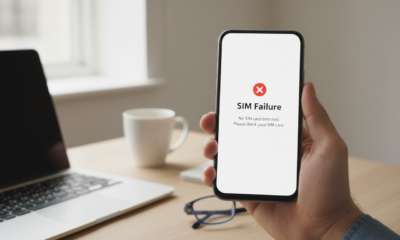

sim failure explained: common causes and quick fixes in 2025
Your iPhone is your lifeline to the digital world, handling everything from urgent emails to streaming the latest podcast. So,...
-

 Open Ai2 months ago
How to Effortlessly Access Your Archived Conversations on ChatGPT in 2025
-

 Open Ai2 months ago
A Comprehensive Guide to Sharing Your ChatGPT Conversations: 2025 Edition
-

 Tools1 month ago
How to download and use open subtitles for movies and TV in 2025
-

 Actualités1 month ago
Ontario Man Claims ChatGPT Prompted Psychosis During ‘World-Saving’ Quest
-

 Ai models2 months ago
MIT Researchers Introduce ‘SEAL’: A Game-Changer in the Evolution of Self-Enhancing AI
-

 Actualités2 months ago
OpenAI Reports That Hundreds of Thousands of ChatGPT Users May Experience Symptoms of Manic or Psychotic Episodes Weekly

