

Open Ai
OpenAI ChatGPT vs. Anthropic Claude: Which AI Will Supercharge Your Productivity in 2025?
The landscape of artificial intelligence has shifted dramatically over the last year. We have moved beyond simple chatbots to fully integrated digital assistants that redefine how professional workflows function in 2026. The release of GPT-5 by OpenAI and Sonnet 4 by Anthropic marked a pivotal moment in this evolution, creating a distinct divergence in how we approach productivity. While one aims for speed and broad multimodal integration, the other doubles down on safety, reasoning, and depth.
Choosing between these two powerhouses isn’t just about picking a tool; it’s about selecting a partner for your cognitive labor. Whether you are crunching massive datasets, generating code for a new application, or drafting nuanced marketing copy, understanding the architectural differences between OpenAI and Anthropic is crucial for optimizing your output.
The Core Philosophies Driving AI Development in 2026
At the heart of the ChatGPT vs. Claude debate lies a fundamental difference in design philosophy. OpenAI continues to push the boundaries of “move fast and break things,” aiming for a universal assistant that connects with everything. The introduction of GPT-5 brought a real-time routing system that dynamically selects the best model for a query, drastically reducing latency and hallucinations. It is designed to be the ultimate generalist, capable of seeing, hearing, and speaking with near-human fluidity.
On the other side of the ring, Anthropic maintains a steadfast commitment to “Constitutional AI.” The development of Claude focuses on safety, reliability, and steerability. The team, comprised of policy experts and engineers, ensures that models like Sonnet 4 are not just smart but aligned with human values, drawing from sources like the UN Declaration of Human Rights. This approach appeals significantly to enterprise environments where data security and reliable outputs are non-negotiable. For those looking to boost productivity in 2025 and beyond, this reliability often translates to less time fact-checking and more time executing.

Technical Specifications and Feature Sets
To truly understand which AI suits a specific workflow, we must look under the hood. The technical specifications of the current free and paid tiers reveal distinct priorities. GPT-5 boasts a massive context window of 400,000 tokens, doubling the capacity of its competitor, which allows it to process entire libraries of information in a single session. However, Claude makes up for this with a highly efficient 200,000-token window that excels in information retrieval accuracy.
Here is a breakdown of how these models stack up in the current market:
| Feature 🚀 | Claude (Sonnet 4) | ChatGPT (GPT-5) |
|---|---|---|
| Context Window | Up to 200K tokens | Up to 400K tokens |
| Coding Capability | High precision, state-of-the-art reasoning (72.7% SWE-bench) | Live code preview, fast execution (74.9% SWE-bench Verified) |
| Visual Generation | Not native (Focus on analysis) | Native DALL-E integration |
| Web Connectivity | Standard Search | Deep integration with real-time sources |
| Memory | Session-based | Persistent memory of preferences |
While ChatGPT offers a “Swiss Army Knife” approach with native image generation and voice modes, Claude focuses on being a specialist in text and code analysis. For developers deciding between ChatGPT vs Github Copilot or Claude, the latter’s ability to maintain logic over long conversations is often a deciding factor.
Real-World Performance: Putting the AI to the Test
Benchmarks are useful, but real-world scenarios dictate daily value. In practical testing involving complex reasoning, Claude consistently demonstrates a superior ability to “show its work.” When presented with a multi-variable math problem regarding tax rebates and income thresholds, Sonnet 4 methodically broke down the logic, step-by-step, resembling a patient tutor. ChatGPT, conversely, acted like a high-speed calculator—jumping straight to the answer. While efficient, this can sometimes obscure the reasoning process, which is vital for verifying accuracy.
In the realm of creative writing, the distinction is even more pronounced. Ask both AIs to write a product description for eco-friendly packaging, and the difference in “voice” becomes apparent.
* Claude tends to produce engaging, nuanced copy that balances technical features with emotional appeal, requiring less human editing to sound natural.
* ChatGPT often defaults to a structured, feature-heavy list format. While factually accurate, it can feel dense and “robotic,” necessitating a rewrite to add human flair.
However, ChatGPT remains the undisputed king of research and adaptability. When tasked with comparing products like Midjourney vs. DALL-E, GPT-5 utilized its superior web browsing to pull the most recent data, including fresh user reviews and updated interface changes. Claude, despite having web access, provided slightly outdated information regarding web interfaces. For users tracking fast-moving topics, such as the evolution of ChatGPT AI, real-time accuracy is paramount.
Coding and Data Science Capabilities
For data scientists and developers, the choice often comes down to the nature of the task. In tests involving the analysis of quarterly financial reports, Claude proved invaluable for qualitative analysis. It didn’t just extract numbers; it synthesized them into a narrative understandable by non-experts. ChatGPT served better as a quick summarizer, extracting key metrics into bullet points for rapid consumption.
Regarding code generation, specifically Python scripts for log analysis, both models performed admirably but differently. Claude considered edge cases—like malformed log entries—writing robust, production-ready code. ChatGPT provided a simplified educational version, excellent for learning the concept but potentially requiring refinement for enterprise deployment. This makes Claude a strong contender against specialized tools, and interesting comparisons arise when looking at OpenAI vs Cohere AI in 2025 for enterprise solutions.
Optimizing Your Workflow for 2026
The reality of the current AI ecosystem is that “mono-model” reliance is becoming obsolete. The most productive professionals are learning to orchestrate both tools. Claude is the ideal engine for “Deep Work”—tasks requiring sustained attention, complex reasoning, lengthy document synthesis, and safe, human-like drafting. It is the tool you open when you have a messy dataset or a blank page that needs a thoughtful essay.
Conversely, ChatGPT is the ultimate “high-speed assistant.” It excels at quick fact retrieval, generating initial ideas, creating visual assets via DALL-E, and handling multimodal inputs like voice and video. If you need to translate languages quickly, checking out the top AI translators of 2025 might lead you back to OpenAI’s robust multilingual capabilities.
Key Recommendations for Implementation
To supercharge productivity, consider this split-stack approach:
* 📝 Use Claude for: Drafting emails, debugging complex code, summarizing legal/medical documents, and creative writing.
* ⚡ Use ChatGPT for: Quick research, image generation, formatting data, learning new concepts via voice mode, and daily planning.
Understanding the strengths of each model prevents frustration. You wouldn’t use a scalpel to chop wood, nor an axe for surgery. Similarly, utilizing Anthropic’s precision for detailed work and OpenAI’s versatility for broad tasks creates a workflow that is greater than the sum of its parts. Even as new competitors emerge, such as in the ChatGPT vs Gemini battle, the duality of Claude and ChatGPT remains the central pillar of the 2026 productivity stack.
Which AI is better for coding in 2026, Claude or ChatGPT?
Claude (Sonnet 4) is generally preferred for complex coding tasks and architecture due to its ability to handle edge cases and maintain logic over a large context window. However, ChatGPT (GPT-5) is excellent for quick scripts, explaining code concepts, and offering live previews of the output.
Can I use ChatGPT and Claude for free?
Yes, both offer robust free tiers. Claude provides access to Sonnet 4 with usage limits, while ChatGPT offers free access to GPT-5 with certain restrictions on advanced features like DALL-E generation and high-volume usage.
Does Claude have image generation capabilities?
No, as of the current 2026 versions, Claude focuses on text and code generation and analysis. For image creation, ChatGPT with its integrated DALL-E model remains the superior choice within the chat interface.
Which AI is safer for corporate data?
Anthropic’s Claude is built with a ‘Safety First’ approach and Constitutional AI, making it highly attractive for enterprise environments concerned with data privacy and brand safety. OpenAI also offers enterprise solutions with data privacy controls, but Claude’s core architecture emphasizes this aspect more heavily.

Aisha thrives on breaking down the black box of machine learning. Her articles are structured, educational journeys that turn technical nuances into understandable, applicable knowledge for developers and curious readers alike.



discover the most fascinating shell names and their meanings
Decoding the Hidden Data of Marine Architectures The ocean functions as a vast, decentralized archive of biological history. Within this...


Funko pop news: latest releases and exclusive drops in 2025
Major 2025 Funko Pop News and the Continuing Impact in 2026 The landscape of collecting changed drastically over the last...


who is hans walters? uncovering the story behind the name in 2025
The Enigma of Hans Walters: Analyzing the Digital Footprint in 2026 In the vast expanse of information available today, few...


Exploring microsoft building 30: a hub of innovation and technology in 2025
Redefining the Workspace: Inside the Heart of Redmond’s Tech Evolution Nestled within the greenery of the expansive Redmond campus, Microsoft...


Top AI Tools for Homework Assistance in 2025
The Evolution of Student Support AI in the Modern Classroom The panic of a Sunday night deadline is slowly becoming...


OpenAI vs Mistral: Which AI Model Will Best Suit Your Natural Language Processing Needs in 2025?
The landscape of Artificial Intelligence has shifted dramatically as we navigate through 2026. The rivalry that defined the previous year—specifically...


how to say goodbye: gentle ways to handle farewells and endings
Navigating the Art of a Gentle Farewell in 2026 Saying goodbye is rarely a simple task. Whether you are pivoting...


pirate ship name generator: create your legendary vessel’s name today
Designing the Perfect Identity for Your Maritime Adventure Naming a vessel is far more than a simple labeling exercise; it...


Unlocking creativity with diamond body AI prompts in 2025
Mastering the Diamond Body Framework for AI Precision In the rapidly evolving landscape of 2025, the difference between a generic...


What is canvas? Everything you need to know in 2025
Defining Canvas in the Modern Digital Enterprise In the landscape of 2026, the term “Canvas” has evolved beyond a singular...


how to turn on your laptop keyboard light: a step-by-step guide
Mastering Keyboard Illumination: The Essential Step-by-Step Guide Typing in a dimly lit room, on a night flight, or during a...


best book mockup prompts for midjourney in 2025
Optimizing Digital Book Visualization with Midjourney in the Post-2025 Era The landscape of digital book visualization shifted dramatically following the...


AI-Driven Adult Video Generators: The Top Innovations to Watch for in 2025
The Dawn of Synthetic Intimacy: Redefining Adult Content in 2026 The landscape of digital expression has undergone a seismic shift,...

ChatGPT vs LLaMA: Which Language Model Will Dominate in 2025?
The Colossal Battle for AI Supremacy: Open Ecosystems vs. Walled Gardens In the rapidly evolving landscape of artificial intelligence, the...
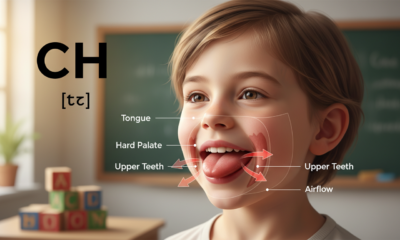

Mastering initial ch words: tips and activities for early readers
Decoding the Mechanism of Initial CH Words in Early Literacy Language acquisition in early readers functions remarkably like a complex...


Howmanyofme review: discover how unique your name really is
Unlocking the secrets of your name identity with data Your name is more than just a label on a driver’s...


Understanding gpt-2 output detector: how it works and why it matters in 2025
The Mechanics Behind GPT-2 Output Detector in the Age of Generative AI In the rapidly evolving landscape of 2026, the...


How to integrate pirate weather with home assistant: a complete step-by-step guide
The Evolution of Hyper-Local Weather Data in Smart Home Ecosystems Reliability is the cornerstone of any effective Smart Home setup....


2025’s Comprehensive Guide to Top NSFW AI Art Creators: Trends and Essential Tools
The Evolution of Digital Erotica and 2025’s Technological Shift The landscape of Digital Art has undergone a seismic shift, moving...


OpenAI vs Meta: Exploring the Key Differences Between ChatGPT and Llama 3 in 2025
The AI Landscape in Late 2025: A Clash of Titans The artificial intelligence sector has witnessed a seismic shift since...
-

 Tech1 month ago
Your card doesn’t support this type of purchase: what it means and how to solve it
-

 Open Ai2 months ago
Mastering Your ChatGPT API Key: A Comprehensive Guide for 2025
-

 Tools2 months ago
How to download and use open subtitles for movies and TV in 2025
-

 Actualités2 months ago
Ontario Man Claims ChatGPT Prompted Psychosis During ‘World-Saving’ Quest
-

 Ai models2 months ago
vietnamese models in 2025: new faces and rising stars to watch
-

 Ai models1 month ago
OpenAI vs Tsinghua: Choosing Between ChatGPT and ChatGLM for Your AI Needs in 2025