

Tech
best book mockup prompts for midjourney in 2025
Optimizing Digital Book Visualization with Midjourney in the Post-2025 Era
The landscape of digital book visualization shifted dramatically following the algorithmic updates of 2025. For authors, marketers, and tech-driven creative teams, the ability to generate high-fidelity assets without a physical photo shoot has become a standard operational requirement. Understanding the nuances of Midjourney prompts is no longer just about artistic exploration; it is about precision engineering for marketability.
Creating a compelling visual representation of a book requires more than just a cover image; it demands a context that potential readers can feel. By leveraging advanced generative techniques, professionals can place their products in hyper-realistic environments—from a sun-drenched coffee table in a Parisian café to a sleek, minimalist desk in a tech startup. The efficiency gained here allows for rapid A/B testing of marketing assets before a single physical copy is printed.
Core Architecture of High-Converting Mockup Prompts
To consistently generate a usable 3D book mockup, one must adhere to a structured syntax. The randomness of earlier AI models has been replaced by controllable parameters that define lighting, texture, and perspective with mathematical precision. A prompt is essentially a set of coordinates for the neural network to navigate the latent space.
The most effective structure observed in recent high-performing campaigns follows this sequence: [Subject/Object] + [Environment/Context] + [Lighting/Atmosphere] + [Technical Specifications]. For instance, requesting a “hardcover book standing on a wooden shelf” is insufficient. A refined prompt would specify: “Hardcover book mockup standing on a rustic oak shelf, surrounded by vintage artifacts, volumetric dust lighting, shallow depth of field, 8k resolution, photorealistic texture.” This level of detail ensures the Midjourney AI understands not just the object, but the mood it must convey.
Furthermore, understanding the evolution of these tools helps in predicting output behavior. As we look at the progression of AI models, we see a clear trend towards understanding physics and light interaction, which is crucial for making a digital object appear tangible.
Key Parameters for Precision Rendering
Achieving a photo-realistic book render requires mastery of specific parameters. The table below outlines the essential command modifiers that stabilize output quality.
| Parameter | Command Syntax | Operational Function ⚙️ |
|---|---|---|
| Aspect Ratio | –ar 2:3 or 16:9 | Defines the canvas dimensions. Use 2:3 for vertical book covers and 16:9 for cinematic promotional banners. |
| Stylize | –s [0-1000] | Controls how strictly the AI adheres to the prompt versus its own artistic training. Lower values yield more literal interpretations. |
| Chaos | –c [0-100] | Introduces variation. Higher chaos values are useful during the initial brainstorming phase to explore unexpected compositions. |
| Negative Prompting | –no [element] | Removes unwanted artifacts. Essential for eliminating “blurry text” or “distorted hands” from the final render. |
Using these parameters effectively allows for the creation of assets that integrate seamlessly into broader book marketing visuals. It reduces the time spent on post-production editing, as the raw output is already aligned with the desired aesthetic.
Advanced Lighting and Composition Strategies
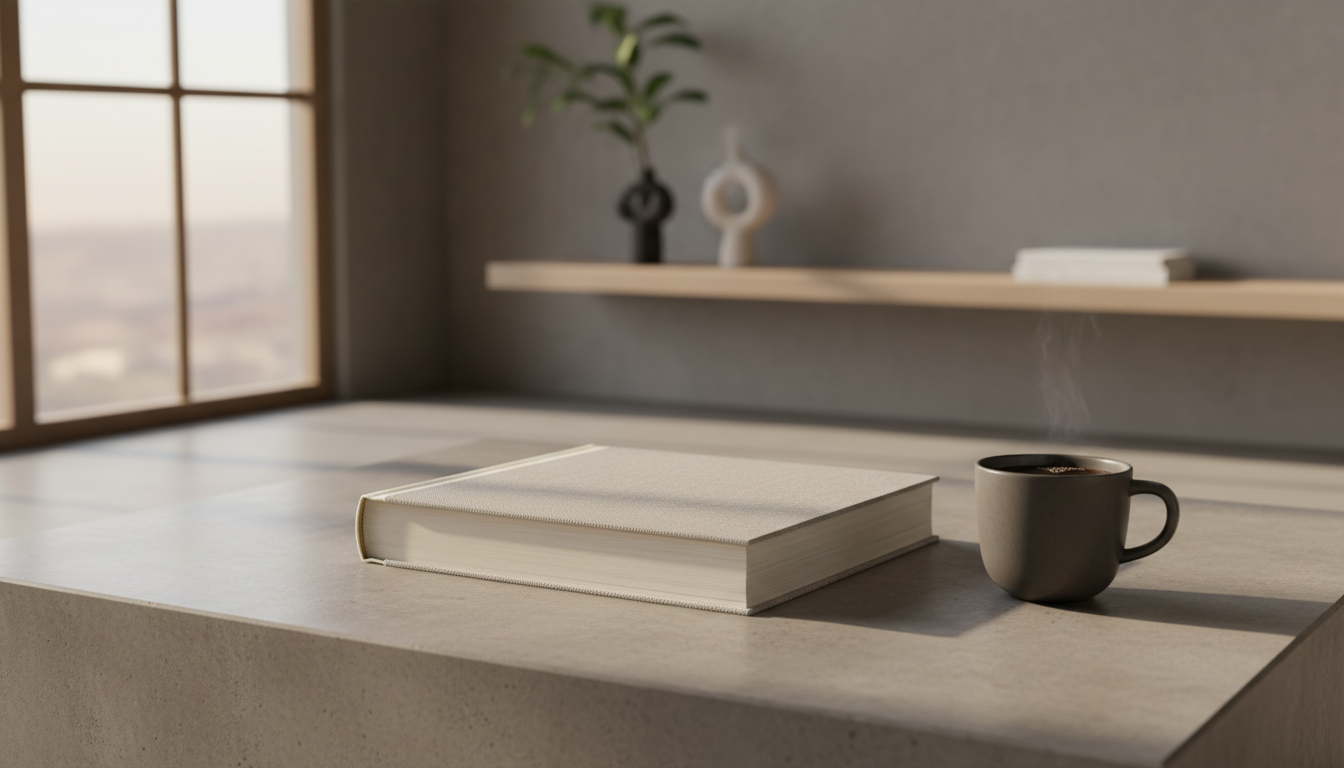
Lighting is the differentiator between a flat, artificial image and a mockup that pops off the screen. In 2026, the standard for design trends leans heavily towards natural, emotive lighting that tells a story. We are moving away from sterile studio white backgrounds towards “lived-in” aesthetics.
When constructing AI art prompts for mockups, specific lighting terminology dictates the emotional resonance of the image. “Golden hour” lighting suggests warmth, nostalgia, and romance, making it ideal for fiction. Conversely, “cool, clinical studio lighting” communicates precision and authority, suitable for technical manuals or non-fiction business books. Exploring creative sketching techniques can help conceptualize these lighting setups before writing the final prompt.
The Role of Perspective in Mockups
The camera angle chosen in the prompt radically alters the viewer’s relationship with the book. A “top-down flat lay” works exceptionally well for Instagram and social media grids, offering a clear view of the cover art alongside thematic props. Alternatively, a “low-angle hero shot” makes the book appear monumental and significant, a technique often employed for blockbuster thriller releases.
- Isometric View: 📐 Perfect for showcasing the spine thickness and physical build quality of the book, often used in tech and educational contexts.
- Over-the-Shoulder: Implies a reader is currently engaged with the content, creating a psychological link between the viewer and the act of reading.
- Macro Close-Up: Focuses on texture details like foil stamping or embossing, highlighting the production value of the physical product.
- Environmental Wide Shot: Places the book in a room (e.g., a library or lab), establishing the target audience’s natural habitat.
Integrating these perspectives into creative book covers and promotional materials ensures a diverse visual portfolio. It is worth noting that while tools like DALL-E 3 have their merits, as discussed in comparisons regarding image generation capabilities, Midjourney generally retains an edge in texture realism for inanimate objects like paper and cardboard.
Streamlining the Workflow with External Tools
While the focus here is on prompt generation, the ecosystem surrounding these AI models is vital for a CTO or production lead. Once a raw image is generated, it often requires refinement. The text generated on the spine or cover by AI is improving but frequently necessitates correction using tools like Photoshop or Canva. The goal is to produce a “blank” mockup via the prompt—using terms like “blank cover” or “minimalist white cover”—and then composite the actual book design onto the generated surface.
This hybrid workflow ensures that the book marketing visuals are perfectly accurate to the final product while benefiting from the hyper-realistic lighting calculated by the AI. For enterprise-level scalability, automating parts of this process using APIs is the next logical step. Understanding how to manage API keys and integrate different AI services can drastically reduce the time-to-market for publishing houses handling multiple titles simultaneously.
Genre-Specific Prompt Adjustments
Different genres demand distinct visual languages. A thriller requires shadows, tension, and perhaps a noir aesthetic. A wellness book thrives in bright, airy, and organic settings. When crafting Midjourney prompts, specific keywords trigger these associations within the model.
For a Sci-Fi novel, one might use descriptors like “neon ambient light,” “reflective surfaces,” and “futuristic sleekness.” In contrast, a historical fiction piece benefits from “candlelight,” “aged wood textures,” and “parchment tones.” This contextual alignment helps the mockup resonate with the specific demographic of the genre. Staying updated with general AI capabilities, such as those found in the 2025 AI FAQ, ensures that creators are utilizing the latest model features for these specific stylistic nuances.
What is the best aspect ratio for a standard book mockup in Midjourney?
For a standard vertical book cover, an aspect ratio of 2:3 (–ar 2:3) is the industry standard as it closely mirrors the dimensions of most trade paperbacks and hardcovers. For wider, cinematic shots involving the book in a landscape environment, 16:9 is preferable.
How can I ensure the text on the book cover is legible?
Midjourney V6 and newer models have improved text generation, but for professional mockups, it is best to prompt for a ‘blank cover’ or ‘plain cover’ and overlay your actual high-resolution book cover design using Photoshop or Canva for perfect typography and branding accuracy.
Can I use Midjourney to generate consistent character art for a book series?
Yes, by using the ‘Character Reference’ (–cref) parameter introduced in recent versions, you can maintain character consistency across multiple mockups and cover designs. This is crucial for series branding where the protagonist must remain recognizable in different settings.
What are negative prompts and why are they important for mockups?
Negative prompts (using the –no parameter) tell the AI what to exclude. For book mockups, using prompts like ‘–no hands, –no blur, –no pens, –no distorted text’ ensures a clean, product-focused image without distracting or anatomically incorrect elements intruding on the composition.

Max doesn’t just talk AI—he builds with it every day. His writing is calm, structured, and deeply strategic, focusing on how LLMs like GPT-5 are transforming product workflows, decision-making, and the future of work.



discover the most fascinating shell names and their meanings
Decoding the Hidden Data of Marine Architectures The ocean functions as a vast, decentralized archive of biological history. Within this...

Funko pop news: latest releases and exclusive drops in 2025
Major 2025 Funko Pop News and the Continuing Impact in 2026 The landscape of collecting changed drastically over the last...

who is hans walters? uncovering the story behind the name in 2025
The Enigma of Hans Walters: Analyzing the Digital Footprint in 2026 In the vast expanse of information available today, few...


Exploring microsoft building 30: a hub of innovation and technology in 2025
Redefining the Workspace: Inside the Heart of Redmond’s Tech Evolution Nestled within the greenery of the expansive Redmond campus, Microsoft...

Top AI Tools for Homework Assistance in 2025
The Evolution of Student Support AI in the Modern Classroom The panic of a Sunday night deadline is slowly becoming...


OpenAI vs Mistral: Which AI Model Will Best Suit Your Natural Language Processing Needs in 2025?
The landscape of Artificial Intelligence has shifted dramatically as we navigate through 2026. The rivalry that defined the previous year—specifically...

how to say goodbye: gentle ways to handle farewells and endings
Navigating the Art of a Gentle Farewell in 2026 Saying goodbye is rarely a simple task. Whether you are pivoting...

pirate ship name generator: create your legendary vessel’s name today
Designing the Perfect Identity for Your Maritime Adventure Naming a vessel is far more than a simple labeling exercise; it...


Unlocking creativity with diamond body AI prompts in 2025
Mastering the Diamond Body Framework for AI Precision In the rapidly evolving landscape of 2025, the difference between a generic...


What is canvas? Everything you need to know in 2025
Defining Canvas in the Modern Digital Enterprise In the landscape of 2026, the term “Canvas” has evolved beyond a singular...

how to turn on your laptop keyboard light: a step-by-step guide
Mastering Keyboard Illumination: The Essential Step-by-Step Guide Typing in a dimly lit room, on a night flight, or during a...


best book mockup prompts for midjourney in 2025
Optimizing Digital Book Visualization with Midjourney in the Post-2025 Era The landscape of digital book visualization shifted dramatically following the...

AI-Driven Adult Video Generators: The Top Innovations to Watch for in 2025
The Dawn of Synthetic Intimacy: Redefining Adult Content in 2026 The landscape of digital expression has undergone a seismic shift,...

ChatGPT vs LLaMA: Which Language Model Will Dominate in 2025?
The Colossal Battle for AI Supremacy: Open Ecosystems vs. Walled Gardens In the rapidly evolving landscape of artificial intelligence, the...

Mastering initial ch words: tips and activities for early readers
Decoding the Mechanism of Initial CH Words in Early Literacy Language acquisition in early readers functions remarkably like a complex...


Howmanyofme review: discover how unique your name really is
Unlocking the secrets of your name identity with data Your name is more than just a label on a driver’s...


Understanding gpt-2 output detector: how it works and why it matters in 2025
The Mechanics Behind GPT-2 Output Detector in the Age of Generative AI In the rapidly evolving landscape of 2026, the...


How to integrate pirate weather with home assistant: a complete step-by-step guide
The Evolution of Hyper-Local Weather Data in Smart Home Ecosystems Reliability is the cornerstone of any effective Smart Home setup....

2025’s Comprehensive Guide to Top NSFW AI Art Creators: Trends and Essential Tools
The Evolution of Digital Erotica and 2025’s Technological Shift The landscape of Digital Art has undergone a seismic shift, moving...

OpenAI vs Meta: Exploring the Key Differences Between ChatGPT and Llama 3 in 2025
The AI Landscape in Late 2025: A Clash of Titans The artificial intelligence sector has witnessed a seismic shift since...
-

 Tech1 month ago
Your card doesn’t support this type of purchase: what it means and how to solve it
-

 Open Ai2 months ago
Mastering Your ChatGPT API Key: A Comprehensive Guide for 2025
-
 Tools2 months ago
How to download and use open subtitles for movies and TV in 2025
-
 Actualités2 months ago
Ontario Man Claims ChatGPT Prompted Psychosis During ‘World-Saving’ Quest
-
 Ai models2 months ago
vietnamese models in 2025: new faces and rising stars to watch
-
 Ai models1 month ago
OpenAI vs Tsinghua: Choosing Between ChatGPT and ChatGLM for Your AI Needs in 2025