

Establishing the Architecture of Credibility in Research
In the high-speed environment of modern information exchange, particularly as we navigate the complex digital landscape of 2026, the backbone of any substantial claim is its verification. Referencing serves as the fundamental protocol for validating knowledge. It is not merely an administrative hurdle; it is the mechanism that connects isolated ideas into a cohesive network of proven facts. By meticulously documenting sources, a writer demonstrates the breadth of their investigation and secures the source credibility necessary to persuade a sophisticated audience.
The primary function of citation is to uphold academic integrity. When a writer acknowledges the intellectual contributions of others, they create a transparent lineage of ideas. This transparency allows readers to trace the origins of data, ensuring that the evidence presented is robust and verifiable. Without this structural support, even the most innovative arguments can collapse under scrutiny. In an era where AI writing assistants and grammar tools are commonplace, the human ability to discern and attribute sources correctly remains a critical distinction of quality.

Strategic Positioning of New Findings
Beyond simple attribution, references function as a strategic tool to position new work within existing scholarship. Academic writing rarely occurs in a vacuum; it is a dialogue with previous research. By citing relevant studies, a writer frames their own arguments, showing where they align with established theories or where they diverge to offer new insights. This comparison and contrast is vital for demonstrating the novelty of a project.
Effective referencing highlights gaps in current knowledge. A researcher might cite a series of papers to illustrate a consensus, only to introduce primary data that challenges that status quo. This technique validates the necessity of the new study. Whether utilizing modern digital archives or traditional journals, the goal is to show that the writer has engaged deeply with the field. This demonstrates that the work is not just a repetition of plagiarism-prone generalities, but a specific, calculated addition to the scientific or literary conversation.
The Mechanics of Attribution and Lists
The practical application of referencing involves two distinct but connected components: the in-text citation and the reference list (or bibliography). In-text citations act as immediate signposts, alerting the reader to the source of a specific fact or idea right at the moment it is used. The reference list, conversely, provides the complete bibliographic details required to locate those sources.
Below is a breakdown of how different source types contribute to the weight of an argument:
| Source Type 📄 | Primary Function 🎯 | Strategic Value 🚀 | |
|---|---|---|---|
| Peer-Reviewed Journals | Provides validated experimental data and theoretical frameworks. | High credibility; establishes the scientific basis of the argument. | |
| Primary Data | Offers raw evidence (clinical trials, texts, surveys). | Demonstrates original investigation and direct analysis. | |
| Generative AI Logs | Acknowledges the use of AI in drafting or brainstorming. | Ensures transparency regarding the role of content generation tools in the process. | |
| Books & Monographs | Delivers comprehensive background and historical context. | Shows a deep understanding of the subject’s evolution over time. |
Avoiding the Pitfalls of Over-Referencing
While attribution is critical, there is a diminishing return when citations are used indiscriminately. A common error in research is the belief that volume equates to quality. Including irrelevant references to pad a bibliography distracts from the core argument and can confuse the reader. If a piece of information is considered “common knowledge”—facts that are generally known by the intended audience—it does not require a citation. The skill lies in balancing the need for evidence with the flow of the narrative.
Furthermore, relying too heavily on citations can drown out the writer’s own voice. The references should support the argument, not replace it. The objective is to build a synthesis where research findings empower the writer’s conclusions rather than overshadowing them. In 2026, where efficiency is paramount, concise and relevant referencing is preferred over exhaustive but tangential lists. For those structuring complex papers, utilizing advanced essay structuring aids can help maintain this balance without compromising originality.

Best Practices for Source Management
To maintain a high standard of work, adherence to a consistent style guide is non-negotiable. Whether the discipline requires APA, MLA, or Harvard style, consistency ensures that the information is accessible. This meticulousness reflects the rigor of the researcher. It is also vital to verify the currency of sources, ensuring that the data is not obsolete.
Here are key principles for effective management of references:
- Relevance is King: 👑 Only cite sources that directly advance your argument or provide necessary background.
- Diversity of Sources: 📚 Mix primary data with secondary analysis to create a well-rounded perspective.
- Accuracy in Format: ✍️ Ensure every comma and italic follows the department’s required style guide meticulously.
- Contextual Integration: 🔗 Do not just drop a citation; explain why this source matters to your point.
- AI Transparency: 🤖 If you utilized tools like automated writing assistants, check your institution’s policy on citing them as non-author entities.
Ultimately, the role of referencing is to create a reliable path for others to follow. It turns a solitary act of writing into a verified contribution to global knowledge. When dealing with multimedia sources, such as those from video generation platforms, the same principles of credit and location apply.

Why is referencing considered a defense against plagiarism?
Referencing clearly distinguishes the writer’s original ideas from those borrowed from other authors. By explicitly acknowledging the owner of an idea or dataset, the writer avoids the ethical violation of presenting someone else’s work as their own, thus maintaining academic integrity.
When is a citation not required in academic text?
Citations are generally not required for ‘common knowledge’—facts that are widely known and undisputed within the specific field of study or by the general public (e.g., ‘Water freezes at 0 degrees Celsius’). However, if there is doubt about whether a fact is common knowledge, it is safer to provide a reference.
How does referencing support the writer’s argument?
References provide the evidentiary basis for claims. They show that the writer’s arguments are grounded in established research, verified data, or expert theory. This lends authority to the work and demonstrates that the writer has engaged with the relevant literature in their field.
Can I cite Generative AI in my research paper?
In 2026, most academic institutions have specific protocols for this. Generally, AI is cited as a tool rather than an author. You must acknowledge the specific prompt used and the date of generation, treating the output as non-reproducible data or personal communication, depending on the specific style guide (APA, MLA, etc.).

Max doesn’t just talk AI—he builds with it every day. His writing is calm, structured, and deeply strategic, focusing on how LLMs like GPT-5 are transforming product workflows, decision-making, and the future of work.



Understanding the gall-peters map projection: benefits and controversies in 2025
The Reality Behind the Map: Why the Gall-Peters Projection Still Matters Every time you look at a standard world map,...


how to create a secure building link login process in 2025
Architecting a Robust Authentication Framework in the Era of AI User authentication defines the perimeter of modern digital infrastructure. In...


Top AI Tools for Small Businesses: Essential Picks for 2025
Navigating the AI Landscape: Essential Tools for Small Business Growth in 2025 The digital horizon has shifted dramatically. As we...


Choosing Between OpenAI’s ChatGPT and Falcon: The Best AI Model for 2025
The landscape of artificial intelligence has shifted dramatically as we navigate through 2026. The choice is no longer just about...


discover the most fascinating shell names and their meanings
Decoding the Hidden Data of Marine Architectures The ocean functions as a vast, decentralized archive of biological history. Within this...


Funko pop news: latest releases and exclusive drops in 2025
Major 2025 Funko Pop News and the Continuing Impact in 2026 The landscape of collecting changed drastically over the last...


who is hans walters? uncovering the story behind the name in 2025
The Enigma of Hans Walters: Analyzing the Digital Footprint in 2026 In the vast expanse of information available today, few...


Exploring microsoft building 30: a hub of innovation and technology in 2025
Redefining the Workspace: Inside the Heart of Redmond’s Tech Evolution Nestled within the greenery of the expansive Redmond campus, Microsoft...


Top AI Tools for Homework Assistance in 2025
The Evolution of Student Support AI in the Modern Classroom The panic of a Sunday night deadline is slowly becoming...


OpenAI vs Mistral: Which AI Model Will Best Suit Your Natural Language Processing Needs in 2025?
The landscape of Artificial Intelligence has shifted dramatically as we navigate through 2026. The rivalry that defined the previous year—specifically...


how to say goodbye: gentle ways to handle farewells and endings
Navigating the Art of a Gentle Farewell in 2026 Saying goodbye is rarely a simple task. Whether you are pivoting...


pirate ship name generator: create your legendary vessel’s name today
Designing the Perfect Identity for Your Maritime Adventure Naming a vessel is far more than a simple labeling exercise; it...


Unlocking creativity with diamond body AI prompts in 2025
Mastering the Diamond Body Framework for AI Precision In the rapidly evolving landscape of 2025, the difference between a generic...


What is canvas? Everything you need to know in 2025
Defining Canvas in the Modern Digital Enterprise In the landscape of 2026, the term “Canvas” has evolved beyond a singular...


how to turn on your laptop keyboard light: a step-by-step guide
Mastering Keyboard Illumination: The Essential Step-by-Step Guide Typing in a dimly lit room, on a night flight, or during a...


best book mockup prompts for midjourney in 2025
Optimizing Digital Book Visualization with Midjourney in the Post-2025 Era The landscape of digital book visualization shifted dramatically following the...


AI-Driven Adult Video Generators: The Top Innovations to Watch for in 2025
The Dawn of Synthetic Intimacy: Redefining Adult Content in 2026 The landscape of digital expression has undergone a seismic shift,...


ChatGPT vs LLaMA: Which Language Model Will Dominate in 2025?
The Colossal Battle for AI Supremacy: Open Ecosystems vs. Walled Gardens In the rapidly evolving landscape of artificial intelligence, the...
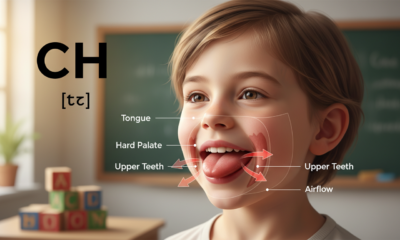

Mastering initial ch words: tips and activities for early readers
Decoding the Mechanism of Initial CH Words in Early Literacy Language acquisition in early readers functions remarkably like a complex...


Howmanyofme review: discover how unique your name really is
Unlocking the secrets of your name identity with data Your name is more than just a label on a driver’s...
-

 Tech1 month ago
Your card doesn’t support this type of purchase: what it means and how to solve it
-

 Open Ai2 months ago
Mastering Your ChatGPT API Key: A Comprehensive Guide for 2025
-

 Tools2 months ago
How to download and use open subtitles for movies and TV in 2025
-

 Actualités2 months ago
Ontario Man Claims ChatGPT Prompted Psychosis During ‘World-Saving’ Quest
-

 Ai models2 months ago
vietnamese models in 2025: new faces and rising stars to watch
-

 Ai models1 month ago
OpenAI vs Tsinghua: Choosing Between ChatGPT and ChatGLM for Your AI Needs in 2025